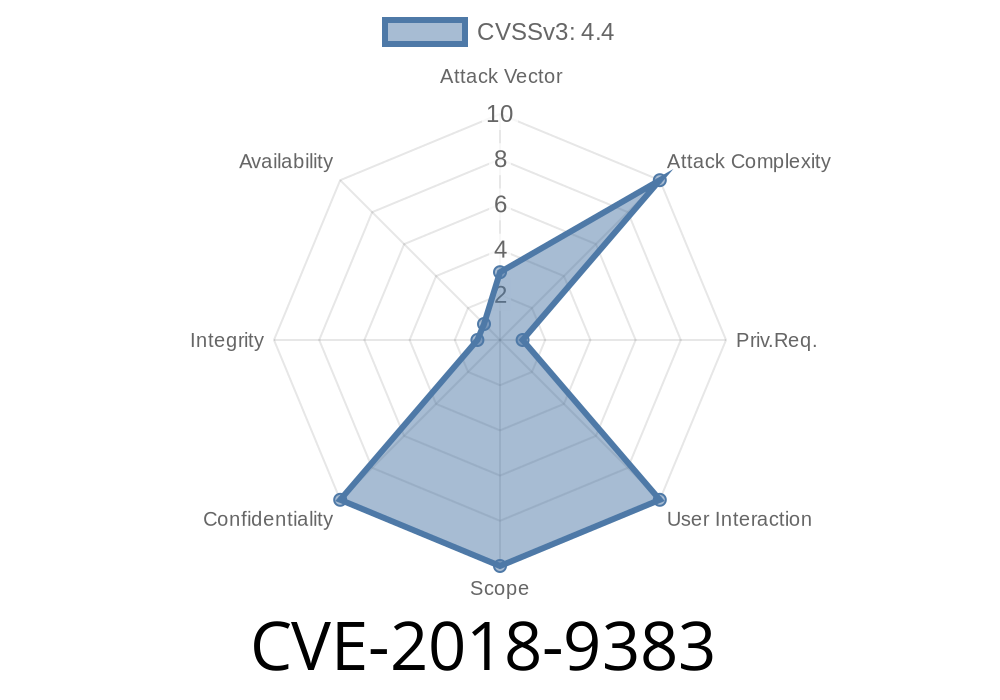
In today's post, we're diving deep into CVE-2018-9383, a critical vulnerability found in Android's ASN.1 BER decoder implementation. We'll break down what the bug is, how it works, show some code, explain exploitation, and give useful references for further study. This post is exclusively written in plain language for easy understanding.
What is CVE-2018-9383?
CVE-2018-9383 is a vulnerability in Android's ASN.1 (Abstract Syntax Notation One) Basic Encoding Rules (BER) decoder. It exists in the asn1_ber_decoder function, specifically in the asn1_decoder.c source file. The bug is due to a missing bounds check, leading to a potential out-of-bounds read. This means an attacker could trick the program into reading memory it shouldn't—possibly leaking sensitive data owned by the System user. No user interaction is needed, but the attack requires local code execution.
Location of the Bug
The bug was found in certain versions of Android within the system/core/libasn1_decoder code. Google's official advisory can be found here:
- Android Security Bulletin June 2018
- AOSP CVE-2018-9383 Issue Tracker
What does asn1_ber_decoder do?
This function is used to parse ASN.1-encoded data. ASN.1 is common in cryptographic protocols (such as certificates), so the decoder is important for secure communication.
The actual bug
Due to lack of proper input validation, the decoder could read memory outside of the intended buffer.
Here's a simplified version of what might happen in the vulnerable function
int asn1_ber_decoder(uint8_t* buffer, size_t size) {
    size_t offset = ;
    while (offset < size) {
        uint8_t tag = buffer[offset++];
        uint8_t length = buffer[offset++]; // Potential issue right here!
        if (offset + length > size) {
            // MISSING: Return error, length is too large!
        }
        // Vulnerable read
        uint8_t* value = &buffer[offset];
        // Processing 'value'...
        offset += length; // Could read past buffer if length check skipped!
    }
    return ;
}
In the code above, if length is bigger than the amount of data left, offset + length will point outside the buffer, leading to out-of-bounds read. This memory could have sensitive information.
Preconditions
- Attacker can send or supply a crafted ASN.1 file, blob, or certificate to a local process running as System.
Trigger Parsing: Process loads the malformed file or gets fed the blob.
3. Read Beyond Buffer: The decoder reads past the intended buffer, possibly exposing data from adjacent memory.
Exploit Code Example
While public full exploits are not released, here's a pseudo-code outline for leaking memory using this bug:
# Create malicious ASN.1 data
asn1_data = bytearray()
asn1_data.append(x04)        # Tag for Octet String
asn1_data.append(x80)        # Length (128), but only supply fewer bytes
asn1_data.extend(b"A" * 8)    # Only 8 bytes of actual data

# Supply asn1_data to the service relying on the vulnerable decoder
Here, when the decoder reads for 128 bytes but only 8 are present, it may read neighboring memory.
User Interaction: Not required.
- Impact: If exploited, could lead to local information disclosure. In high-privilege contexts, this could include credentials or private app data.
Remediation
Google fixed this issue by adding proper bounds checks before all buffer reads in the decoder code. If you’re using an affected device or product, update to the June 2018 security patch or newer.
You can view the fix in the AOSP code
References
- Android Security Bulletin, June 2018
- CVE-2018-9383 at NVD
- CVE-2018-9383 in AOSP issue tracker
- ASN.1 Wikipedia
Final Thoughts
CVE-2018-9383 is a reminder that robust input validation is crucial, especially when parsing complex formats like ASN.1. If you develop software parsing binary protocols, always double-check your boundary validations to prevent leaks like this.
Timeline
Published on: 01/17/2025 23:15:12 UTC
Last modified on: 01/21/2025 17:15:12 UTC