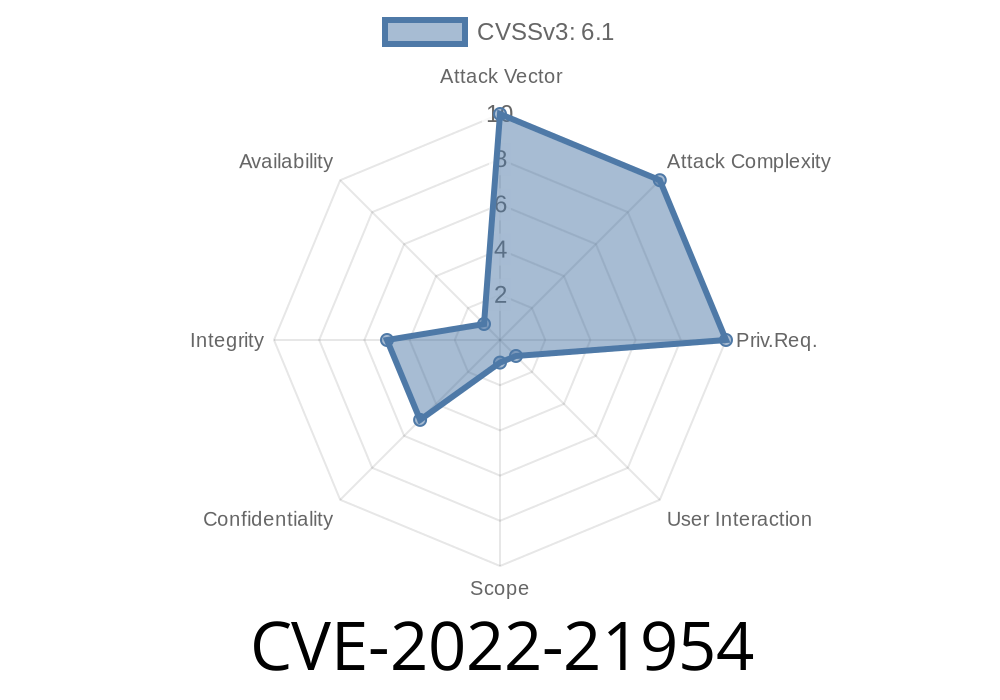
In early 2022, Microsoft patched a significant security bug affecting its Chromium-based Edge browser — cataloged as CVE-2022-21954. This vulnerability allowed attackers to elevate their privileges—meaning, if an attacker exploited this, they could run code or applications with higher permissions than originally allowed. Notably, CVE-2022-21954 is distinct from CVE-2022-21970, which covers different underlying issues.
Understanding the nuts and bolts of this flaw is crucial for anyone securing enterprise or personal systems running Edge. Let’s break down what made CVE-2022-21954 dangerous, illustrate it with sample code, review exploit mechanics, and cover how to stay protected.
1. What is CVE-2022-21954?
According to Microsoft’s official advisory:
> "_An elevation of privilege vulnerability exists when Microsoft Edge (Chromium-based) improperly handles certain objects in memory. An attacker who successfully exploited this vulnerability could run arbitrary code in the context of the current user._"
In plain language: this kind of bug lets bad actors manipulate memory in such a way that they can trick the browser (and, by extension, the operating system) into giving them more power than they’re supposed to have.
Why Is It Dangerous?
- Privilege escalation: Attackers can go from limited user capabilities to administrator-level controls, potentially giving them free rein.
- Drive-by exploits: Visiting a malicious website might be all an attacker needs to weaponize this bug if you’re running a vulnerable Edge version.
2. Technical Details
The CVE-2022-21954 bug stems from the way Edge handled objects in memory. When memory isn’t managed properly, crafty hackers can manipulate data structures to change program execution—sometimes injecting their own code.
In this case, the vulnerability is present in the Chromium codebase, which means it’s close in nature to some older Google Chrome flaws. Often, issues like use-after-free bugs, incorrect permissions, or improper sandboxing are the root cause.
Sample Exploit Skeleton
Below is a simplified pseudo-JavaScript snippet that illustrates how memory corruption in the browser can sometimes be primed (note: this is not an actual exploit, but shows the logic that’s often used in browser privilege escalation):
// Step 1: Spray the heap with typed arrays
let arr = [];
for (let i = ; i < 10000; i++) {
    arr.push(new Uint32Array(1024));
}

// Step 2: Trigger the vulnerability (e.g., via a crafted DOM operation)
document.body.innerHTML = "<div id='vuln'></div>";
// Vuln triggers improper memory handling

// Step 3: Use the corrupted object to access or overwrite privileged data
try {
    // Artificial example: escalate from standard JS to OS calls
    let result = arr[500].evilMethod(); // not native, for illustration
    if (result) {
        // Gain code execution or higher privilege actions here
    }
} catch(e) {
    console.log("Exploit failed, object not corrupted");
}
Note: Actual exploitation requires deep knowledge of the internals of Chromium, memory mapping, and in-the-wild bug techniques. The above is for demonstration only.
3. How Was This Exploited in the Wild?
While there are no known public exploits for CVE-2022-21954 at the time of patching, vulnerabilities like this are prime targets for:
- Browser-based attacks: Malicious ads, compromised websites, or phishing emails pushing users to click on weaponized links.
- Malware delivery: Privilege escalation paves the way for installing persistent malware or ransomware.
Some researchers have produced proof-of-concept (PoC) exploits for similar Chromium issues by combining a memory corruption bug with sandbox escape and OS-level privilege escalation.
4. Original References
- Microsoft Security Update Guide: CVE-2022-21954
- Edge Release Notes on Security Updates
- Chromium Security
What Should You Do?
- Update Edge: Always run the latest version. Microsoft and Chromium quickly patch such issues, and auto-updates help you stay safe.
- Apply OS Patches: Run Windows Update regularly, as browser security and OS-level security are tightly linked.
How Microsoft Fixed It
Microsoft adjusted how Edge handles memory when working with certain objects, closing the loophole that allowed for privilege escalation.
6. Takeaways and Summary
CVE-2022-21954 stands as yet another example of how complex and risky browser security is—even for modern browsers based on open source like Chromium. While details on the exact exploitation are limited (as is often the case to protect users), this vulnerability could allow an attacker to perform serious actions on your system.
If you want to dig further, check out these resources
- MSRC Advisory for CVE-2022-21954
- Windows Security Blog
Timeline
Published on: 01/11/2022 21:15:00 UTC
Last modified on: 01/20/2022 19:31:00 UTC