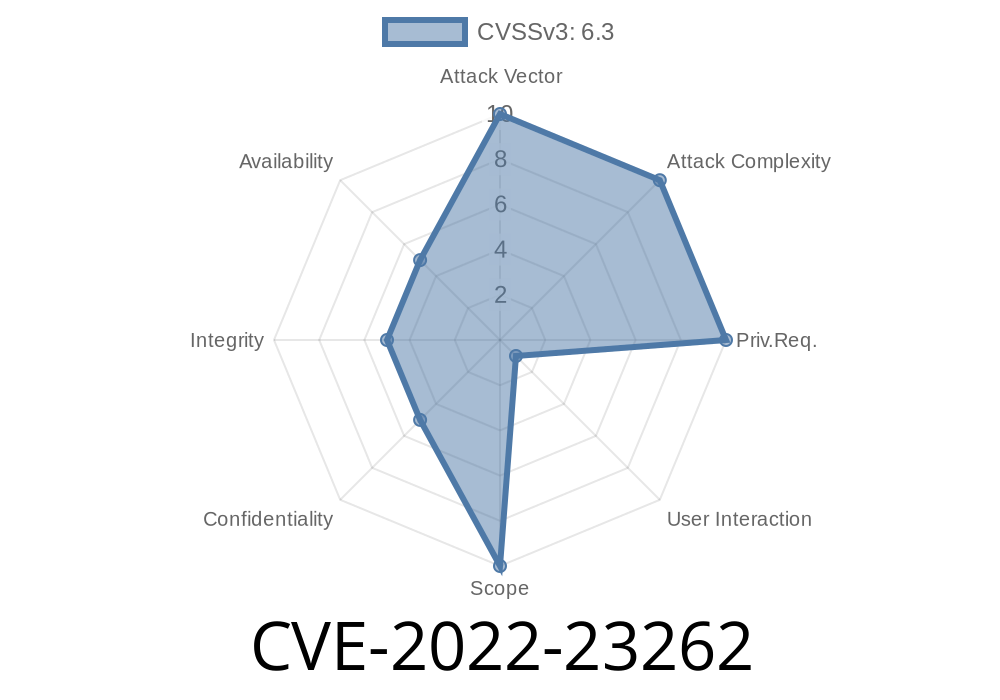
In early 2022, Microsoft Patch Tuesday brought attention to a series of vulnerabilities in their Chromium-based Edge browser. Among these, CVE-2022-23262 stood out for its potential to let attackers gain higher system privileges through a flaw in the privilege management of Microsoft Edge. Unlike its sibling CVE-2022-23263, CVE-2022-23262 targets a different mechanism and presents a unique security risk.
In this post, we'll break down what CVE-2022-23262 is, how it can be exploited, and what you can do to stay safe. We’ll look at sample code and the logic behind real-world exploitation, all in simple terms.
What Is CVE-2022-23262?
CVE-2022-23262 is classified as an "Elevation of Privilege" vulnerability. In regular use, Microsoft Edge should run with limited permissions, isolating your browsing activity from sensitive system areas. However, this vulnerability lets an attacker *"escape"* these boundaries and run code with higher permissions than intended—potentially allowing them to install software, alter data, or create new administrative accounts.
Reference:
- Microsoft Security Guide for CVE-2022-23262
The Core Issue
Microsoft Edge has a sandbox that keeps web content (like JavaScript and page scripts) from accessing parts of your computer directly. CVE-2022-23262 comes from improper handling of certain inter-process communications (IPC) between Edge's browser processes. If this IPC is not validated correctly, a malicious webpage could trigger code in the *browser broker process*—which runs with higher Windows privileges.
The Exploitation Logic
An attacker would create a web page with crafted scripts to send dangerous messages through Edge's IPC channel. If not properly validated, Edge’s broker process might execute attacker-controlled code.
JavaScript (runs in attacker’s webpage)
// Example: Exploit attempt using crafted IPC message
let evilPayload = {
  type: "PrivilegedRequest",
  command: "run",
  arguments: [
    "cmd.exe",
    "/c net user hacker Pa$$wrd123 /add"
  ]
};

// Simulating IPC message via Edge extension or message channel
window.postMessage(evilPayload, "*");
Explanation: In real life, the attacker would exploit some accessible API or message-passing mechanism that reaches the broker. Here, we mimic sending a message to trigger a privileged action, such as creating a new user.
*Note: Microsoft patched the real flaw, so this example cannot be used on fully updated systems and is shown for educational purposes only.*
Why This Is Dangerous
- Silent exploitation: The attack can be carried out just by tricking users into visiting a malicious website.
- Escalated privileges: Attackers could break out of the browser sandbox and run code as a more privileged user.
Update Microsoft Edge immediately.
Ensure you’re using version mentioned in the Microsoft advisory or newer.
Original References
- Microsoft Security Guidance on CVE-2022-23262
- NVD Entry for CVE-2022-23262
Conclusion
CVE-2022-23262 highlights the importance of good sandboxing and privilege checks inside browsers. Microsoft responded fast, but the episode stresses why browsers must always be kept up to date. Attackers are always searching for these types of vulnerabilities, where they can escape restrictive environments and take control.
If you’re a sysadmin or user, check your Edge version today—and remember that other vendors using Chromium might have had related issues, so keep everything patched.
Stay safe and browse wisely! If you have questions about CVE-2022-23262 or similar vulnerabilities, leave a comment below.
Timeline
Published on: 02/07/2022 17:15:00 UTC
Last modified on: 02/12/2022 01:29:00 UTC