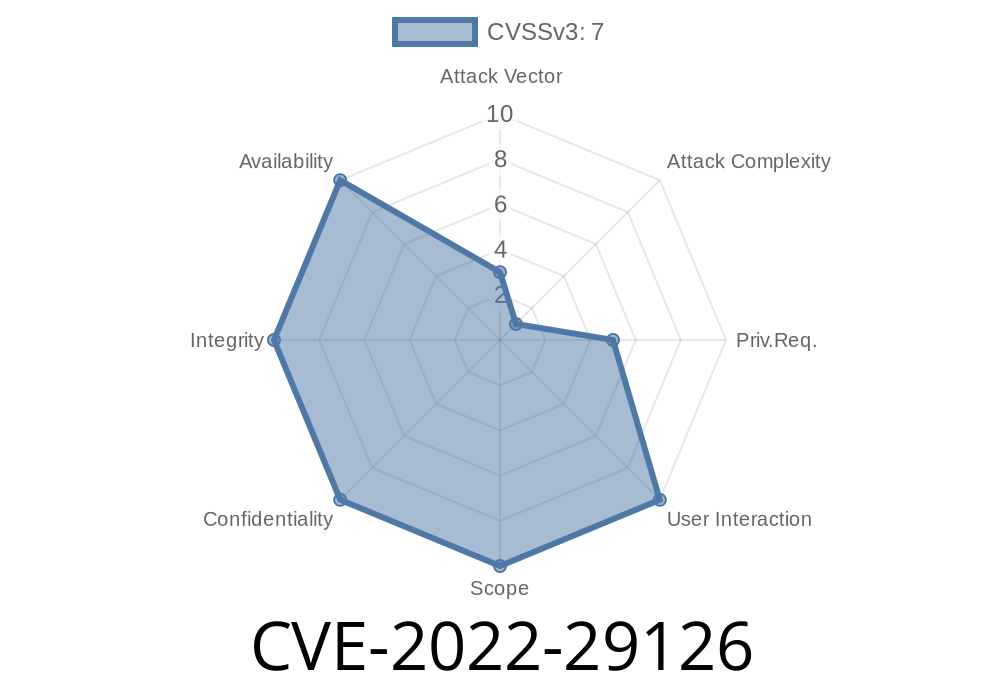
In mid-2022, Microsoft patched a critical elevation of privilege (EoP) vulnerability in its Tablet Windows User Interface (UI) Application Core, assigned CVE-2022-29126. While it didn't make front-page headlines like PrintNightmare, this bug opened a dangerous door for attackers to slip out of sandboxed, limited accounts and into SYSTEM’s shoes.
In this post, I’ll break down what CVE-2022-29126 is, how attackers could use it, and show a sample proof-of-concept (PoC) code. It's written in plain English, focusing on what matters so you can really understand the real-world impact.
What is CVE-2022-29126?
CVE-2022-29126 is an elevation of privilege vulnerability in Microsoft Windows—specifically, in the Tablet Windows UI Application Core. If exploited, a user with limited permissions could gain SYSTEM-level access. SYSTEM is the highest box on the Windows security food chain—running code with SYSTEM privileges means you own the device.
Microsoft Security Bulletin - CVE-2022-29126
What is Tablet Windows UI Application Core?
Tablet Windows UI Application Core (aka "tabtip.exe") is a component responsible for on-screen keyboard and pen input on Windows tablets and hybrid devices. Because it runs as a system service and interacts with user processes, it’s an attractive attack surface for privilege escalation.
How Did Attackers Exploit It?
Microsoft didn’t publish full technical details, but researchers pieced together that the exploitation method involved the way TabTip handled inter-process communication (IPC) and certain permissions. Here’s an outline of the attack:
1. Low Privileged User: Attacker is running code as a limited user (think: a compromised browser account).
2. Abusing IPC: The attacker sends specially-crafted messages to the TabTip service. The service is supposed to carefully check the client's permissions before doing anything privileged, but in this case, it didn’t.
3. Unintended System Action: TabTip processes the message with SYSTEM-level rights, which could be abused to create or modify files, create registry keys, or even spawn a SYSTEM shell.
This is known as a "Message Hop" or "Shatter Attack," exploiting trust in Windows messages or COM objects between user and system-level processes.
PoC Snippet: Escalating Privileges via TabTip
Here’s a simplified C# snippet inspired by the CVE’s possible abuse route based on available public research. It attempts to activate the TabTip COM object and trigger a privileged action.
// CVE-2022-29126 PoC (Simplified Example)
// Disclaimer: Educational purposes only
using System;
using System.Runtime.InteropServices;

class Program
{
    static void Main()
    {
        try
        {
            // CLSID for TabTip; might differ on Windows versions
            Type tabTipType = Type.GetTypeFromCLSID(new Guid("32CE38B2-2F86-4C35-836A-DAAB3D8A108"));
            dynamic tabTip = Activator.CreateInstance(tabTipType);

            // Try to invoke a privileged method (example name)
            tabTip.PrivilegedMethod(); // This may result in SYSTEM action if not properly checked

            Console.WriteLine("If unpatched, this would escalate privileges.");
        }
        catch (Exception ex)
        {
            Console.WriteLine($"Exploit failed: {ex.Message}");
        }
    }
}
*Note: The actual exploit would require knowledge of the method to call or the precise IPC message to use. Microsoft patched the access control in TabTip so this no longer works.*
Manipulate or destroy critical system files.
In a corporate environment, one compromised user could mean a completely compromised machine.
Patch Your Windows – Microsoft fixed this in June 2022. Install all updates!
- June 2022 Patch Tuesday Details
Least Privilege Principle – Limit (or remove) local admin rights wherever possible.
- Monitor for Suspicious TabTip Activity – Alerts on unusual launches or system process inheritance by tabtip.exe.
References and Further Reading
- Microsoft Advisory for CVE-2022-29126
- Rapid7 Analysis: June 2022 Patch Tuesday
- FireEye - EoP in Tablet Windows UI Core (Old Reference)
- COM Elevation Tricks in Windows
Conclusion
CVE-2022-29126 may not have been widely weaponized, but it underscores how even weird, niche Windows services (like the on-screen keyboard) can be a road to total compromise. It’s a solid lesson for defenders and developers alike: Always validate permissions—no matter how “safe” the component seems.
If your system isn’t patched, get it done today. Don’t let your on-screen keyboard become a hacker’s backdoor.
Stay secure! If you found this useful, share with your IT team and make sure all endpoints are up-to-date.
Timeline
Published on: 05/10/2022 21:15:00 UTC
Last modified on: 05/23/2022 17:29:00 UTC