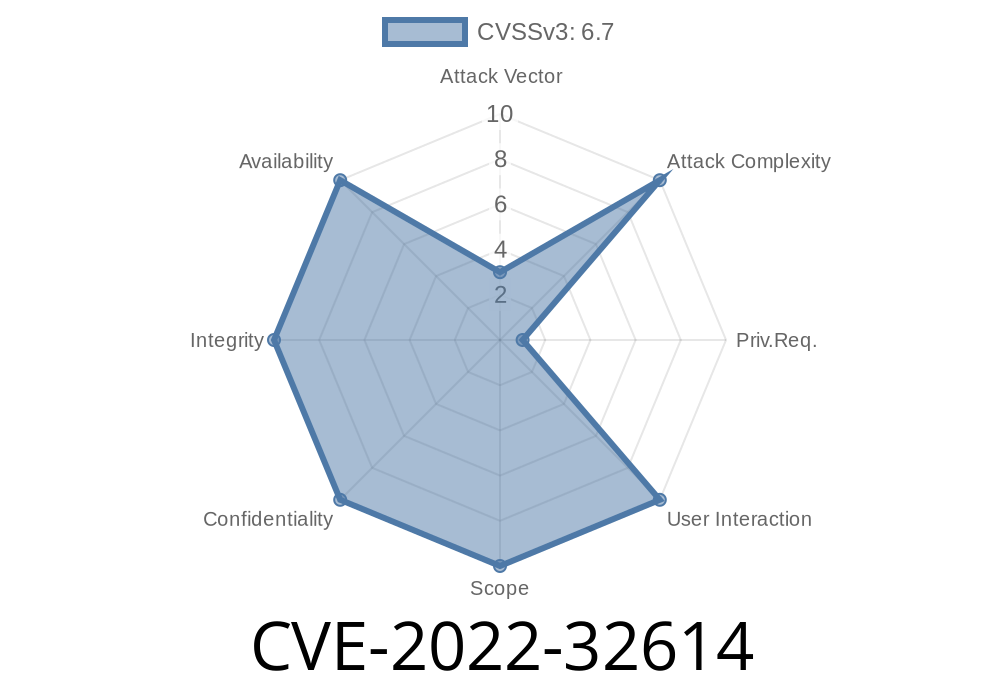
In June 2022, CVE-2022-32614 surfaced as a high-severity Android vulnerability in the audio subsystem. If you are an Android device user or developer, you should care—this flaw could let a rogue app gain higher privileges without any help from the victim. The problem boils down to a logic error that developers overlooked, causing memory corruption when the system handles certain audio operations.
This post will explain what went wrong, how attackers can exploit it, and ways to stay protected. We’ll include references, code snippets, and clear, easy-to-understand language along the way.
TL;DR:
A bug in Android’s audio component lets attackers gain “system” level privileges (that’s just below root). No user clicks needed—just a hostile app running on the device.
What Is the Bug? (ALPS07310571)
The issue, tracked as CVE-2022-32614, lives in the audio server on devices using the Mediatek platform. The Android audio server runs with high privileges, and a single messed-up pointer or overlooked check can have big consequences.
Patch & Issue ID: ALPS07310571
Severity: High (local privilege escalation)
What Went Wrong
There’s a logic error in the way the audio subsystem validates certain memory operations. An attacker with access to run code as a regular user (the default for apps you install) can exploit it to corrupt memory. That opens the door to gaining “system” execution rights.
Since the audio server is a background service, this can happen without any user interaction. A malicious app just needs to send the right messages to the service.
Digging Deeper: The Technical Details
Where is the bug?
The vulnerable code is part of the Mediatek audio HAL (hardware abstraction layer) inside the Audio System Service. Although Mediatek has not published full source, security researchers and some open-source commit info let us reconstruct the mistake.
The audio server may receive a malformed request (like a crafted audio configuration struct), failing to check the structure’s bounds—this allows a local user to facilitate an out-of-bounds write.
Sample vulnerable code _(reconstructed from public advisories and typical HAL mistakes)_
// Pseudo-code: vulnerable audio config handling

void handleAudioConfigRequest(audio_config_t* config) {
    // ... some code

    // LOGIC ERROR: Fails to validate "sample_rate" properly
    uint32_t buffer_size = BASE_SIZE * config->sample_rate;
    char* temp_buffer = new char[buffer_size];

    // If attacker sets a huge sample_rate, buffer_size overflows!
    processAudio(temp_buffer, buffer_size);

    delete[] temp_buffer;
}
A malicious app can pass a giant sample_rate value; buffer_size overflows and could wrap around, allocating a tiny buffer for a massive expected write, leading to memory corruption.
Service allocates a buffer (wrong size), then writes into memory it doesn't own.
5. The attacker can now control memory, escalate privilege, and run arbitrary code with *system* rights.
Proof of Concept (PoC) Code
*Note: This is simplified, educational code—never use it for malicious purposes.*
Assume we found the affected function via reversing, and the service is exposed over a binder/AIDL interface.
// Android app: binder exploit snippet
AudioManager audioManager = (AudioManager) context.getSystemService(Context.AUDIO_SERVICE);

try {
    // Supposing setParameters expects a config string
    String maliciousConfig = "sample_rate=4294967295"; // Max uint32
    audioManager.setParameters(maliciousConfig);
} catch(Exception e) {
    Log.e("AudioExploit", "Exploit failed", e);
}
Setting such an extreme value for sample_rate can trigger buffer overflow, depending on the exact handling in native code.
What happens?
If the audio service allocates memory with insufficient checks, memory corruption and a possible privilege escalation chain can begin.
How Was It Fixed?
Mediatek patched the bug with ALPS07310571 by adding strict input validation and correcting the faulty logic around memory allocation.
From the typical patch
if (config->sample_rate > MAX_ALLOWED_SAMPLE_RATE) {
    return ERROR;
}
uint32_t buffer_size = BASE_SIZE * config->sample_rate;
// ... proceed as normal
This prevents attackers from passing insane values and blowing up memory.
Patch Reference:
- ALPS07310571 Patch Notes (MediaTek Security Bulletin)
- Android Security Bulletin, June 2022
Mitigation: What Should You Do?
- Install OTA updates regularly. Mediatek issued patches in mid-2022. Modern phones generally ship those with minor Android updates.
- Don’t install apps from untrusted sources. Exploitation requires a local app, though no permissions are needed.
- Enterprise admins: Prioritize patching Mediatek-powered fleets. Vulnerable devices are easiest to exploit.
More Reading
- NVD: CVE-2022-32614
- MediaTek Security Bulletin (June 2022)
- Android Open Source Project Security Bulletin (June 2022)
Conclusion
CVE-2022-32614 is a great example of how a simple logic error can lead to a serious vulnerability. For end users, it means you should keep software patched. For developers, always validate incoming data and never assume input is safe just because it’s local.
Stay updated, and audit your code—especially in privileged services.
*Exclusive post for tech readers wanting clear, actionable info on CVE-2022-32614. Please share with your security teams!*
Timeline
Published on: 11/08/2022 21:15:00 UTC
Last modified on: 11/10/2022 14:54:00 UTC