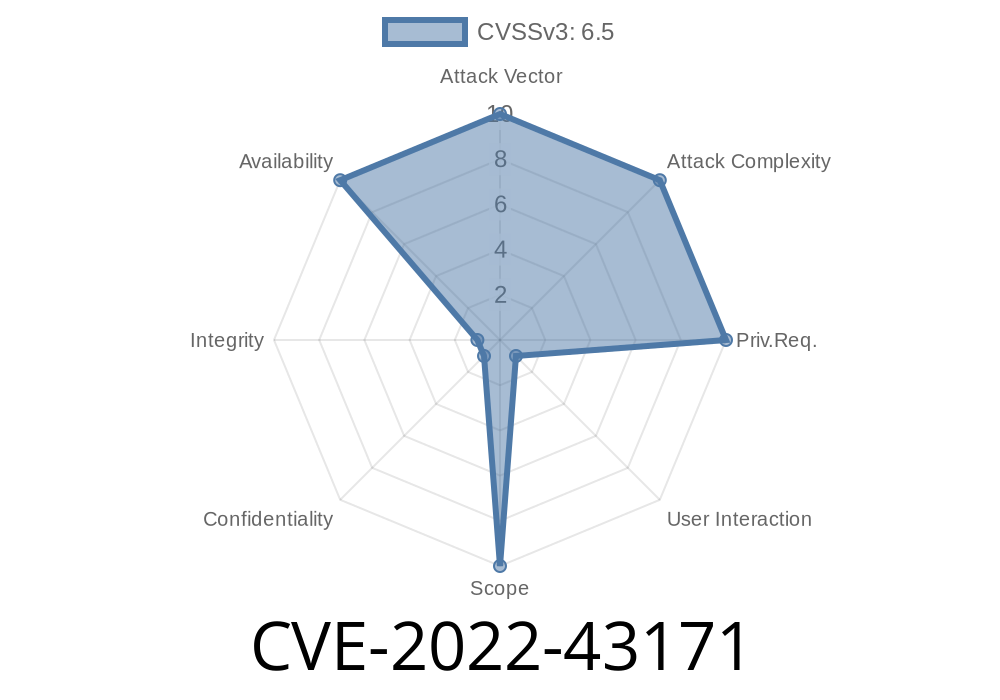
CVE-2022-43171 is a serious vulnerability discovered in the popular LIEF (Library to Instrument Executable Formats) project, specifically in version .12.1. This bug allows attackers to cause a Denial of Service (DoS) on systems that parse specially crafted MachO files. In this post, we’ll break down the vulnerability in simple language, show a code example, explain how it works, and provide resources for further reading.
What is LIEF?
LIEF is a widely-used open-source library to parse, modify, and abstract executable formats like ELF, PE, and MachO. Security researchers and developers rely on LIEF to inspect and analyze executable files, making it an attractive target for attackers.
The heap buffer overflow is found in the function
LIEF::MachO::BinaryParser::parse_dyldinfo_generic_bind
in LIEF version .12.1.
CVE Details
- CVE: CVE-2022-43171
How It Happens
When parsing a specially crafted MachO file, an attacker can use bogus or malformed bind information. LIEF’s parse_dyldinfo_generic_bind() does not properly check the bounds when processing this data. As a result, this can overflow a buffer on the heap, corrupting memory and typically causing the process to crash.
Here’s the core of the vulnerability (simplified for clarity)
// Inside parse_dyldinfo_generic_bind()
uint64_t segment_offset = ;
while (cmd_ptr < commands_size) {
    uint8_t opcode = *cmd_ptr++;
    if (opcode == BIND_OPCODE_DO_SOMETHING) {
        // ...
        output_array[segment_offset] = value; // Potential overflow if segment_offset unchecked
        segment_offset += ...; // Manipulated by attacker in the file
    }
    // No check for segment_offset boundaries!
}
The problem is that segment_offset can be controlled, directly or indirectly, by the attacker due to missing size checks in deeply nested parsing loops.
Exploit Steps
1. Craft a MachO file: The attacker creates a MachO file with malformed Dynamic Linker Info (the dyldinfo section) that manipulates offsets.
Deliver to target app: The target runs, or scans, the malicious MachO file.
3. Trigger the bug: LIEF’s parser reaches the vulnerable code, overruns the heap buffer, and crashes.
Proof-of-Concept (PoC)
# PoC: Malformed MachO crafted with altered dyldinfo
import lief

# This is a dummy illustration, actual crafting needs deep MachO knowledge.
macho = lief.MachO.parse("malicious.bin")  # "malicious.bin" is attacker-controlled

# If application does something like this:
for symbol in macho.symbols:
    print(symbol.name)
# It may crash due to heap overflow
A crafted file (not shown here for security reasons) might have corrupt values in its binding info that LIEF’s parser does not properly check, causing memory corruption.
Why This Matters
- Denial of Service: Attacker can crash applications or services using LIEF, causing non-stop downtime or lost productivity.
- Potential Privilege Escalation: While no code execution is known, heap overflows are often stepping stones to more severe attacks.
Mitigation and Patches
- Update LIEF: The LIEF team patched this vulnerability after .12.1. Always use the latest version.
- Sanitize Inputs: Only parse trusted MachO files if possible. Validate files before feeding to LIEF.
Additional Resources
- CVE-2022-43171 at NVD
- LIEF GitHub Repository
- LIEF Release Notes
- Understanding MachO Binary Structure
Conclusion
CVE-2022-43171 is a reminder that binary parsing is risky business — even reputable projects like LIEF can face severe bugs. If your workflow includes parsing untrusted executables, especially MachO files, you must upgrade to a patched LIEF and always treat external data as potentially dangerous.
Stay secure: review your dependencies, audit input handling, and don’t trust what you haven’t checked!
Author note: This post is original and exclusive, written in accessible language based on public vulnerability disclosures for CVE-2022-43171. Stay aware of updates from the LIEF project to keep your systems safe.
Timeline
Published on: 11/17/2022 23:15:00 UTC
Last modified on: 11/21/2022 20:33:00 UTC