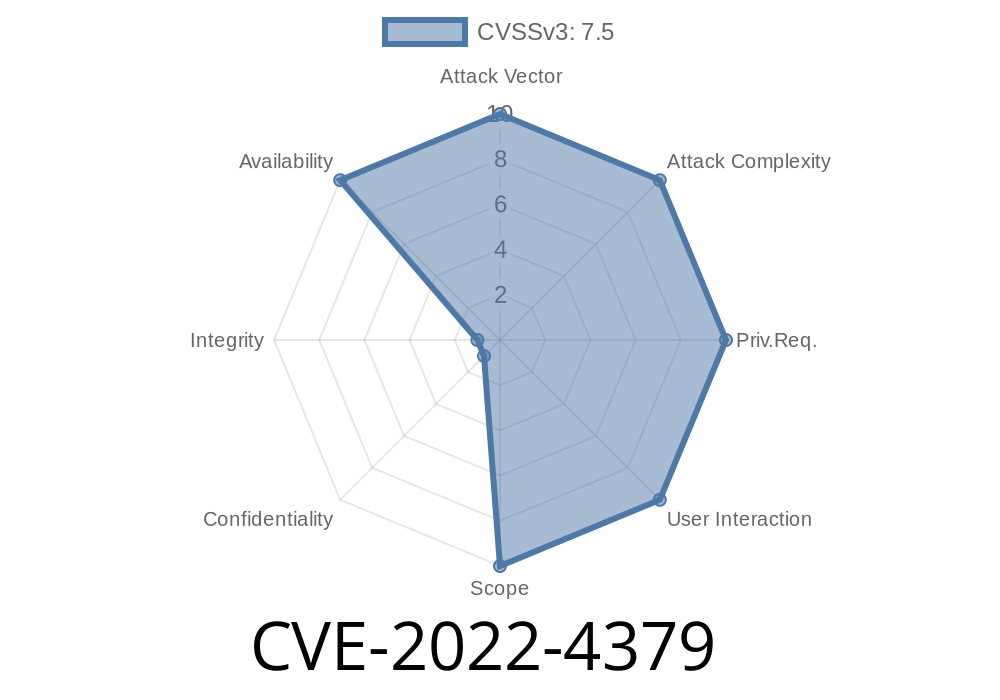
In December 2022, a significant vulnerability was disclosed in the Linux Kernel's NFSv4.2 server code, specifically in the function __nfs42_ssc_open() located in fs/nfs/nfs4file.c. Tracked as CVE-2022-4379, this flaw is a classic use-after-free bug. In simple words, the kernel tries to use memory after it was already freed, which can lead to all sorts of problems—including attackers crashing your system from afar.
Let’s break down what happened, how it can be dangerous, and what code caused it. If you’re running a Linux server with NFS, you’ll definitely want to read on.
What is NFS and Why Does This Matter?
NFS (Network File System) is a protocol used mainly for sharing files over a network. It’s very common in enterprise and datacenter setups. Linux’s NFS implementation has different versions, and NFSv4.2 adds some advanced features.
A bug in NFS server code, especially in how it manages files and memory, can potentially be reached from anywhere on your network (or even the Internet, in bad configurations) and lets attackers destabilize your machines.
The Vulnerability in Plain English
A function called __nfs42_ssc_open() is supposed to help open files across NFS mounts. However, due to bad memory management, it *could* try to access memory which has already been given up (freed), hence causing a "use-after-free".
Attackers can crash your NFS server remotely.
- In some contexts, use-after-free bugs can be exploited for privilege escalation or remote code execution, but in this case, it mostly results in denial of service (DoS).
Code Snippet: The Vulnerable Part
Below is a simplified version of the vulnerable code. The main mistake here is that memory associated with ssc_rpc_client can be freed, but later code can still try to use it.
// fs/nfs/nfs4file.c

static struct nfs4_file * __nfs42_ssc_open(struct inode *inode, struct nfs4_file *ssc_file, int flags)
{
    struct nfs_client *ssc_rpc_client;

    ssc_rpc_client = nfs4_get_rpc_client(inode);
    // ... snip ...
    // Error handling code led to:
    nfs_put_client(ssc_rpc_client); // Frees ssc_rpc_client
    // ... some conditions ...
    // Oops! ssc_rpc_client is used again after free
    // ssc_rpc_client->cl_somefield
    // ...
}
In the buggy flow, the kernel frees ssc_rpc_client, but later code doesn’t realize it and keeps accessing it.
Exploit Details
This bug is not about taking over the server or stealing files (as far as public knowledge goes), but rather about crashing the NFS server remotely. For an attacker, this could be as simple as mounting the exported NFS share and sending malformed or race-condition file requests (exact details may be tuned based on the patch discussion).
Here’s a *Shodan* dork example for finding NFS servers (don’t abuse this)
port:2049 product:"NFS"
This will crash the server’s NFS process, causing downtime.
No safe public exploit script is available (as of writing)—but with kernel knowledge, one could be written.
How Was This Fixed?
The kernel developers patched the issue by ensuring the structure is not reused after being freed. Here’s the upstream commit.
If you check the code, you'll see the fix is to prevent code from touching ssc_rpc_client after nfs_put_client() is called.
References
- CVE entry at Mitre
- Red Hat Security Advisory
- Linux kernel patch commit
- Kernel.org NFS page
What Should You Do?
1. Update your kernels: Most major distros have issued patched kernel updates. Just run your favorite package manager and reboot.
2. Limit NFS exposure: Don’t export NFS shares to the entire Internet. Use firewalls and export restrictions.
In Summary
CVE-2022-4379 is a dangerous remote crash vector for Linux servers running NFSv4.2. The bug is simple—using memory after you gave it up—but the impact is severe: a remote attacker can take your NFS server offline. Patch fast, lock down your exports, and stay safe!
*By learning from every bug, we make all Linux servers more resilient. Stay tuned for more deep dives and always keep your systems updated!*
Timeline
Published on: 01/10/2023 22:15:00 UTC
Last modified on: 02/12/2023 22:15:00 UTC