---
Keycloak is a popular open-source identity and access management tool. Many organizations use it to handle login, Single Sign-On (SSO), and user authentication using industry standards like OpenID Connect (OIDC). But did you know a flaw discovered in early 2023 (tracked as CVE-2023-0264) could let attackers impersonate users and take over their sessions? Let’s break down what this vulnerability is, how it works, and what you can do to stay safe.
What Is CVE-2023-0264?
CVE-2023-0264 is a vulnerability in Keycloak’s OpenID Connect user authentication. In simple terms: Keycloak sometimes doesn’t properly check all the information when users log in. This flaw means an attacker, who already has access to some session data from the same Keycloak "realm," could use that info to pretend to be another user.
Official Advisory:
- Red Hat security advisory
- Keycloak Issue Tracker (#17692)
To exploit this vulnerability, an attacker needs two things
1. Be an authenticated user in the same realm (a realm is like a workspace or grouping of users in Keycloak).
2. Access to sensitive authentication data from another user’s session (e.g., intercepted through logs, a Cross-Site Scripting (XSS) bug, or social engineering).
Once the attacker has that *victim's request data* (such as authentication codes or state parameters from a login request), they can craft a new request to Keycloak using the stolen information. Because of the flaw, Keycloak may accept this data and generate a session token for the attacker as if they were the victim, thus allowing impersonation.
Simple Exploit Flow
1. Attacker logs in to Keycloak in the same realm as the victim.
2. Attacker gets authentication request or response data from the victim (through other means).
3. Attacker sends a crafted OIDC authentication request to Keycloak, mixing in data from the victim.
4. Keycloak fails to correctly verify, and issues a session or access token for the victim's account to the attacker.
Example Exploit (Code Snippet)
Below is a simplified (Python) example to show how someone could try to replay a state or code value to get an access token. This is for educational purposes only!
import requests

# This is the endpoint from your Keycloak server
token_url = "https://your-keycloak-server/auth/realms/demo/protocol/openid-connect/token";

# Let's say the attacker has leaked the victim's code and client info
leaked_code = "leaked_code_from_victim"
client_id = "demo-app"
client_secret = "supersecret"
redirect_uri = "https://yourapp.example.com/callback";

# The attacker tries to exchange the victim's code for an access token
data = {
    'grant_type': 'authorization_code',
    'code': leaked_code,
    'client_id': client_id,
    'client_secret': client_secret,
    'redirect_uri': redirect_uri
}

response = requests.post(token_url, data=data)

if response.status_code == 200:
    print("Got access token as victim!")
    print(response.json())
else:
    print("Failed to get access token")
*Note: Normally, Keycloak should stop this kind of replay. This vulnerability is about broken validation that may let it through under certain conditions.*
Why Is This a Big Deal?
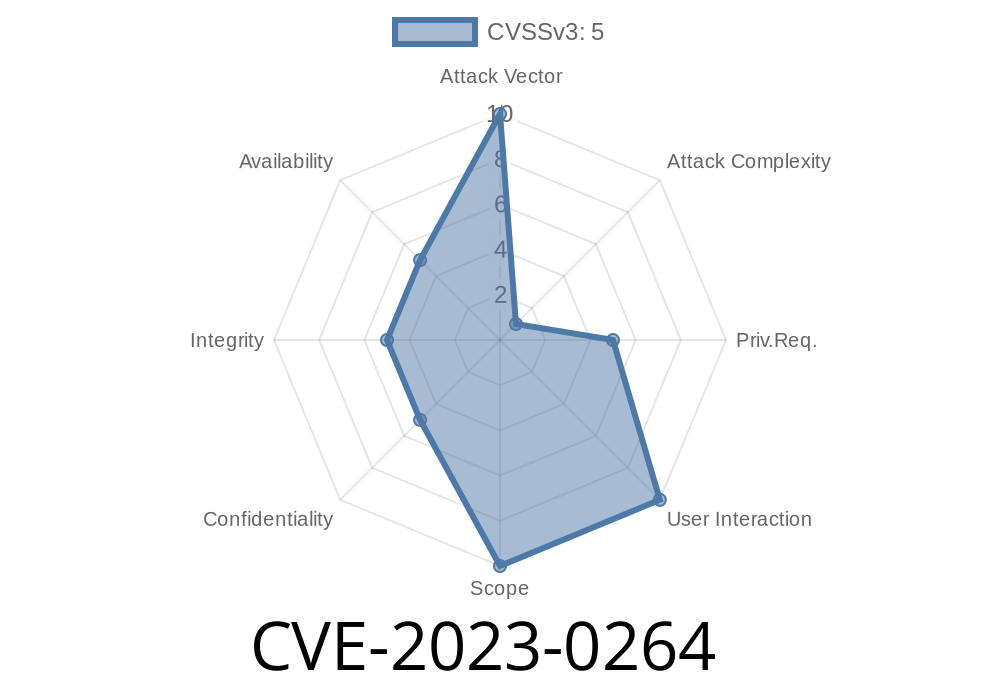
This bug affects confidentiality (others may see your data), integrity (someone else can take actions as you), and availability (session hijacking could be used to lock people out).
Patch Keycloak:
Always update to the latest version that contains fixes for CVE-2023-0264.
References & Further Reading
- Red Hat Security Advisory for CVE-2023-0264
- Keycloak Issue Tracker (#17692)
- Keycloak Documentation
Final Thoughts
CVE-2023-0264 shows how even trusted, modern authentication systems can have subtle flaws that allow attackers to bypass normal protections. If you’re using Keycloak for your apps or organization, take this as a reminder to patch promptly and review security best practices for all authentication flows.
Timeline
Published on: 08/04/2023 18:15:00 UTC
Last modified on: 08/14/2023 18:14:00 UTC