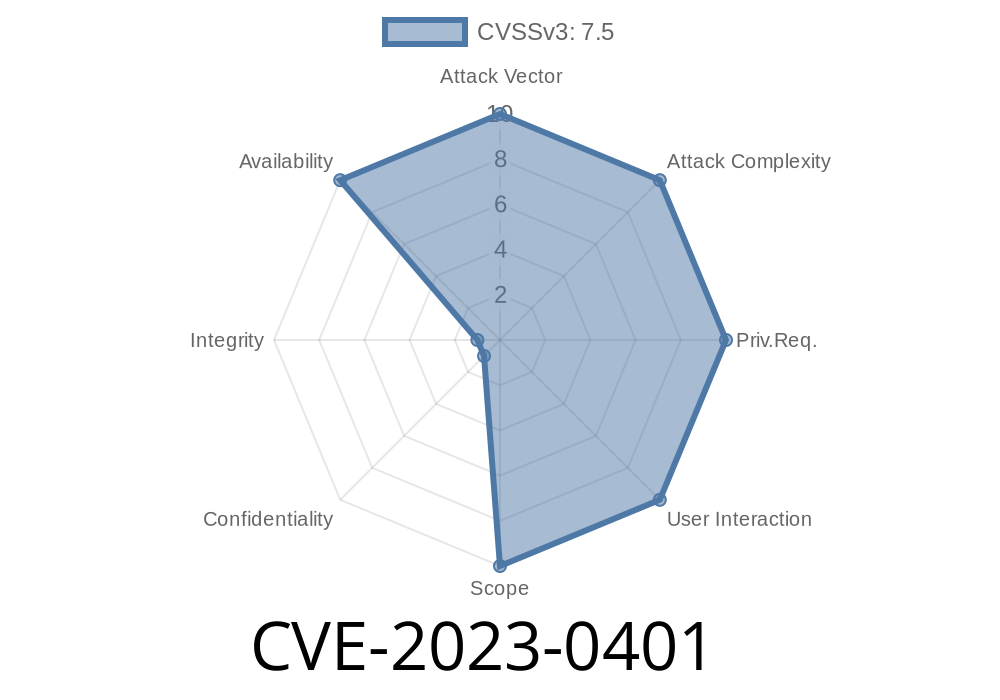
In early 2023, the security community was alerted to a serious vulnerability in OpenSSL, cataloged as CVE-2023-0401. This bug can cause applications processing PKCS7 signed or signedAndEnveloped data to crash, simply because of a missed check when initializing digest algorithms. Below, we’ll break down exactly what the vulnerability is, how it happens, who’s affected, and how an attacker could exploit it—with code snippets and references to official sources.
What is CVE-2023-0401?
CVE-2023-0401 is a flaw in OpenSSL’s PKCS7 handling code. This bug allows a NULL pointer to be dereferenced during signature verification, particularly when OpenSSL knows the hash algorithm used, but its implementation is *not* available. This can occur if the legacy provider isn’t loaded, or in FIPS-enabled environments where some algorithms are purposely restricted.
The vulnerability lies in the PKCS7 and SMIME processing routines, which are often used to verify digital signatures on sensitive data—think S/MIME (secure email), document signatures, and time-stamping.
It calls a function to initialize the desired hash algorithm (e.g. MD5, SHA1, SHA256).
- If the algorithm is known, but its implementation isn't available (because the legacy provider is not loaded, for example), the initialization function returns NULL.
OpenSSL fails to check this NULL return value.
- Later, OpenSSL tries to use the result, dereferencing a NULL pointer, likely causing a crash (segmentation fault).
Where Is the Bug?
The bug lives in OpenSSL’s PKCS7 code, notably in functions like PKCS7_signatureVerify(), PKCS7_dataFinal() and inside SMIME processing. The vulnerable pattern boils down to this kind of code:
EVP_MD_CTX *mdctx = EVP_MD_CTX_new();
const EVP_MD *md = EVP_get_digestbyobj(obj); // Get hash algorithm

if (mdctx == NULL || md == NULL) {
    // Should handle error here...
}

// Digest init - may return  if unavailable!
if (!EVP_DigestInit_ex(mdctx, md, NULL)) {
    // MISSING: Check for error here!
}

// ... Further processing, eventually using mdctx
If EVP_get_digestbyobj(obj) can’t provide an implementation of the requested digest (due to missing legacy provider, for example), EVP_DigestInit_ex() will fail—but because the error isn’t handled, the pointer is used later, causing problems.
Triggering the Bug
An attacker could craft or send a PKCS7-signed message that uses an old or unsupported hash algorithm (for which the implementation isn’t loaded). When a vulnerable OpenSSL application tries to verify the signature, it crashes.
Here’s how an attacker might weaponize this
- Denial-of-Service (DoS): By sending malicious signed data, attackers can crash email servers, document signing gateways, or any app calling the vulnerable functions.
- Target Scope: Apps using SMIME_read_PKCS7(), PKCS7_verify(), or Time-Stamp Protocol (TS) verification, especially if not using up-to-date configs or have missing providers.
Let’s simulate what happens internally with pseudocode
// Simulate attempt to verify a PKCS7 signature with unavailable hash
const EVP_MD *md = EVP_get_digestbyname("md2"); // Not loaded by default
EVP_MD_CTX *mdctx = EVP_MD_CTX_new();

if (!EVP_DigestInit_ex(mdctx, md, NULL)) {
    // This should have been caught and handled!
    // But it's not, leading to NULL pointer dereference soon after...
}

// ... Application proceeds, disaster follows
To genuinely exploit this, an attacker would need to send PKCS7 data using a hash like MD2, MD5, or SHA1, while ensuring the server/app doesn’t have its provider loaded.
Not impacted: OpenSSL’s own TLS implementation does *not* call these vulnerable functions.
- Impacted: Third-party applications that process signed PKCS7 or S/MIME data, especially if they verify *untrusted* input (e.g. user-uploaded emails, signed documents).
- Common setups: Servers running with FIPS mode (restricts legacy algorithms), or those not explicitly loading OpenSSL’s legacy provider.
The Fix
OpenSSL released patches (see links below) that add the necessary checks around digest initialization, ensuring that NULL or failed digests cause a clean error instead of a crash.
References
- OpenSSL Security Advisory — 7 February 2023
- NIST National Vulnerability Database: CVE-2023-0401
- OpenSSL Commit Fixing CVE-2023-0401
Conclusion
CVE-2023-0401 is a classic example of how a missing error check, even in widely respected libraries like OpenSSL, can lead to stability and security issues. While it doesn’t allow code execution, it does allow attackers to crash systems that process untrusted PKCS7 or S/MIME data using OpenSSL. To stay safe, update OpenSSL and audit your code for robust error checking around cryptographic routines.
For more details, always check the official OpenSSL security advisories and track upstream changes.
Timeline
Published on: 02/08/2023 20:15:00 UTC
Last modified on: 02/24/2023 15:15:00 UTC