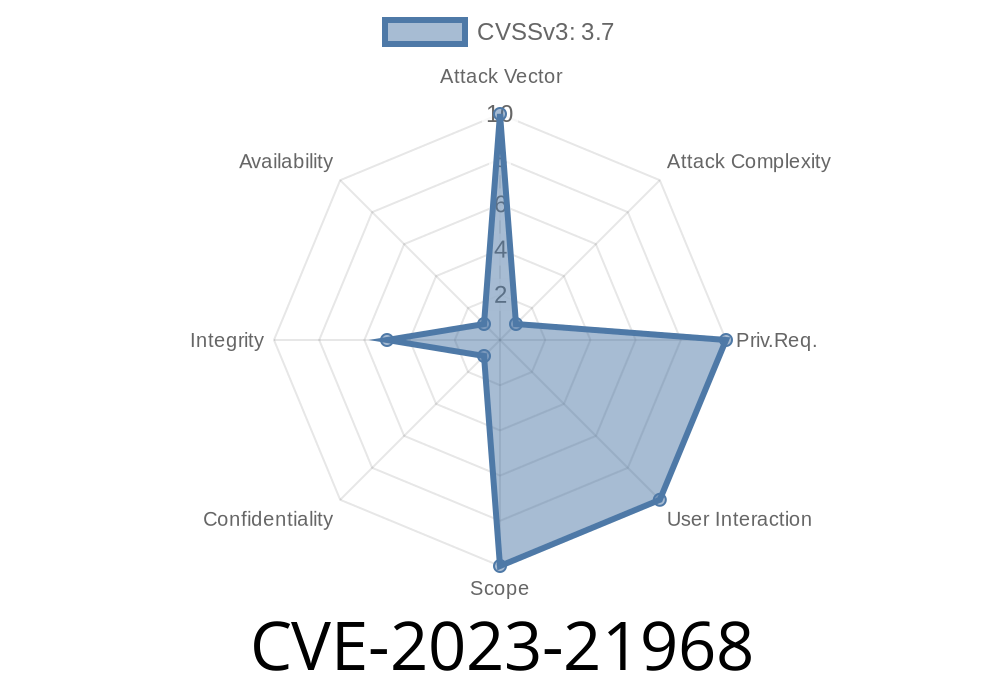
In March 2023, Oracle quietly patched a new vulnerability affecting its Java SE and GraalVM Enterprise platforms—tracked as CVE-2023-21968. With a CVSS score of 3.7, the bug didn't get much attention, but it’s a critical reminder about the risks of running untrusted Java code. In this exclusive deep dive, we break down what CVE-2023-21968 is, affected products, how it’s exploited, code-level insights, and what you should do to stay safe.
What Is CVE-2023-21968?
CVE-2023-21968 resides in the Libraries component of Oracle Java SE and Oracle GraalVM Enterprise Edition. The flaw could let an unauthenticated attacker—someone with no credentials—send data over the network and change data in your Java deployment, even if they don't have permission.
While exploiting the bug is considered *difficult* (attack complexity: high), the right conditions could let an attacker:
Delete some data
All without user authentication. This can affect key business logic or stored data.
> Important: This mostly threatens systems that use Java Web Start or applets (sandboxed applications) and accept input from the outside world.
Official References
- Oracle Critical Patch Update Advisory – March 2023
- NVD entry for CVE-2023-21968
22.3.1
*Update: Patches are available—see the Oracle advisory above.*
How the Flaw Works
The vulnerability is in the core Java Libraries—shared code used by many Java applications. In particular, the bug shows up for apps that:
How It Might Be Exploited
If an attacker can trick your app into loading a malicious Java class via an API, web service input, or even a network protocol, they might be able to change records in your system—even if the sandbox is supposed to prevent this.
> Realistic Scenarios
> - Malicious Java Web Start application
> - Evil Java applet loaded by a browser (rare in modern times, but legacy systems exist)
> - Web service endpoint that passes data into an API, which triggers the buggy library method
Code Snippet & Potential Exploit Path
Oracle hasn't published a public proof of concept. However, let's imagine how such a vulnerability would play out. Suppose your system exposes a service that takes input and processes it via Java libraries, believing the sandbox will block dangerous actions.
import java.net.*;
import java.io.*;

public class SandboxVulnerableExample {
    public static void main(String[] args) throws Exception {
        // User submits URL for remote resource, claimed to be safe
        String userSuppliedUrl = args[];
        URL url = new URL(userSuppliedUrl);
        // Application reads bytes from the URL
        try (InputStream in = url.openStream()) {
            // The untrusted code comes from the internet!
            byte[] code = in.readAllBytes();

            // Load the class and execute in the sandbox (insecure)
            InsecureClassLoader loader = new InsecureClassLoader();
            Class<?> clazz = loader.defineClass(null, code, , code.length);

            // Sandbox expected to protect against changes, but it fails!
            clazz.getMethod("run").invoke(null);
        }
    }
}
In the exploit, the malicious class (supplied via a crafted URL) could break out of expected sandbox restrictions and perform unauthorized updates, inserts, or deletes by abusing the buggy library.
Complexity: The attacker has to craft the exact input, possibly in bytecode, to trigger the bug.
- Java Web Start and Applets: These technologies are much less common now due to browser deprecations.
High-Attack Complexity: Not simply sending text in a browser or API call.
But, on systems relying heavily on sandbox protections—especially if they use legacy tech—this bug could be practical for skilled attackers.
Crafting a malicious Java class that calls specific vulnerable library methods.
2. Delivering this class via a sandboxed context (Java Web Start, applet, or API that accepts code).
Triggering object deserialization or API handling that bypasses normal sandbox restrictions.
The pattern here is similar to historic Java sandbox escapes, making legacy applications most at risk.
Indicators of compromise could be unauthorized data changes via normally restricted interfaces.
Monitor and Audit:
- Log unusual update/delete activity in Java applications
Conclusion
CVE-2023-21968 serves as a reminder of the dangers of running untrusted code, even inside what seems like a secure Java sandbox. If you run legacy Java apps, especially ones that pull in code or data from untrusted sources, this patch is urgent. Even as sandboxed Java declines in popularity, the persistence of old systems means attackers keep looking for ways in.
Further Reading
- Oracle Security Alerts
- NIST NVD Entry for CVE-2023-21968
- Java Deserialization Vulnerabilities
Timeline
Published on: 04/18/2023 20:15:00 UTC
Last modified on: 05/17/2023 17:06:00 UTC