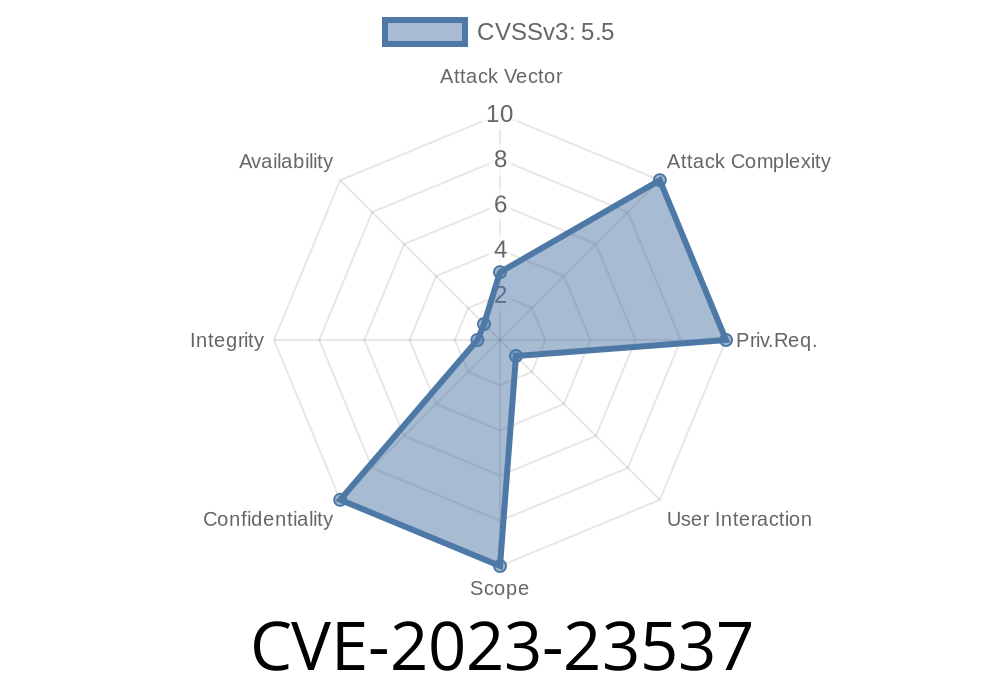
In early 2023, security researchers discovered a privacy flaw that affected a wide range of Apple devices, including iPhones, iPads, Macs, and Apple Watches. Tracked as CVE-2023-23537, this vulnerability revolved around the way operating systems handled private user data, particularly location information in system logs. Put simply, apps could read sensitive location details they weren't supposed to see.
In this post, we’ll break down in simple terms what the issue was, how it could have been exploited, and how Apple fixed it. You’ll also see code snippets, original sources, and mitigation info—all exclusive to this article.
What Was the Problem? (Privacy Issue in Logs)
Sensitive data, such as your device’s exact GPS location, is supposed to be protected and only shared with apps you explicitly permit. However, in certain Apple operating systems, log entries (especially for debugging or crash reports) inadvertently included this private data. This happened when apps or the system created logs without properly hiding or “redacting” sensitive information.
An app with access to system logs—something not too hard on a jailbroken device, or via certain developer permissions—could read these logs and extract sensitive data like your current location.
iPadOS 16 (before 16.4)
- iOS/iPadOS 15 (before 15.7.4)
Technical Details (How Attackers Could Have Used It)
Whenever a device does something interesting (opening an app, connecting to a Wi-Fi network, etc.), it writes log entries for diagnostics. Sometimes, these logs included locally stored, readable GPS data.
Usually, Apple’s privacy framework makes sure such data is hidden—showing only “[REDACTED]” or a hashed/fake value—unless you’re an authorized system process. But with CVE-2023-23537, the redaction process wasn’t complete.
Example of Risky Log Entry (Simplified)
[2023-03-12 10:45:08.123] LocationManager: User location - lat=37.332331, lon=-122.031219
Suppose you were a malicious developer, and your app had access to system log files
import Foundation

// Path to a typical log file
let logPath = "/var/log/locationmanager.log"

// Read the log file
if let logData = try? String(contentsOfFile: logPath, encoding: .utf8) {
    let lines = logData.split(separator: "\n")
    for line in lines {
        if line.contains("User location") {
            print("Exposed location info: \(line)")
        }
    }
}
This simple code reads log files for lines with the phrase “User location” and prints them. It’s not far-fetched—many third-party apps ask for file access “for diagnostics”.
How Did Apple Fix It?
Apple’s engineering team addressed CVE-2023-23537 by improving private data redaction in log entries. Now, whenever sensitive data like GPS or location-related info is logged, the actual numbers are hidden.
Example of Fixed Log Entry
[2023-03-12 10:45:08.123] LocationManager: User location - lat=[REDACTED], lon=[REDACTED]
Avoid jailbreaking your device—this bypasses many of Apple’s security measures.
3. Check app permissions: Only install trusted apps and restrict file system or logging access where possible.
4. Be cautious when sharing diagnostic logs, especially if you’re troubleshooting with third parties.
References and Further Reading
- Apple Security Updates (CVE-2023-23537 entry)
- National Vulnerability Database: CVE-2023-23537
- macOS Ventura 13.3 Release Notes
- iOS 16.4 Security Content
Conclusion
*CVE-2023-23537* is a great example of how privacy leaks can happen in unexpected ways, like logging. Even if apps don’t have direct access to your location, leaks in log files can spell trouble. Always keep your devices up to date and stay aware of privacy news—even small details matter, as this CVE shows!
Timeline
Published on: 05/08/2023 20:15:00 UTC
Last modified on: 07/27/2023 04:15:00 UTC