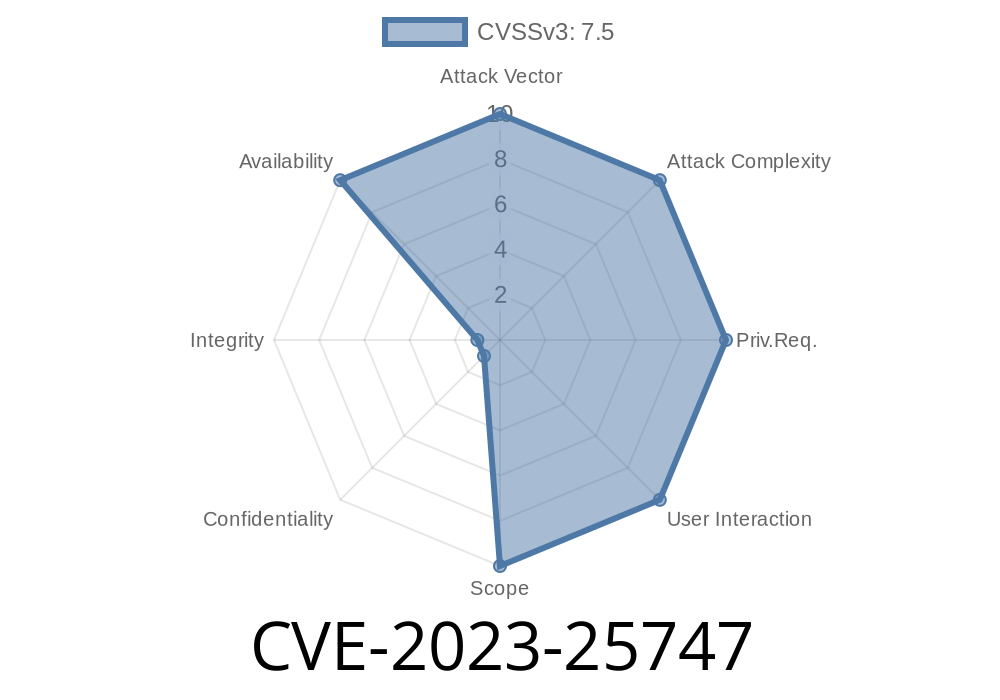
On February 14, 2023, Mozilla released a security advisory about CVE-2023-25747—a bug that could allow hackers to exploit Firefox for Android through a dangerous memory error known as *use-after-free* in the libaudio component. The problem was so serious that the best solution was to *disable an entire audio backend* for older Android versions!
This post breaks down what went wrong, who was affected, and how the fix works. Plus, you’ll find a technical code snippet and links to official references—all explained simply and clearly.
What Is CVE-2023-25747?
CVE-2023-25747 is a use-after-free vulnerability in Firefox for Android’s audio playback library, libaudio, related to the AAudio backend.
- Use-after-free is a memory safety bug: the program uses memory that has already been freed (“deleted”)—sometimes letting hackers run any code they want.
This only affects *Firefox for Android*, specifically versions below 110.1..
- Other platforms (Windows, macOS, Linux) and Firefox for Android running 110.1. or later are safe.
In plain terms: If an attacker could trick Firefox into using the bad part of the audio code, they could potentially hijack the browser—and maybe the device.
How Did This Bug Happen?
On Android, Firefox uses different ways (“backends”) to play sound. For devices running Android API version below 30 (Android 11), the browser could use AAudio as a backend via the libaudio library.
AAudio was never officially supported before Android API 30, making its use risky on older phones. An error in the code made it possible for Firefox to free up (delete) audio resources while still expecting to use them—the classic recipe for use-after-free.
Let’s look at a simplified version of what the bug might have looked like
// Pseudo-code for educational purposes
AudioStream* stream = AudioStream_createAAudio();
// ... some operations ...
AudioStream_destroy(stream); // Frees the memory

// Bug: still tries to use "stream"!
int status = AudioStream_play(stream); // Use-after-free vulnerability
If attackers could control when this code ran and how, they could spray the memory with their own data—eventually controlling what happens when stream is used after being freed.
How Was It Fixed?
Mozilla’s solution is as simple as it is effective: Disable the AAudio backend on Android versions below 30. This way, libaudio never risks using AAudio where it could go wrong.
Here’s a (hypothetical) code change
if (android_api_version >= 30) {
    // Safe to use AAudio
    backend = AAudio;
} else {
    // Use older, safer backend; don't risk the bug
    backend = OpenSLES;
}
So, on Android 10 (API 29) and older, Firefox *never* tries to use AAudio—no more use-after-free.
Proof-of-Concept: Is It Exploitable?
Making a public exploit for this would be dangerous, so here’s a safe snippet *demonstrating* the risk in this class of bug (for learning only):
#include <stdio.h>
#include <stdlib.h>

typedef struct { char data[8]; } object;

int main() {
    object *obj = malloc(sizeof(object));
    strcpy(obj->data, "testing");
    free(obj); // Frees memory

    // Use-after-free: still accessing freed memory!
    printf("%s\n", obj->data);

    // Attacker could control memory here in real exploit
}
In the real Firefox case, the objects are sound streams, not simple “object”, but the risk is the same: one wrong access, and an attacker could corrupt the browser’s memory.
Who Was at Risk? Who Is Safe?
You were at risk IF:
Your device runs Android 10 or lower (API < 30)
You are safe IF:
Always keep your Android OS and apps up-to-date.
- Follow Mozilla’s security advisories.
References and Further Reading
- Mozilla Security Advisory 2023-07
- NVD entry for CVE-2023-25747
- Firefox for Android release notes
Conclusion
CVE-2023-25747 demonstrates how legacy support for old Android versions can hide dangerous bugs. The real lesson: even big, trusted projects like Firefox can have critical issues when they balance “support everyone” with “stay safe.” If you use Firefox for Android, always keep it updated—you never know what bug might be lurking under the hood.
Timeline
Published on: 06/19/2023 11:15:00 UTC
Last modified on: 06/27/2023 08:29:00 UTC