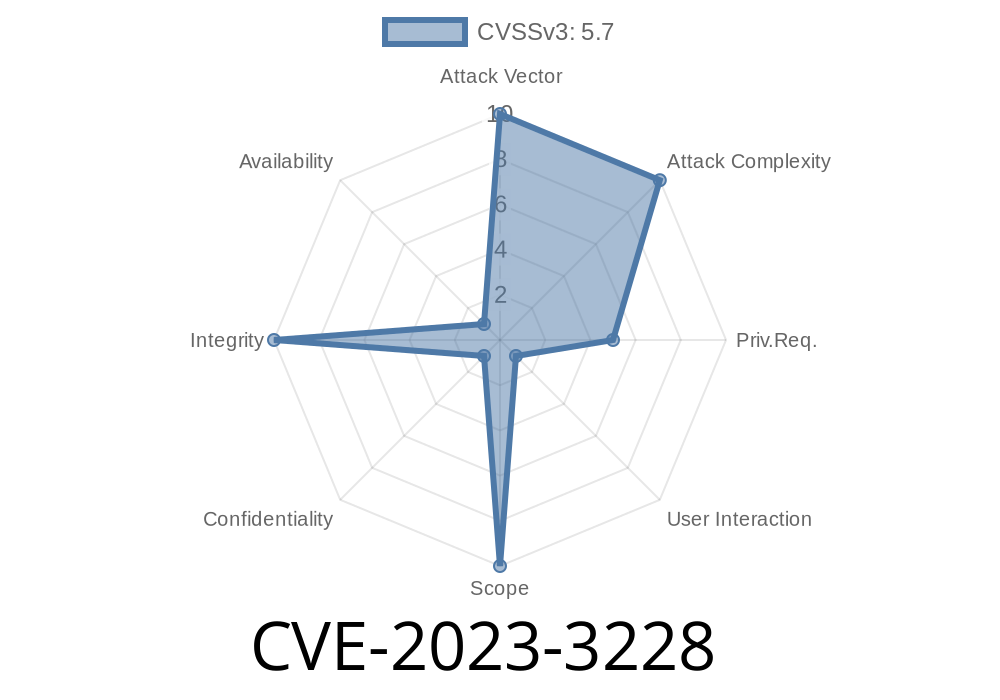
CVE-2023-3228 highlights a critical business logic flaw in the FOSSBilling open-source project (GitHub repo: fossbilling/fossbilling), affecting all versions before .5.. This vulnerability allowed attackers to bypass key security steps and abuse the application’s workflows—potentially getting unauthorized access or performing unintended financial operations. Today, let's break down what went wrong, how it can be exploited, and how you can protect yourself.
What is FOSSBilling?
FOSSBilling is a free, open-source client management and billing solution. Many small businesses and hosting companies use it for tasks like managing customers, billing, and issuing invoices. Being an open-source alternative to commercial billing platforms, its code is publicly visible and contributions come from the global community.
What Went Wrong: Business Logic Error
Unlike typical software bugs (like buffer overflows or SQL injection), Business Logic Errors occur when the application behaves as *designed*, but the logic itself is flawed. In this CVE, the vulnerability was in how FOSSBilling handled certain account and payment functions—specifically, it trusted client-side input and workflows without strong server-side checks.
For example, let’s see a simplified (and vulnerable) flow
// Accept service upgrade requests
if (isset($_POST['upgradeService'])) {
    $serviceID = $_POST['service_id'];
    $newPlan = $_POST['plan_id'];
    $price = $_POST['price']; // <-- Comes from client

    // Server does NOT verify the price or plan_id matches known price!
    processUpgrade($serviceID, $newPlan, $price); // Trusting client input
}
An attacker could manipulate the price or plan_id values when submitting the form, causing the server to process a fraudulent upgrade, possibly at a lower cost.
Malicious actors could manipulate order values, discounts, or payment status.
- Attackers might create/renew services for others without authorization.
Proof of Concept (PoC)
Let’s go through a basic exploitation using web browser developer tools.
Scenario: An attacker wants to upgrade their service to a higher plan but pay _zero_.
`javascript
document.querySelector("input[name='price']").value = .01; // Or
Submit the Form:
The server, trusting the price sent from the client, upgrades the service using this manipulated amount.
Alternatively, using a cURL request
curl -X POST https://yourfossbilling.com/upgrade_service.php \
  -d "service_id=123&plan_id=999&price=.01"
If the server doesn’t cross-check the new plan and price, the upgrade proceeds at the attacker’s chosen price.
How Was It Fixed?
Developers patched this logic in version .5..
Security checks ensure users are authorized for the actions they attempt.
You can view the security patches here:
🔗 FOSSBilling Commit Example
Never trust user input: Even in business logic, cross-verify input with known server-side data.
- Conduct regular code audits: Especially on workflows dealing with payments, privileges, and access control.
References & Further Reading
- Github Security Advisory: GHSA-r4q2-jm2p-h8fr
- CVE-2023-3228 on CVE.org
- Business Logic Vulnerabilities – OWASP
Conclusion
The case of CVE-2023-3228 is a lesson in how *trusting the user* can lead to severe security gaps. Code must always double-check—never simply accept what the browser (or client) tells it! If you manage a FOSSBilling instance (or any app with money or user data), prioritize business logic validation. Stay patched and stay safe.
Timeline
Published on: 06/14/2023 06:15:00 UTC
Last modified on: 06/17/2023 03:10:00 UTC