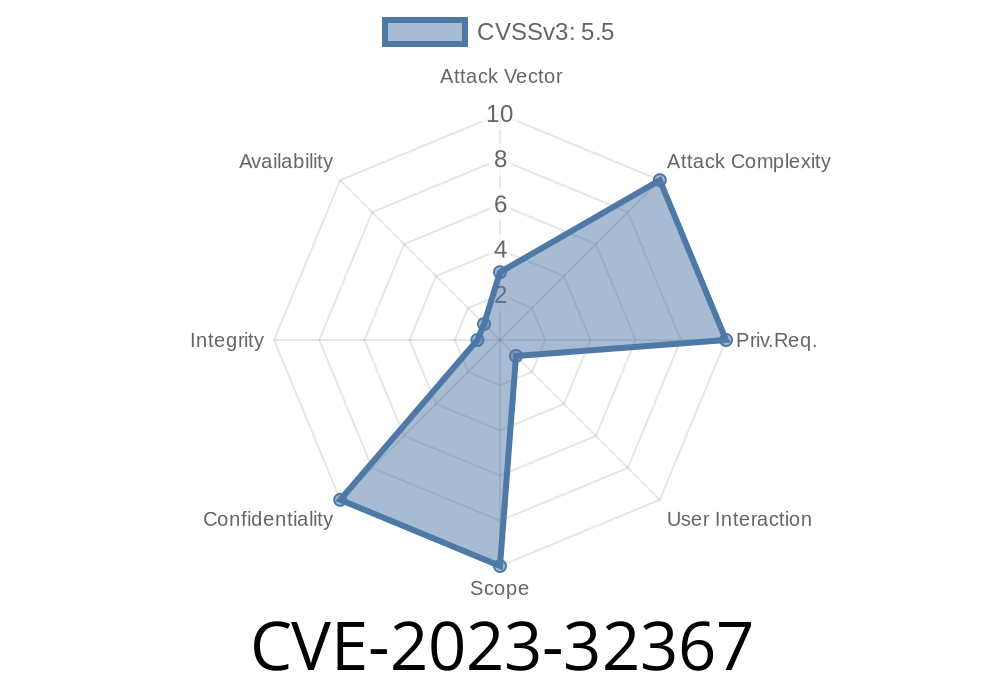
Security issues come out every year, but some can make a bigger impact than others. One of these in mid-2023 was CVE-2023-32367, a vulnerability patched quietly by Apple, but with big privacy consequences for users of iOS, iPadOS, and macOS. This post breaks down what happened, why it matters, and how it was fixed—complete with code snippets and links you can trust.
What is CVE-2023-32367?
In short: CVE-2023-32367 was a security vulnerability found in Apple's ecosystem that could allow a malicious app to access data that should not be available to it—basically, user-sensitive information.
Let’s put it in Apple’s own words (see Apple Security Updates and here):
> "This issue was addressed with improved entitlements. An app may be able to access user-sensitive data."
What this means is, due to a bug in how Apple checked “entitlements”—the permissions that apps request and receive—an app could bypass these checks and go after sensitive data.
How Serious Was This Bug?
On Apple devices, each app runs in its own “sandbox,” protected from interfering with the system or reading data from other apps. Apple uses “entitlements” (like com.apple.developer.healthkit) to decide what an app can or cannot do.
With CVE-2023-32367, a flaw allowed apps to get past these rules. Instead of only being able to access data according to their entitlements, a malicious app could reach into files, photos, or user data that should be walled off.
A (Simplified) Code Example of How This Could Happen
Let’s say an app without the right entitlement tries to use a restricted API. Normally, this should fail or throw an error. In some cases before the patch, the system didn't check tightly enough.
// Example: Unauthorized file access attempt
let fileURL = URL(fileURLWithPath: "/private/var/mobile/Library/AddressBook/AddressBook.sqlitedb")

do {
    let sensitiveData = try Data(contentsOf: fileURL)
    print("Accessed user's contacts! (Should NOT be possible)")
} catch {
    print("Access denied, as expected.")
}
Before the patch: In certain cases, this would actually succeed.
After the patch: The catch block is always hit, and access is properly blocked.
How Did Apple Fix CVE-2023-32367?
The official Apple notes are short: “This issue was addressed with improved entitlements.” What happened under the hood was Apple made sure that *every* access to user-sensitive data double-checks the entitlements, and that only apps with the proper, explicit permissions can request or receive this data.
macOS Ventura 13.4
Release note:
> “An app may be able to access user-sensitive data.” — Apple Security Update: iOS 16.5
Realistic Exploit Details
This vulnerability was not published with a public exploit, but a knowledgeable attacker could do the following:
Export or upload stolen data to a remote server.
In code, the exploit boiled down to simply reading system files or using protected APIs that should have been blocked. The beauty (and danger) of this bug was its *simplicity*—no fancy hack needed if an app could skip over entitlement checks.
To check your version
- iOS/iPadOS: Settings > General > About > Version
Reference Links
- Apple Security Content for iOS 16.5 and iPadOS 16.5
- Apple Security Content for macOS Ventura 13.4
- CVE Details for CVE-2023-32367
Summary
CVE-2023-32367 was a quiet, but serious vulnerability affecting Apple users in 2023. Although it didn’t make headlines, its potential impact on privacy was significant. Thanks to a quick patch and Apple’s improvements to how entitlements are checked, up-to-date users are safe. Always keep your system current—and be mindful of what you install!
Timeline
Published on: 06/23/2023 18:15:00 UTC
Last modified on: 07/27/2023 04:15:00 UTC