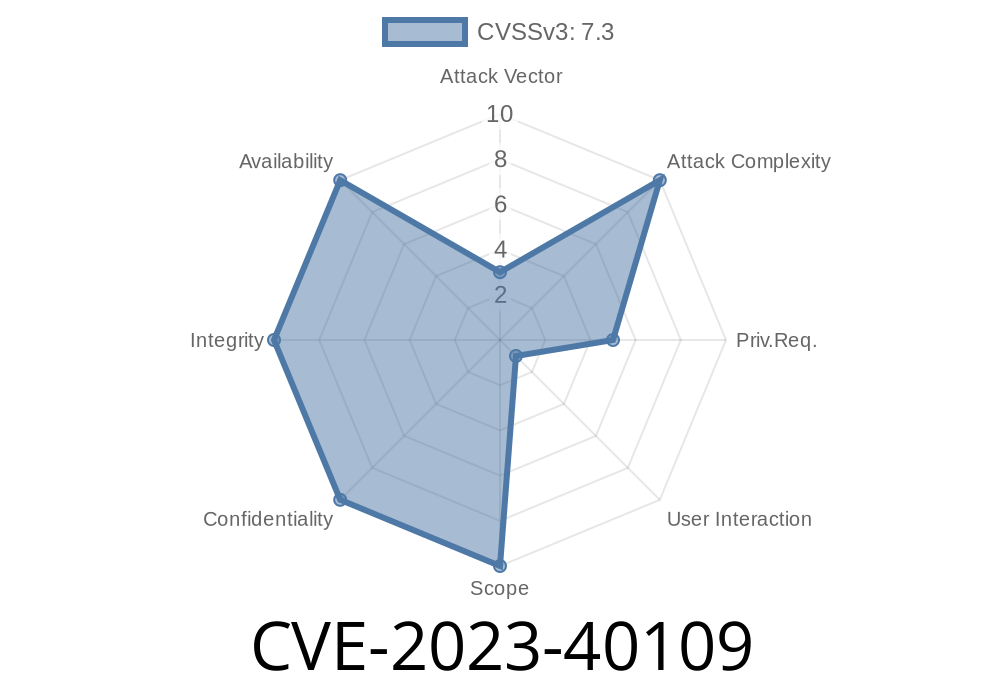
In September 2023, Google disclosed CVE-2023-40109, a security vulnerability in the Android framework's UsbConfiguration.java. This vulnerability could let a malicious app bypass certain permissions and launch background activities, leading to a local escalation of privilege. The good news is: for this issue, the attacker still needs some user interaction. However, the bad news is: with the right combo of code and manipulation, gaining those escalated privileges isn't all that tough.
In this article, let's break down what CVE-2023-40109 is, how it can be exploited, and how code changes fix it—all in simple American language.
What Went Wrong? (Vulnerability Details)
The Android framework has a class called UsbConfiguration that manages USB device configurations. There's a method called createFromParcel used to serialize and deserialize UsbConfiguration objects for use by other processes and apps.
// frameworks/base/core/java/android/hardware/usb/UsbConfiguration.java
public static final Parcelable.Creator<UsbConfiguration> CREATOR =
    new Parcelable.Creator<UsbConfiguration>() {
        public UsbConfiguration createFromParcel(Parcel in) {
            return new UsbConfiguration(in);
        }

        public UsbConfiguration[] newArray(int size) {
            return new UsbConfiguration[size];
        }
    };
Here, the createFromParcel method reads data from a Parcel (which is kind of like a fancy Android message), reconstructing the UsbConfiguration object.
The flaw is that under certain circumstances, a malicious app can craft a special Parcel and use it to launch a background activity—that is, an activity that runs behind the scenes—without proper user authorization. This is known as a Background Activity Launch (BAL). Android restricts this behavior for security reasons, as it can help apps escalate privileges beyond their intended scope.
Who’s Affected?
All Android devices running an unpatched version of the Android OS prior to September 2023 are vulnerable. The official Android Security Bulletin, September 2023 lists this as a high severity local privilege escalation.
The Attack: Permission Bypass and Privilege Escalation
Let's walk through a simplified example to see how an attacker could exploit this.
1. The Attacker App: The attacker builds a malicious app that abuses UsbConfiguration by dynamically crafting a Parcel object and stuffing it with exploitative data.
2. Tricking User Interaction: The attack does need the user to take some action—like clicking a dialog or agreeing to a prompt.
3. Background Activity Launch (BAL): The attacker then bypasses Android's usual permission checks to start a background activity.
4. Local Privilege Escalation: The attacker now has escalated privileges within the device, potentially recording your screen or stealing sensitive data.
Sample Exploit Code: (Purely educational; don’t use it maliciously!)
// AttackParcelDemo.java
Parcel exploitParcel = Parcel.obtain();

// Craft data for UsbConfiguration; real exploit would require reverse-engineering
// the parcel structure to match UsbConfiguration
exploitParcel.writeInt(/* usb config fields with malicious intent */);

// Trigger the framework to deserialize the parcel
UsbConfiguration maliciousConfig = UsbConfiguration.CREATOR.createFromParcel(exploitParcel);

// If exploit works, a background activity could start here, bypassing BAL checks!
Note: The actual data you write for a working exploit is beyond the scope of this post, as it depends on detailed reverse engineering of the framework.
Reference Links & Further Reading
- Android Security Bulletin—September 2023
- Android Framework Code: UsbConfiguration.java (AOSP Reference)
- Mitre CVE-2023-40109 Entry
Fix Status
Google patched this vulnerability in September 2023 security update. They changed how the framework handles Parcels and added stricter checking, so malicious apps can't exploit the method to launch background activities.
If you’re an Android user, make sure your device is up to date with the latest security patches. Device makers like Samsung, OnePlus, and Google Pixel have already shipped updates to affected devices.
Final Thoughts
CVE-2023-40109 is a warning that even powerful, well-audited code bases like Android's can have subtle permission bypasses. The takeaway? Don’t skip those monthly security updates, and don’t install shady apps.
Timeline
Published on: 02/15/2024 23:15:08 UTC
Last modified on: 08/16/2024 16:35:00 UTC