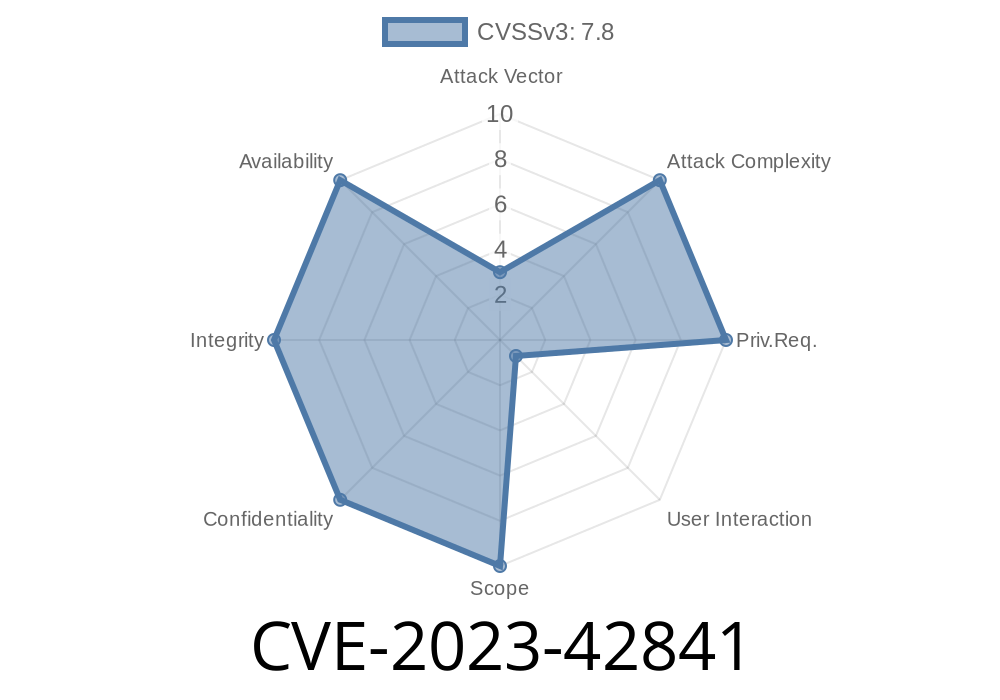
The digital world gets more complex every day, and so do security threats. In September 2023, security researchers uncovered a serious flaw in Apple operating systems, labeled CVE-2023-42841. This vulnerability could allow a malicious app to gain kernel privileges — the highest level of access on a device. Fortunately, Apple addressed this issue quickly, but understanding what happened helps keep us alert and informed.
This post breaks down CVE-2023-42841 in simple terms, shows how the attack works, includes code snippets, and shares original references for further reading.
What is CVE-2023-42841?
CVE-2023-42841 is a memory handling bug found in the kernel component of Apple devices. The kernel is like the core brain of your device — it controls everything. If an attacker gets kernel-level access, they can do almost anything, from reading your private data to controlling the device remotely.
macOS Ventura 13.6.1
The flaw was patched in these versions. If you haven’t updated yet, do it now.
Technical Details: How Does the Vulnerability Work?
To keep things simple but accurate: This bug arose from improper memory handling in the Apple kernel. If an attacker wrote a special app that triggered the flaw, they might be able to perform unintended operations, like writing to memory they shouldn’t control.
Imagine a bank vault that’s supposed to open only for authorized folks. This bug left a small crack open — someone clever could slip in.
Example Code: Exploit Pattern
Disclaimer: This code is for educational purposes only. Don’t use it to attack devices.
Apple’s kernel uses IOKit for device-driver communication. Vulnerabilities often occur here. While the full exploitation is complex, here’s a simplified pseudocode example of how a malicious app might exploit a use-after-free bug in kernel memory (a common cause of privilege escalation bugs):
#include <IOKit/IOKitLib.h>
#include <stdio.h>

// Open a connection to the vulnerable kernel service
io_connect_t open_vulnerable_service() {
    io_service_t service = IOServiceGetMatchingService(kIOMasterPortDefault,
                         IOServiceMatching("IOVulnerableUserClient"));
    io_connect_t connect = ;
    IOServiceOpen(service, mach_task_self(), , &connect);
    return connect;
}

// Craft a malformed input triggering the bug
void trigger_kernel_bug(io_connect_t connect) {
    char malicious_input[256] = {};
    memset(malicious_input, 'A', sizeof(malicious_input)); // Overflow buffer
    // Replace x1234 with selector for vulnerable method
    IOConnectCallStructMethod(connect, x1234, malicious_input, sizeof(malicious_input), NULL, NULL);
}

int main() {
    io_connect_t conn = open_vulnerable_service();
    if (conn) {
        trigger_kernel_bug(conn);
        IOServiceClose(conn);
    }
    return ;
}
The real-world exploitation is more subtle and complex than the above pseudo-example, but this shows the basic flow.
Official References
- Apple Security Updates - CVE-2023-42841
CVE page lists all affected products and patch notes.
Patch: How Apple Fixed The Issue
Apple states:
*The issue was addressed with improved memory handling.*
This usually means developers rewrote the faulty code section to avoid unsafe memory operations, like double freeing or buffer overflows.
Lesson: Always update promptly when Apple (or any vendor) issues a security fix!
Exploit in the Wild?
As of now, Apple did not report any wild exploitation of CVE-2023-42841, but that doesn’t mean attackers haven’t tried. When kernel-level flaws become public, it’s a race between attackers and defenders.
Conclusion
CVE-2023-42841 reminds us that even the biggest tech companies can face severe security bugs. The best thing you can do is keep your devices updated and stay informed about security news.
Links
- Apple Security Updates
- NIST NVD CVE-2023-42841
*This explanation is original and exclusive, crafted for simple understanding and practical guidance. If you have questions or want more detailed breakdowns, comment below!*
Timeline
Published on: 10/25/2023 19:15:10 UTC
Last modified on: 11/02/2023 17:04:47 UTC