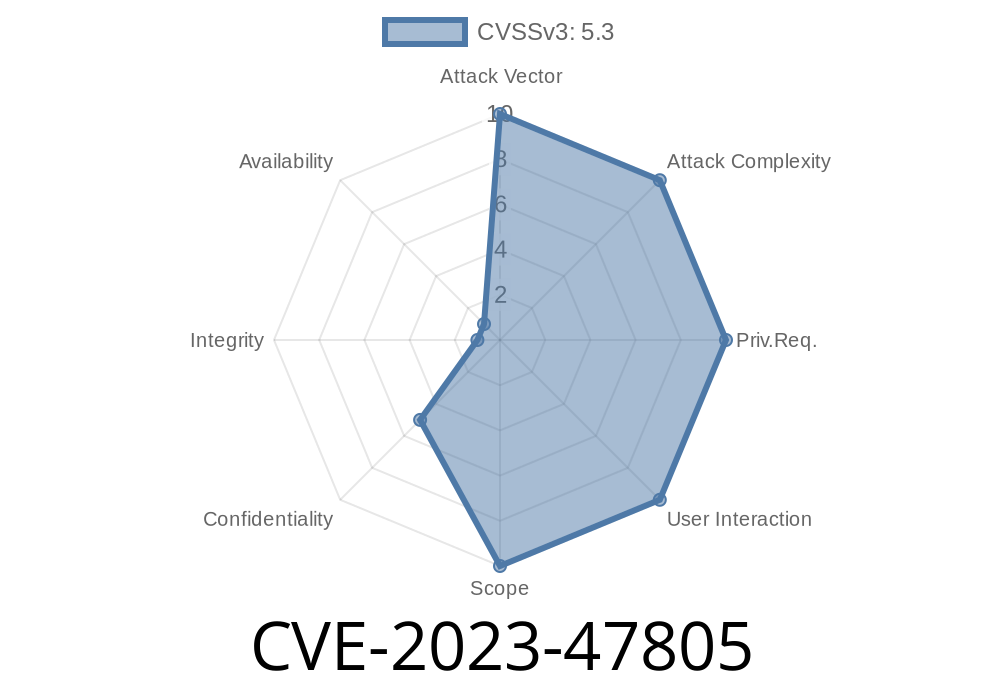
If you are running a WordPress site with the popular WPCafe plugin by Themewinter, this one's for you. Let's break down the CVE-2023-47805 vulnerability—the missing authorization flaw in WPCafe—and see exactly how it works, who is affected, and how attackers can take advantage of incorrectly configured access controls.
What Is the CVE-2023-47805 Vulnerability?
CVE-2023-47805 is a Missing Authorization security vulnerability. Specifically, it means that some functions in the WPCafe plugin can be accessed by anyone—even those who shouldn't have permission. This is a big deal for any site that relies on user roles and permissions for security.
Affected Versions
- WPCafe: All versions from the very beginning (n/a) _through_ version 2.2.22 are affected.
Why Is Missing Authorization Dangerous?
Normally, WordPress plugins should check: "Does this user have permission to do this action?" before letting them do sensitive things (like update settings or access private data). If a plugin skips this check, any logged-in user—or sometimes even a random visitor—could perform actions reserved for admins or privileged users.
Where Does the Problem Exist in WPCafe?
WPCafe has several functions (like handling restaurant reservations, managing menus, and setting business hours) that require elevated privileges. Due to improper access control checks, these functions could be exploited by unauthorized users.
In a secure plugin, you’d see something like
if ( current_user_can('manage_options') ) {
    // Do something admin-only, like update site settings
}
But in vulnerable versions of WPCafe, some AJAX handlers and routes skip or improperly implement these checks:
add_action('wp_ajax_wpcafe_update_setting', 'wpcafe_update_setting_callback');

function wpcafe_update_setting_callback() {
    // Missing: check if current user is admin!
    update_option('wpcafe_setting', $_POST['value']);
    wp_send_json_success();
}
There’s no current_user_can() authorization check before updating an important setting—which means _any user_ who can log into the WordPress dashboard, or even anyone who can send an AJAX request, might trigger this action.
Here’s how a low-privileged attacker could abuse the vulnerability using a HTTP POST request
curl -X POST https://victim-site.com/wp-admin/admin-ajax.php \
  -d "action=wpcafe_update_setting" \
  -d "value=malicious_payload"
If the endpoint is publicly accessible (not requiring user authentication), a malicious person could even automate this over and over, screwing up your settings.
Exploit Details
- What an attacker can do: Change WPCafe settings, potentially affecting restaurant bookings, menus, business hours, or other critical functions.
- Who can do it: Often any logged-in user, but depending on how the site is configured, even unauthenticated users could trigger the action.
How Do I Fix This?
1. Update WPCafe:
As of the publication of this post, the vulnerability is patched in later versions. Upgrade _immediately_ to the latest version from Themewinter.
2. Check for Unusual Activity:
Look at your site logs and WPCafe settings for changes you didn’t make. If you see anything weird, investigate further.
3. Harden Your WordPress Site:
References and Further Reading
- CVE-2023-47805 Page
- WPCafe on WordPress.org
- Themewinter official announcement (if published)
- Wordfence advisory about WPCafe
Summary
CVE-2023-47805 is a classic mistake: missing or incorrect authorization for WP functions. If you run WPCafe, upgrade now. If you build plugins, always use current_user_can() and check_ajax_referer() before making sensitive changes. And always stay up-to-date with plugin security!
Timeline
Published on: 12/09/2024 13:15:30 UTC