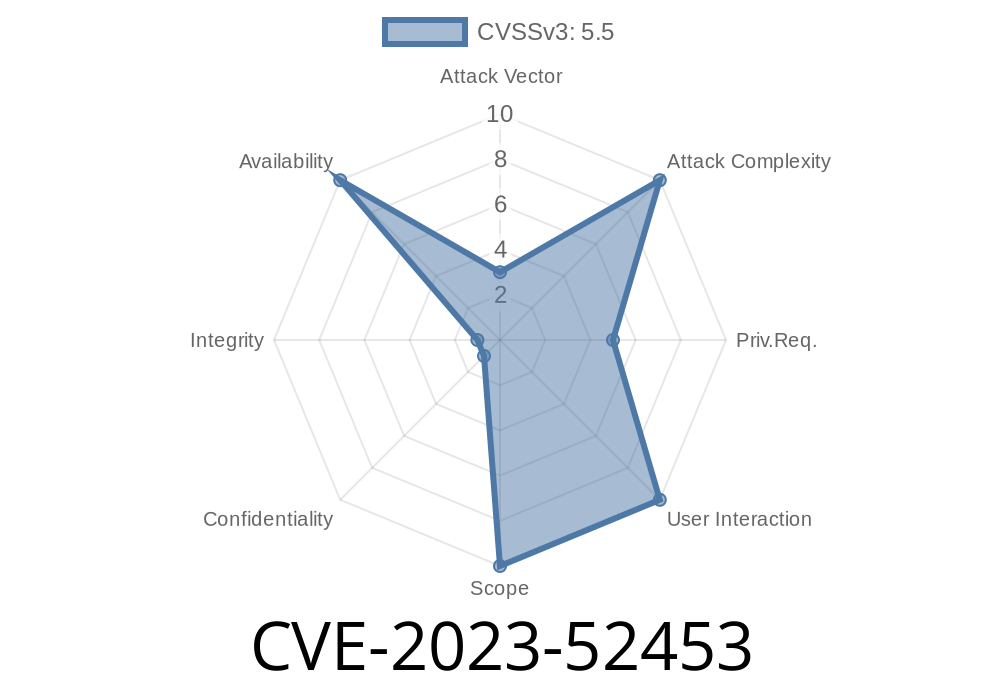
The Linux kernel, the core of almost all modern Linux distributions, sometimes hides complex issues under the hood—just like the one tracked as CVE-2023-52453. If you work with virtualization or PCI passthrough, this is a vulnerability worth knowing. In this long read, we’ll break down what went wrong with the hisi_acc_vfio_pci driver (common with some ARM hardware), how it affected security and stability, show you real affected code, and help you understand the fix.
What Is CVE-2023-52453?
CVE-2023-52453 is a vulnerability found in the Linux kernel’s hisi_acc_vfio_pci driver. This driver is used for certain Huawei acceleration cards (like crypto, compression, or AI PCIs), and ties into virtualization using VFIO (Virtual Function I/O).
The heart of the bug
> When saving or resuming device state for migration (think: moving a running VM from one host to another), a “PRE_COPY” optimization was added, but the driver forgot to update key data pointers.
>
> The result? Saved migration data can get corrupted, potentially failing device startup on the destination host.
How the Vulnerability Happens
In live VM migration or device state migration, the device memory gets copied between source and destination—sometimes in multiple rounds, for speed (this is “pre-copy”). If your code doesn’t update your data pointers according to the right file descriptor (fd) offset, any new data gets written in the wrong place. When the device resumes on the new host, the saved state is inconsistent or outright bad.
This triggers real-world kernel log errors, for example
[ 478.947552] hisi_zip 000:31:00.: qm_axi_rresp [error status=x1] found
[ 478.955930] hisi_zip 000:31:00.: qm_db_timeout [error status=x400] found
[ 478.955944] hisi_zip 000:31:00.: qm sq doorbell timeout in function 2
This means the destination device can’t finish initialization, and you might lose that VM session or hang hardware.
Before the fix
// Called during device migration
ssize_t hisi_acc_save_data(struct file *filp, char __user *buf, size_t count, loff_t *ppos) {
    struct migration_data *data = filp->private_data;

    // Oops! Missing logic connecting ppos (file offset) to data pointer
    memcpy_to_user(buf, data->ptr, count); // Wrong offset can corrupt!

    return count;
}
When PRE_COPY was enabled (for faster migration), the necessary piece tying *ppos (the current read offset in the file) to the start of your data in memory was missing. That meant every new read started at the wrong position.
After the fix
// Now, during migration, data pointer updates by file offset
ssize_t hisi_acc_save_data(struct file *filp, char __user *buf, size_t count, loff_t *ppos) {
    struct migration_data *data = filp->private_data;
    size_t offset = *ppos;

    // Correctly move the data pointer by 'offset'
    memcpy_to_user(buf, data->ptr + offset, count);

    return count;
}
Now the correct chunk gets copied, preventing corruption.
How Could Attackers Exploit This?
Note: This bug primarily affects reliability (data/state corruption during device migration), but depending on system configuration, there are some security risks:
- Denial of Service: If an attacker controls migration timing or covers pre-copy logic, they could consistently crash device startups and “brick” hardware-bound VMs.
- Potential for Hypervisor Escape: If migration data lands on wrong memory boundaries and another bug is present, there’s a very limited window for memory exposure or privilege escalation. As of now, no known code exploit exists—but it opens doors for future chaining with other bugs.
Quote from the official patch commit:
> When the optional PRE_COPY support was added to speed up device compatibility check, it failed to update the saving/resuming data pointers according to fd offset, causing corrupted data to be migrated.
You use ARM or x86 hosts with PCIe cards that use the hisi_acc_vfio_pci driver (Huawei hardware)
- You perform live or pre-copy device migration (i.e. using QEMU/KVM with device passthrough)
Upgrade your kernel to the latest version for your distribution, or
- Apply the official patch to your source and recompile
Example for Ubuntu
sudo apt update
sudo apt upgrade
# Reboot for new kernel to load
References and Further Reading
- Linux Kernel Commit Fix
- CVE record on cve.org
- Linux Kernel Mailing List Discussion
Final Thoughts
CVE-2023-52453 won’t break the internet overnight, but it’s the kind of low-level bug that can ruin your morning if you rely on live device migration, especially on ARM with specialized PCI hardware. Linux’s vigorous patching communities close these loopholes fast, but remember: always keep your kernel updated and monitor vendor security advisories if you use advanced virtualization features.
Found something similar? Check your device drivers. Sometimes, a small pointer change makes all the difference between flawless VM moves and hours of debug logs.
Timeline
Published on: 02/23/2024 15:15:08 UTC
Last modified on: 12/12/2024 15:37:41 UTC