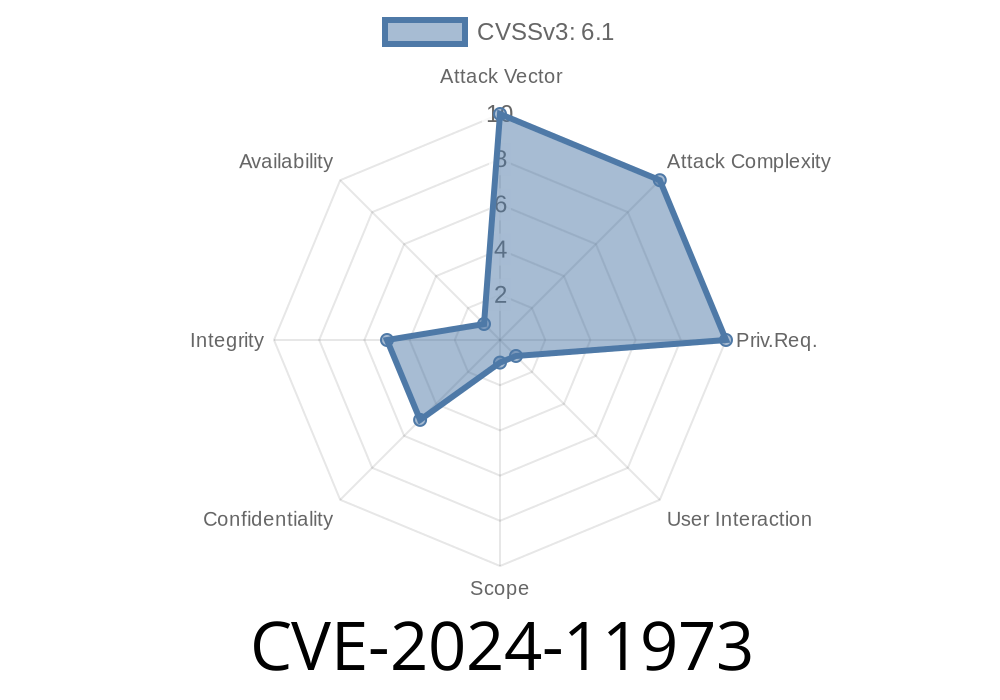
WordPress is the most popular website platform in the world, powering millions of sites. The plugin ecosystem makes it flexible—but also introduces risks. Recently, CVE-2024-11973 was published, exposing a reflected XSS vulnerability in the The Quran Multilanguage Text & Audio plugin for WordPress.
In this post, I’ll break down what this vulnerability means, show you real code samples, how attackers might use it, and detail how you can keep your site safe.
What Is CVE-2024-11973?
CVE-2024-11973 is an identifier for a security flaw found in the WordPress plugin *The Quran Multilanguage Text & Audio*. The problem is a reflected Cross-Site Scripting (XSS) vulnerability found in the way the plugin handles certain URL parameters.
Authenticated Required: No (Unauthenticated)
- CVE Reference: NVD Entry, Wordfence Advisory
What Is Reflected XSS?
Reflected XSS is a common web vulnerability where a web application takes user input from the browser and then immediately "reflects" it back in the page content without proper sanitization. If malicious scripts are allowed in this process, an attacker can trick a user into running those scripts in their browser.
How Does This Vulnerability Happen?
The *Quran Multilanguage Text & Audio* plugin lets you generate Quranic verse pages using sourate (chapter) and lang (language) parameters like this:
https://example.com/?sourate=1&lang=en
But before v2.3.22, this plugin did not sanitize or escape these parameters when outputting them into the page. That means, if someone stuck a JavaScript payload in those fields, it would get output directly to site visitors.
An attacker could craft a dangerous link like
https://victim-site.com/?sourate=1"><script>alert('XSS')</script>&lang=en
or abusing the lang parameter
https://victim-site.com/?sourate=1&lang=en"><script>alert('Gotcha!')</script>;
If the victim is lured into clicking the link (for example, via phishing email or social media post), the user's browser will execute the attacker’s script.
Assuming a typical vulnerable PHP rendering pattern
// Get parameters from URL
$sourate = $_GET['sourate'];
$lang = $_GET['lang'];

// Output into HTML (unsafe!)
echo "<div class='quran-audio' data-sourate='$sourate' data-lang='$lang'>";
The code above injects whatever the user sends in the URL directly into the page.
- No escaping is done, so if the user sends "><script>alert('XSS')</script> in sourate, it'll break out of the attribute and run JavaScript.
The correct way is to escape all output
$sourate = esc_attr($_GET['sourate']);
$lang = esc_attr($_GET['lang']);

echo "<div class='quran-audio' data-sourate='$sourate' data-lang='$lang'>";
- esc_attr() (WordPress function) ensures any special characters are rendered safe, preventing script injection.
Defacing religious or community sites using this plugin.
No authentication is required—just get a user to click a link.
References & Further Reading
- NVD Entry for CVE-2024-11973
- Wordfence Threat Advisory
- Official WordPress Plugin Page
- OWASP XSS Cheat Sheet
Conclusion
*CVE-2024-11973* reminds us that even plugins serving educational or religious purposes can become attack vectors if they mishandle user input. Reflected XSS is a longtime risk, but you can stay safe by:
Using proper security tools.
If you use *The Quran Multilanguage Text & Audio* plugin, upgrade it now and review your site's security.
*Exclusive writeup by a security enthusiast. If you found this helpful, share it with fellow WordPress admins!*
Timeline
Published on: 12/10/2024 10:15:06 UTC