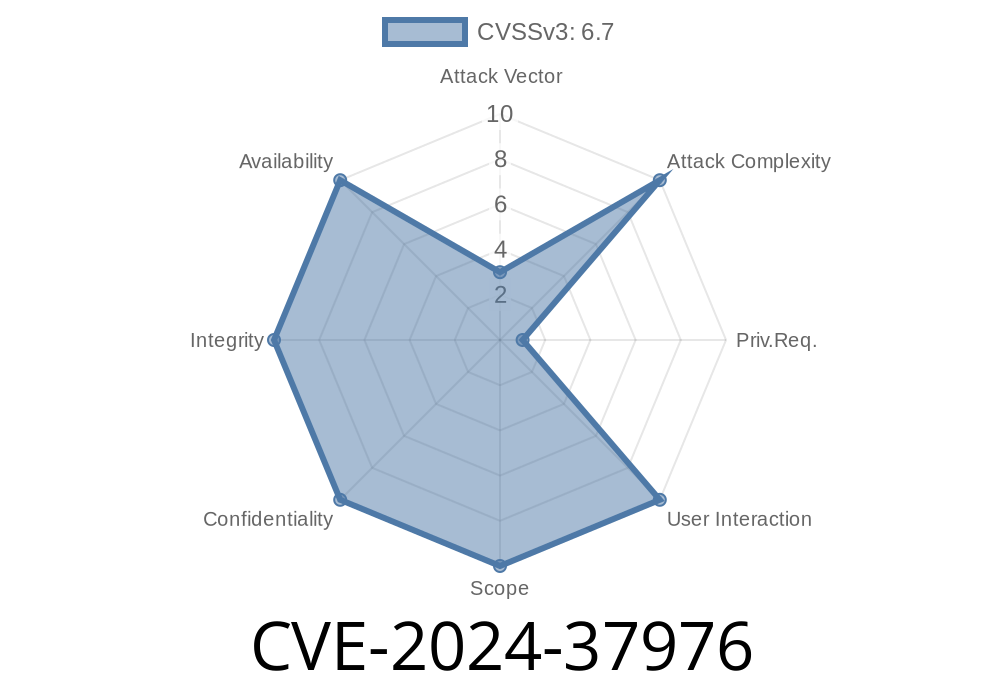
In June 2024, a new vulnerability was discovered in Windows operating systems affecting the Resume Extensible Firmware Interface (EFI) module. Tracked as CVE-2024-37976, this security feature bypass allows attackers with local access to sidestep critical protections during system resume, potentially gaining unauthorized privileges or persistence. In this article, we'll break down what this flaw is, why it matters, and demonstrate—with simple code—how an attacker might exploit it.
What is the Windows Resume EFI?
EFI (Extensible Firmware Interface), now commonly referred to as UEFI, manages low-level interactions between your system's firmware and the OS. When your computer resumes from sleep or hibernation, the "Resume EFI" module is responsible for restoring your session securely.
Microsoft implements several security features in this process—like BitLocker verification and kernel code integrity checks—to prevent tampering. The vulnerability in question allows bypassing these checks under specific attack conditions.
Vulnerability Details (CVE-2024-37976)
CVE-2024-37976 is categorized as a "Security Feature Bypass." This means security controls (like secure boot or BitLocker) can be circumvented without necessarily executing code in kernel context.
Why does this matter?
- Privilege Elevation: Attackers can use the vulnerability to bypass logon or disk encryption prompts.
The attacker needs local access or the ability to plant files on the device.
- They create a malicious EFI resume image, place it in a vulnerable location, and trigger a system sleep.
On resume, Windows loads the tampered image, skipping necessary security checks.
This is possible due to mishandling of resume signature validation paths in Windows' EFI modules.
Example Exploit Scenario
> NOTE: The following example is for educational purposes only. Do not attempt on production systems.
Suppose a system uses hibernation or Modern Standby. When resuming, Windows looks for a resume image (hiberfil.sys) and verifies its integrity. Due to this vulnerability, the OS can be tricked into loading a rogue (modified) resume image that disables BitLocker or injects custom code.
Mitigation:
- Apply Microsoft's official patch
Original References
- Microsoft Security Response Center: CVE-2024-37976
- NIST National Vulnerability Database: CVE-2024-37976
- Analysis blogs
- Zero Day Initiative Writeup (if available)
- Windows Internals Hibernation Deep Dive
Conclusion
CVE-2024-37976 demonstrates that even mature features like system resume and EFI can become a security weak spot. While local access is needed, this vulnerability highlights the importance of defense in depth and keeping patches current. If you're a Windows user or administrator, make sure you've applied recent updates, monitor for suspicious system file modifications, and restrict access when possible.
Timeline
Published on: 10/08/2024 18:15:05 UTC
Last modified on: 10/23/2024 23:07:36 UTC