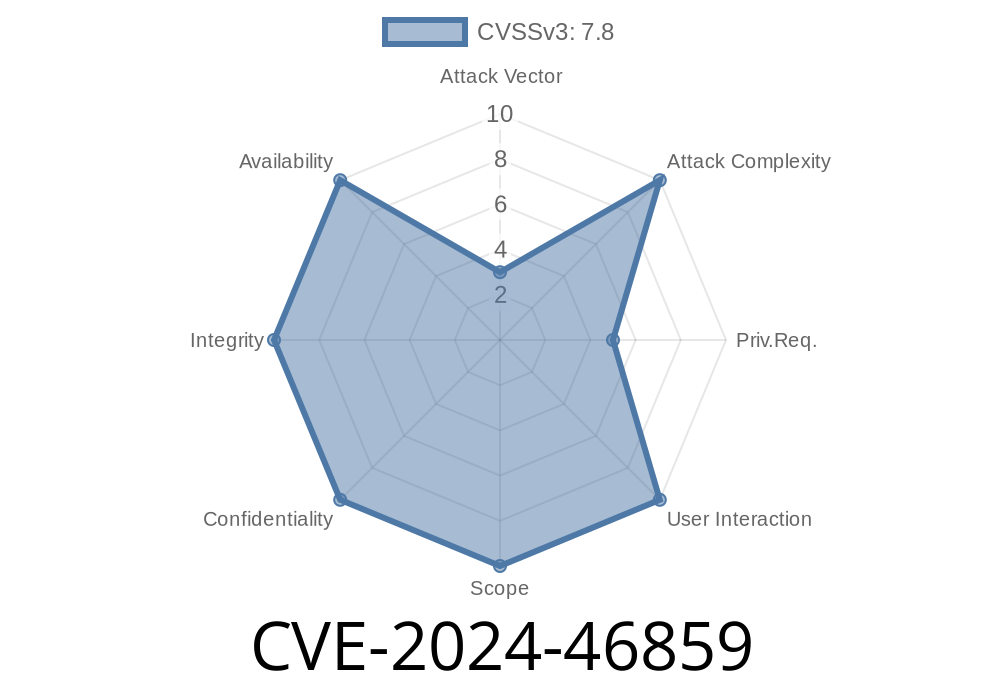
A serious vulnerability — CVE-2024-46859 — has been identified and recently resolved in the Linux kernel’s Panasonic laptop driver (platform/x86/panasonic-laptop.c). This bug let attackers trigger out-of-bounds access due to improper validation of the SINF array size, potentially leading to kernel memory corruption, crashes, or worse.
In this post, we’ll break down the issue, walk through scenario examples and code, and provide resources for sysadmins and developers to take action.
What’s the Bug?
The Panasonic laptop driver supports various hardware features (like brightness and mute) via an array called SINF. The code assumed that the array always has as many entries as necessary to cover all potential features, and accessed it by index *without* checking if the index was valid.
However, some Panasonic models, like the Toughbook CF-18, have a smaller SINF array (only 10 entries instead of what’s sometimes assumed to be more). If system routines or userspace tools tried to access features not available on these machines, the kernel might read (or write) outside the array. That’s a classic out-of-bounds error.
Originally, code for brightness or other features would directly do
val = sinf[SINF_CUR_BRIGHT];
But SINF_CUR_BRIGHT could have a value (xd = 13) that exceeds the actual array size. No bounds check!
When the sysfs interface exposed attributes for these non-existent features, reading or setting a bad attribute could trigger the bug.
Exploit Scenario (Simple PoC)
Suppose a Panasonic Toughbook CF-18 (with a 10-entry SINF). A user (or program) tries to access /sys/devices/platform/panasonic/brightness13 via the sysfs interface:
cat /sys/devices/platform/panasonic/brightness13
If the kernel had exported this file without validating the SINF array size, the kernel would index past the end of the array, causing undefined behavior, often a crash.
Minimum Size Check:
The driver now checks if the SINF array has the *minimum* number of entries required to support *all* AC and DC brightness features at load time. If not, the driver refuses to load to prevent bad access.
Hide Nonexistent Attributes:
When the SINF array is smaller than expected, *sysfs attributes for features without backing data* are now hidden, preventing userspace from accessing them.
Patched snippet
if (index >= sinf_len) {
    dev_warn(&pdev->dev, "Ignoring sysfs entry for SINF index %d", index);
    return -ENODEV;
}
val = sinf[index];
And the driver fails to probe if the array is too small
if (sinf_len < MIN_SINF_ENTRIES) {
    dev_err(&pdev->dev, "SINF array too small; driver will not load");
    return -ENODEV;
}
References & Links
- Linux Kernel Patch
- CVE Description — NVD
- Relevant Kernel Mailing List Thread
Update your kernels!
All systems using Panasonic Toughbook laptops and running affected kernels should upgrade to a patched kernel version.
Distributors:
Make sure your kernel packages include this fix, especially for enterprise or defense users with legacy hardware.
End Users:
If you’re stuck on old hardware, consider blacklisting the panasonic-laptop module if you don’t need its features.
Conclusion
CVE-2024-46859 is another reminder that old hardware support code is critical infrastructure. One unchecked array access can bring an enterprise or critical system to its knees. Stay patched, stay safe.
Found this helpful? Share with your sysadmin team, and consider subscribing to kernel-announce lists for the latest news!
Timeline
Published on: 09/27/2024 13:15:17 UTC
Last modified on: 12/19/2024 09:24:53 UTC