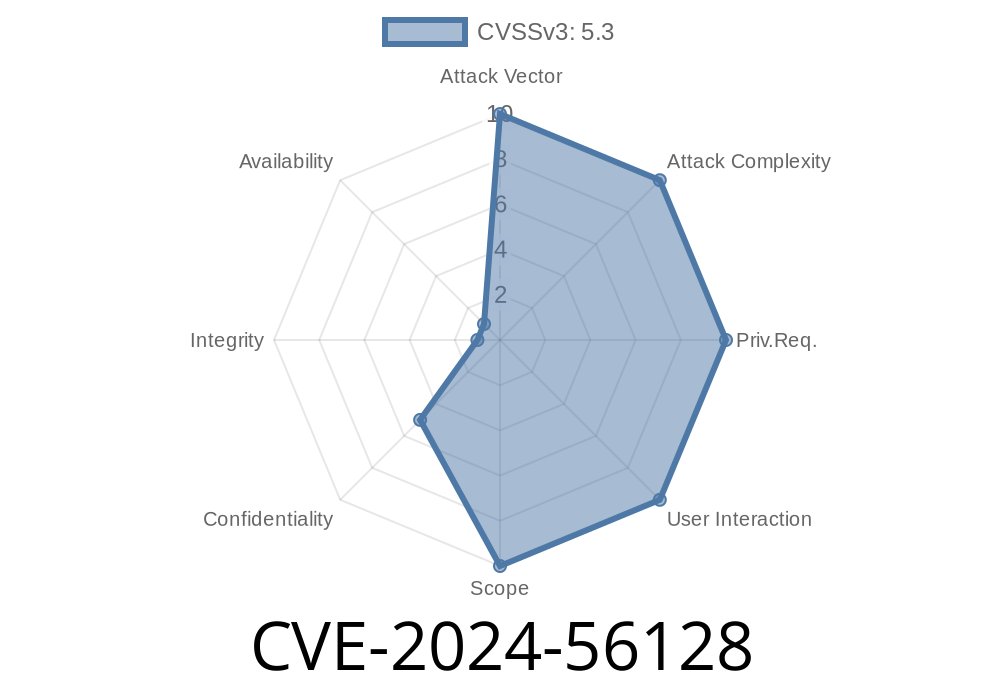
CVE-2024-56128 exposes a critical problem in the way Apache Kafka implemented SCRAM (Salted Challenge Response Authentication Mechanism). This vulnerability comes from Kafka not fully following the authentication steps required by RFC 5802, specifically *nonce verification* during the SCRAM authentication handshake.
What Really Happened?
The RFC says that during SCRAM authentication, the server must verify that the nonce token sent by the client in the second exchange matches the one sent by the server in its own response. This protects against certain attacks where an unauthorized user may try to hijack or replay the authentication process.
Kafka’s SCRAM module failed to perform this nonce check.
If an attacker can see and interact with the SCRAM challenge/response sequence (for example, on a network without TLS/SSL encryption), they may be able to interfere with or replay authentication attempts, creating a security risk.
Note: This issue is *only* a risk if you’re using SCRAM over an unencrypted network (plaintext). Most production deployments use TLS, which encrypts these exchanges.
Expected RFC 5802-compliant server logic (pseudo-code)
// On server during SCRAM exchange
if (!clientNonce.equals(expectedNonceFromFirstMessage)) {
    throw new AuthenticationException("Nonce mismatch. RFC 5802 violation.");
}
Before the fix, Kafka did *not* compare the nonce like above.
This missing validation means that purposely mismatched or malicious messages were being processed, violating the protocol.
For reference, see Kafka JIRA KAFKA-16298 and the official CVE statement.
How might this get exploited if your network isn’t encrypted?
1. Attacker gets access to the SCRAM authentication exchange (for example, through a network sniffer if TLS is not used).
2. Attacker can intercept and replay (or modify) SCRAM challenge/response exchanges since Kafka isn’t checking the nonce correctly.
3. This could allow the attacker to trick the system into accepting an authentication session that hasn’t been verified properly.
This is a classic example of why cryptographic handshakes must strictly follow protocol specifications!
Are You Vulnerable? (How to Detect)
Most at risk: Kafka deployments using SCRAM without TLS/SSL encryption.
How to check:
Open your server.properties configuration.
Look for the listeners property.
If you see SASL_PLAINTEXT, you are likely vulnerable!
Example
listeners=SASL_PLAINTEXT://:9092
This is *insecure*.
Instead, a secure configuration looks like
listeners=SASL_SSL://:9093
Or similar, using TLS/SSL.
3.7.2
Kafka now verifies the nonce in the SCRAM handshake as required.
The patched code includes logic similar to
if (!messageNonce.equals(storedServerNonce)) {
    throw new AuthenticationException("Invalid SCRAM nonce");
}
See the fix in Apache Kafka code.
Recommendations and Mitigation
Upgrade Immediately
If you’re running a Kafka version between .10.2. and 3.9. (and not already fixed), upgrade as soon as possible to:
3.7.2
If you can’t upgrade right away:
Check your configs: Make sure no brokers or clients are using SASL_PLAINTEXT.
- Consider alternatives: Use other authentication methods (PLAIN, Kerberos, OAuth) with TLS if possible.
References
- RFC 5802: SCRAM Mechanism
- Apache Kafka Security Documentation
- Apache Kafka Jira Issue (KAFKA-16298)
- CVE record for CVE-2024-56128
- Upgrading Kafka
Conclusion: What This Means for You
If your Apache Kafka cluster still runs SCRAM authentication on an unencrypted channel, fix your deployment immediately. While this bug does not break security on encrypted networks, it is always safest to keep your infrastructure up-to-date and follow security best practices.
Remember, using TLS is not only best practice - with bugs like CVE-2024-56128, it becomes a strict necessity.
Timeline
Published on: 12/18/2024 14:15:23 UTC
Last modified on: 12/18/2024 17:15:15 UTC