In the world of operating systems, Linux stands out as a powerful and flexible platform for millions of devices worldwide. However, with complex code comes the risk of hidden bugs. One such vulnerability, recently patched, was found in the Linux kernel’s DMA engine subsystem, specifically involving the Atmel XDMA Controller driver (at_xdmac). This post explores the details of CVE-2024-56767, demonstrates the bug, explains its impact, and shows how it was resolved.
What is CVE-2024-56767?
CVE-2024-56767 is a vulnerability discovered in the Linux kernel’s at_xdmac driver where failing to check a pointer for NULL could lead to a system crash via a null pointer dereference. This issue manifests in certain situations when preparing a DMA memory set operation. It can be triggered if resources are exhausted or if there’s malformed input, leaving the kernel open to a crash scenario.
Where is the Bug?
The source of the problem is in the function at_xdmac_prep_dma_memset. This function calls at_xdmac_memset_create_desc, which may return a NULL pointer (for example, when memory allocation fails or input parameters are incorrect). The original code does not check this pointer and blindly uses it, leading to a possible kernel panic.
Here’s a simplified version of the problematic logic
struct at_xdmac_desc *desc;
desc = at_xdmac_memset_create_desc(chan, len, value);
// No check for desc == NULL
desc->some_field = some_value; // <- BOOM! If desc is NULL, kernel will crash
If at_xdmac_memset_create_desc returns NULL, the attempt to access desc->some_field will cause a null pointer dereference.
Impact: Any kernel code run under these conditions can crash the whole system (kernel panic).
- Trigger: Most likely to affect embedded or resource-constrained Linux devices, or if a user-space process (through drivers or DMA API) can cause an allocation failure or supply problematic input.
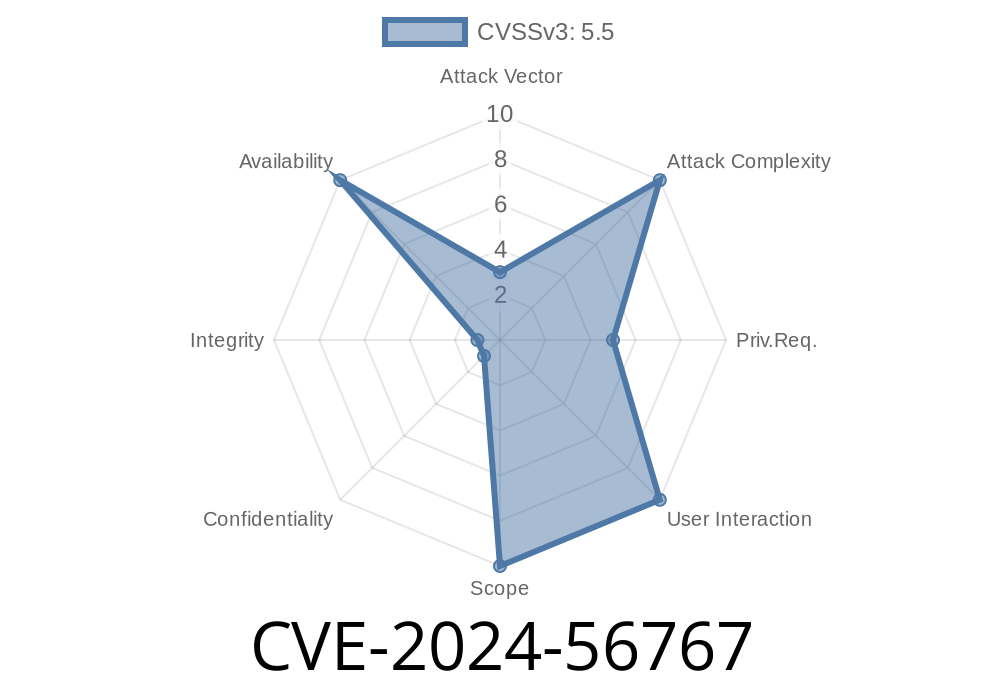
- Exploitability: It’s opportunistic. A local attacker can cause a denial-of-service, but not privilege escalation or data compromise (as per current assessments).
To exploit this, an attacker (local user or possibly malware) would need to trigger the edge-case conditions that result in at_xdmac_memset_create_desc returning NULL – for example, by exhausting memory or passing a bogus DMA buffer length if they have API access.
The Fix
The patch adds a critical check: test if the returned pointer is NULL and safely handle the failure.
Patched Code Snippet
struct at_xdmac_desc *desc;
desc = at_xdmac_memset_create_desc(chan, len, value);

if (!desc) {
    // Avoid dereferencing null pointer
    return NULL;
}

// Safe to use desc
desc->some_field = some_value;
By checking if (!desc) before using it, the kernel avoids crashing if memory is exhausted or other failures occur.
Patch Reference:
You can see the official commit here:
https://git.kernel.org/pub/scm/linux/kernel/git/stable/linux.git/commit/?id=5f3b9ddb5e7a61f195b6e3cf0296e634094fff6
Original Vulnerability Report
- Linux kernel mailing list (LKML) patch discussion
- Upstream commit reference
Proof-of-Concept Scenario
While a reliable user-space exploit isn’t public, in a controlled environment, the bug can be triggered by:
Forcing the DMA descriptors pool to run dry (for example, by submitting many DMA requests).
2. Using a custom kernel module or patched user-space application to make a DMA memset request with deliberately invalid arguments (like an enormous length value).
One such pseudo-exploit looks like this (concept only)
// Assuming user has access to at_xdmac through custom driver interface
size_t big_len = UINT_MAX;
int value = xAA;
ioctl(at_xdmac_fd, PREP_DMA_MEMSET, &big_len, &value);
// Kernel may crash if proper checks aren’t in place.
NOTE: This is a simplified example. Attackers interested in denial-of-service could try to deplete kernel resources, triggering the NULL pointer condition.
How To Stay Protected
- Update your Kernel: If you use a device with at_xdmac support, apply the latest security patches.
Conclusion
CVE-2024-56767 wasn’t a “remote code execution” or data-leak kind of bug, but it highlights why checking return values and guarding against null pointers is so important in kernel code. Even a simple omission can take down the whole operating system. Thanks to the Linux community for its vigilance and quick response.
References
- Official kernel patch commit
- Linux CVE tracker
- LKML discussion
Timeline
Published on: 01/06/2025 17:15:43 UTC
Last modified on: 01/07/2025 22:51:02 UTC