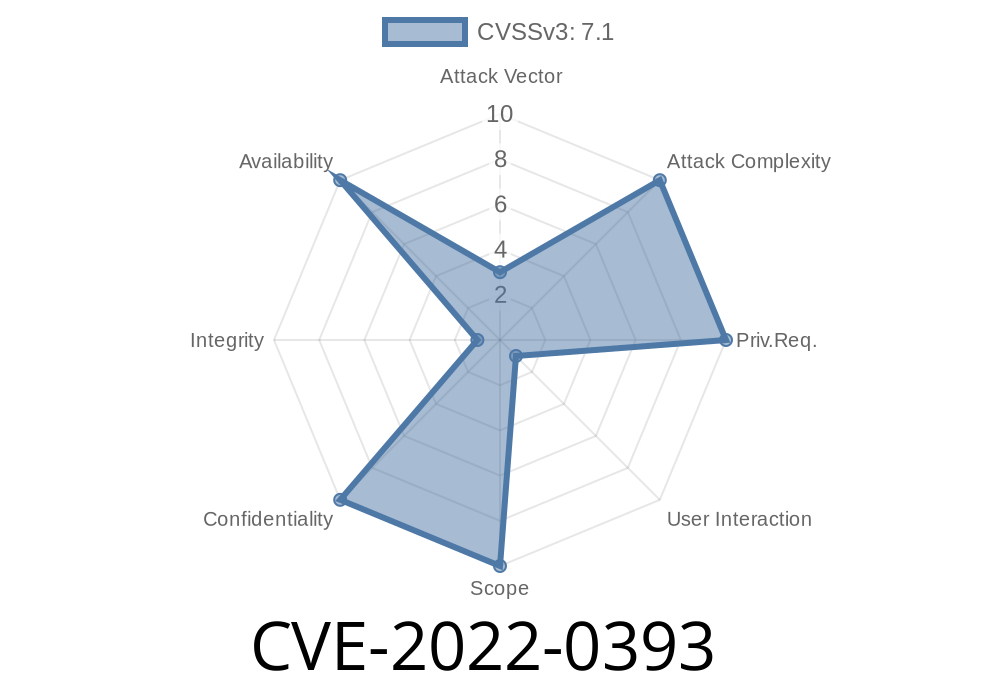
If you use Vim, the famous text editor, you might have heard about a critical issue tagged CVE-2022-0393. This post explains what happened, how it could be exploited, and what you need to do to stay safe.
What Is CVE-2022-0393?
CVE-2022-0393 is an *out-of-bounds read* vulnerability found in vim/vim before version 8.2. An out-of-bounds read happens when a program tries to access data outside the limits of an allocated memory buffer. This type of bug can lead to a crash or, potentially, let an attacker read sensitive memory, helping with further attacks.
In Vim's case, this bug could be triggered using a specially crafted text file, exploiting the way Vim parses certain file types.
Where Did the Problem Happen?
The bug was related to Vim’s *syntax highlighting* feature. When opening or processing files with specific malformed contents, Vim's logic in handling *syntax regions* could accidentally read memory it wasn’t supposed to, past the end of an intended buffer.
Vulnerable Code Snippet
Let’s look at a simplified code snippet to understand how such issues occur (this is not literal Vim code, but it shows the idea):
// Hypothetical example
char buffer[100];
int i;

// User-controlled index
i = user_input(); // Imagine this is over 100!

// Out-of-bounds read if i > 99
char c = buffer[i];
In Vim, a similar pattern happened in logic that handled nested syntax constructs, where an improper check meant an array could be read past its limit.
For specifics, check the commit fixing the vulnerability.
Exploitation in Practice
1. Attacker builds a malicious text file with crafted content designed to trigger the edge case in Vim's syntax highlighting engine.
Or, in some cases, leak memory contents from nearby locations.
No remote code execution was reported, but denial-of-service and possible data leaks are still serious.
Here's an *abstracted* exploit file (for educational purposes, not actual weaponized code)
" Example: Crafted syntax to trigger the bug
syntax region badRegion start="START" end="END" contains=badRegion
" Further nested rules designed to break the parser
Saving such content in a file and opening it with Vim < 8.2 could cause the program to behave unexpectedly.
How Was It Fixed?
The fix involved adding correct boundary checks before accessing array elements. The patch is found in this GitHub commit:
if (idx < stacksize) {
    // Safe to access array
    ...
}
Always making sure the index stays within the correct limits is the best defense against out-of-bounds errors.
Should You Be Worried?
If you only open your own files in Vim, your risk is low. But, if you ever open files from strangers or download text files from the internet, consider this HIGH RISK. It's easy for attackers to hide an exploit payload in a file type Vim parses.
More References
- NIST NVD Entry
- GitHub Security Advisory
- Vim Fix Commit
Conclusion
CVE-2022-0393 reminds us that even trusted, ancient software like Vim can have dangerous bugs. Always keep your tools up to date, and be careful when working with files from unknown sources!
If you’re running an older Vim, upgrade now to stay protected.
Timeline
Published on: 01/28/2022 22:15:00 UTC
Last modified on: 08/21/2022 08:15:00 UTC