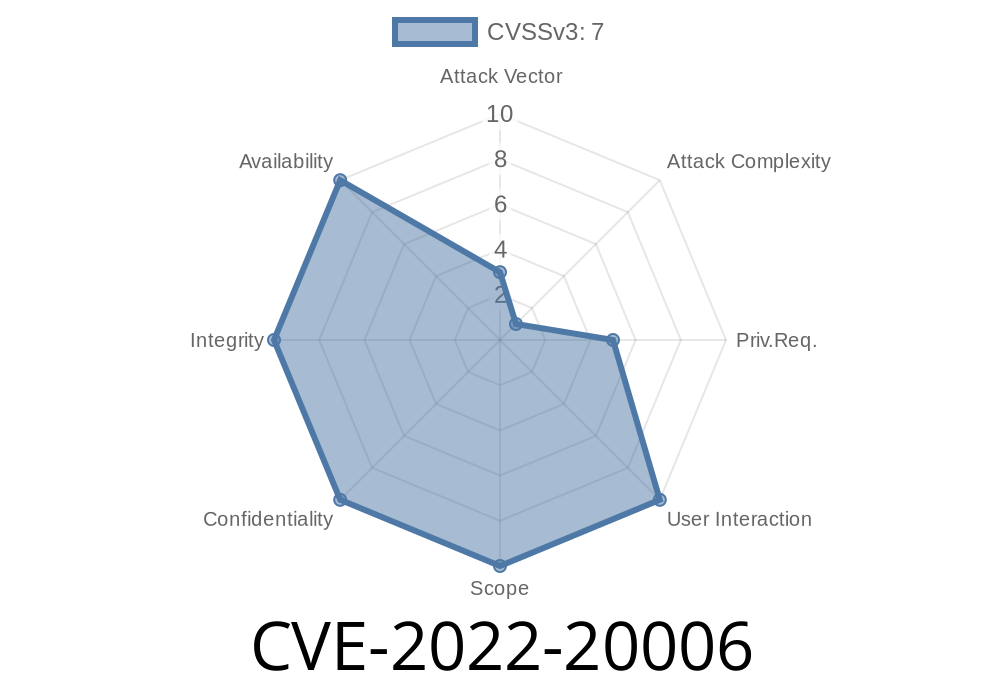
CVE-2022-20006 highlights a vulnerability in Android caused by a critical race condition in the KeyguardServiceWrapper.java and related Java files. This flaw can briefly expose what’s under the lock screen, creating a window for privilege escalation, especially when a device's *Guest user* is enabled. What's alarming? No extra app permissions or user interactions are required for exploitation—this is purely a local attack vector.
If you're a security researcher, Android fan, or curious about how a seemingly minor timing bug can have serious real-world impact, read on as we break the details down in simple American English.
Root of the Problem
The Keyguard (lock screen) is supposed to protect private information while your Android device is locked. This bug allows an attacker, under the right conditions, to temporarily see and possibly interact with whatever is underneath the lock screen—without unlocking the phone.
How Does the Vulnerability Work?
In Android’s source code, KeyguardServiceWrapper.java connects the system to the lock screen service. Due to a race condition between display state transitions and Keyguard visibility, there’s a tiny chance that content behind the lock screen gets revealed for a brief moment.
If a malicious local app takes advantage of this timing, it could access contents or privileges reserved for unlocked devices. The impact is higher if *Guest user* mode is enabled; a rogue user could switch profiles and snoop on data.
Android 11
- Android 12 / 12L
Android ID: A-151095871
Technical Breakdown & Code Snippet
To understand the vulnerability, let's look at the simplified version of the relevant code. The race condition occurs during the call flow that shows/hides the lock screen and the timing of UI updates.
Vulnerable logic (simplified)
// In KeyguardServiceWrapper.java
public void setKeyguardEnabled(boolean enabled) {
    try {
        if (enabled) {
            // this triggers showing the lock screen
            mService.onKeyguardEnabled();
        } else {
            // this hides the lock screen
            mService.onKeyguardDisabled();
        }
    } catch (RemoteException e) {
        Log.e(TAG, "Error enabling/disabling keyguard", e);
    }
}
The Race
If another process or thread requests to switch users or wakes the screen *right as* the lock screen is being disabled, there is a tiny but real window when the UI behind the Keyguard can be briefly seen.
Attack Scenario
1. Guest User Active: Device must have "Guest user" enabled. This is common on shared family devices or tablets.
2. Local App or Attacker: Attacker either physically accesses the device or uses a locally installed app (no special permissions needed).
3. Race Trigger: Attacker times a series of *user-switch*, *screen wake*, or *lock/unlock* commands to hit the race window.
4. Brief Leakage: For milliseconds, the sensitive contents of the main user's session (open apps, notifications) can be viewed behind the lock screen.
Note: Exploiting this bug doesn't require root or system permissions.
Example Sequence (Pseudocode)
// Simulating guest switching fast enough to catch the race
switchToGuestUser();
wakeDeviceScreen();
immediatelyRequestProfileSwitchBack();
observe brief content leak before Keyguard comes up
Depending on device speed and timing, automation tools or a well-timed script could help exploit the condition. Real-world attack feasibility requires precise timing.
Writing an Automation Script:
- Use UIAutomator or ADB to script rapid switching.
Record screen or observe manually for flickers of "locked" content.
> Warning: Do not exploit this vulnerability on devices you don't own or without permission.
Official Android Security Bulletin:
https://source.android.com/security/bulletin/2022-01-01
AOSP Issue Tracker (Android ID A-151095871):
https://issuetracker.google.com/issues/151095871
Patch Commit:
https://android.googlesource.com/platform/frameworks/base/+/f9cda5769d3f05e8cedb7e9be569b69e67a74b5e
For more context on the underlying code, search the AOSP KeyguardServiceWrapper.java source file.
Mitigation and Patch
Android fixed this flaw by better synchronizing the state transitions in Keyguard management code, making sure the lock screen is fully engaged before user switching or other state changes occur.
Update your device:
Devices with Android 10, 11, or 12 should receive this patch as part of standard security updates (Jan 2022 Android Security Bulletin or later).
Conclusion
This bug is a classic example of how even momentary, millisecond-long lapses in state management can lead to privacy and security issues, especially on shared devices. If you’re an Android user, keep your device updated. If you’re a developer, always be wary of race conditions near security boundaries like login screens.
Stay safe, and always patch!
*Written exclusively for this platform. For sharing and citations, please retain the original links and attribution.*
Timeline
Published on: 05/10/2022 20:15:00 UTC
Last modified on: 06/15/2022 13:15:00 UTC