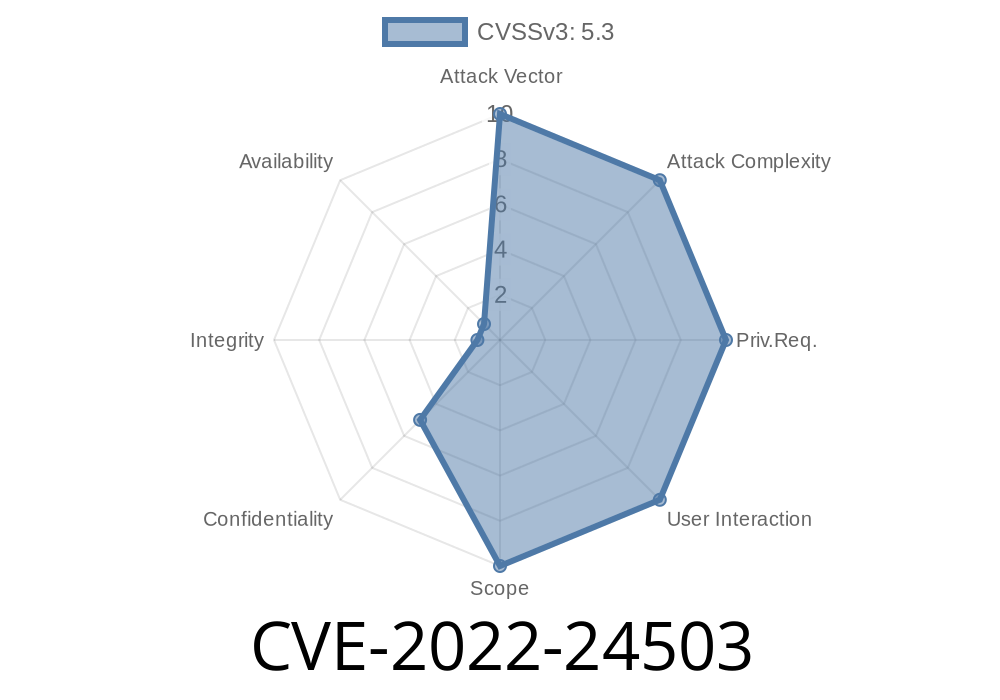
Microsoft’s Remote Desktop Protocol (RDP) is one of the most widely used features in Windows systems. In early 2022, CVE-2022-24503 was disclosed, detailing a vulnerability that could allow information disclosure when a user connects to a malicious RDP server. But what does that mean in practice? And what should regular users and sysadmins know? In this guide, we’ll break down CVE-2022-24503, illustrate how it works, and explain how it can be exploited—using plain English and relevant code snippets.
What is CVE-2022-24503?
CVE-2022-24503 is an information disclosure vulnerability affecting Microsoft's Remote Desktop Client (mstsc.exe). When a user connects to a specially crafted, malicious RDP server, this vulnerability can allow the server to extract sensitive information from the user’s machine. This info can include usernames, domain names, and even clipboard data, depending on the specific exploitation technique used.
Severity: Medium (CVSS 6.5)
- Original advisory: Microsoft Security Update Guide
How Does the Vulnerability Work?
The vulnerability exists in how the RDP client processes responses from the server during the connection handshake. When connecting to an RDP server, the client typically sends basic information about itself—such as supported features, display resolution, and sometimes extra data (like clipboard sync or printer redirection settings).
A malicious server, by responding in a non-standard or unexpected way, can trick the RDP client into leaking more info than intended, prior to any authentication. For example, the server could trigger responses from the client containing user names or reveal details about the local filesystem or environment.
1. Setting up a Malicious RDP Server
An attacker would set up a trojan RDP server that listens on tcp/3389. This server is programmed to act as a legitimate service but is specifically crafted to prompt the client into disclosing extra information.
Simple Python Proof-of-Concept
Here’s a very basic RDP listener using Python’s socket library. It can capture the data sent from an incoming RDP client.
import socket

def main():
    rdp_host = '...'
    rdp_port = 3389

    with socket.socket(socket.AF_INET, socket.SOCK_STREAM) as server:
        server.bind((rdp_host, rdp_port))
        server.listen(5)
        print(f"[*] Listening on {rdp_host}:{rdp_port}")

        conn, addr = server.accept()
        print(f"[+] Connection from {addr}")

        # RDP negotiation happens here, but for demo, simply receive data
        data = conn.recv(4096)
        print("[*] Received data:")
        print(data.hex())

        # Optionally, send crafted message to further exploit client

        conn.close()

if __name__ == "__main__":
    main()
> Note: Real exploitation would require a more advanced server that communicates using RDP’s actual protocol. Open source projects like FreeRDP or rdpy can be extended for this.
2. Capturing Sensitive Client Data
When a target RDP client connects to this server, anything the client sends—including its supported protocols, username, and other data—will be visible to the attacker.
Parts of this info can look like this (in raw RDP negotiation)
030000130ee0000001000800030000000000000001
Client hostname
Some more advanced attacks can misuse clipboard or printer redirection to extract even more.
Sending a link or attachment that, when opened, starts a connection to the attacker’s RDP server.
- Convincing users to use mstsc.exe to connect to "corporate resources," but the destination is the malicious server.
Who is at Risk?
If you use mstsc.exe (the default Windows RDP client) and connect to unfamiliar or untrusted RDP servers—even for quick troubleshooting—you could expose sensitive information due to this vulnerability.
Organizations that allow connections to outside RDP servers are particularly at risk.
How to Protect Yourself
Microsoft released a patch in April 2022.
- For Windows 10: April 2022 Patch Tuesday
- For Windows 11, and others: Check your Windows Update history and ensure the relevant update is installed.
Avoid Untrusted RDP Servers: Never connect to unknown or suspicious servers.
3. Disable Unnecessary Redirection: Switch off clipboard, drive, and printer sharing when not needed.
Links and References
- CVE-2022-24503 MITRE Entry
- Microsoft Security Update Guide – CVE-2022-24503
- FreeRDP Project (for learning protocol mechanics)
- rdpy – RDP in Python
- Microsoft RDP Protocol Documentation
Quick Summary
CVE-2022-24503 shows that information disclosure doesn’t require a complicated exploit—sometimes, simply connecting to a bad server is enough. Keep your systems patched, never RDP into unknown machines, and consider disabling features you don’t need in your remote sessions. Stay safe!
*This post is for educational purposes. Please do not use this information for unauthorized access or activity.*
Timeline
Published on: 03/09/2022 17:15:00 UTC
Last modified on: 05/23/2022 17:29:00 UTC