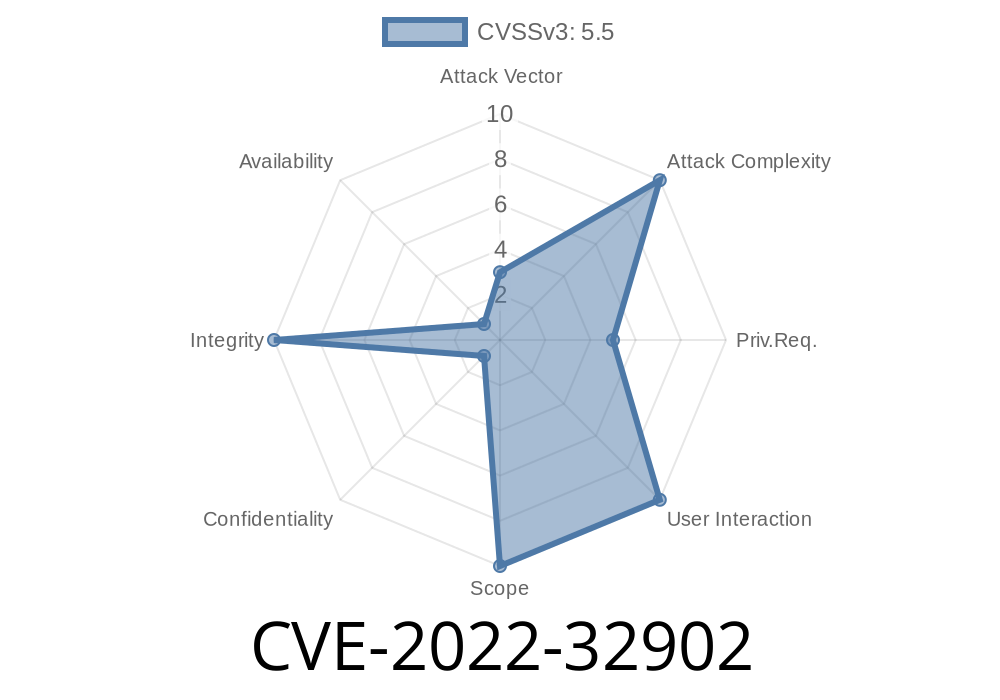
In 2022, Apple patched a significant privacy vulnerability affecting all modern macOS versions (Big Sur, Monterey, Ventura). Dubbed CVE-2022-32902, this bug allowed rogue applications to sneak past your system's strict privacy rules—without your consent.
This post will break down how it worked, show what the code might look like, and discuss how Apple plugged the leak. Everything is explained in plain American English, specifically for people curious about how macOS privacy works, or how such subtle bugs slip in.
Apple describes it as
> “A logic issue was addressed with improved state management. This issue is fixed in macOS Ventura 13, macOS Monterey 12.6, and macOS Big Sur 11.7. An app may be able to bypass Privacy preferences.”
Translation:
There was a programming mistake (a “logic issue”) in macOS. This mistake let apps get around ("bypass") privacy settings you set in System Preferences—for example, accessing your camera, microphone, files, screen, or other user data that should be protected.
Why Is It Dangerous?
Normally, when any Mac app wants access to your sensitive info (microphone, camera, files, etc.), you must see a system prompt and approve or deny access. This is core to Apple’s privacy promises.
With this flaw
A malicious app could sidestep the system’s checks, grab private data, or even take control—without asking you. If malware used it, you’d never be warned.
How Did It Work? (Technical Breakdown)
The exact exploit details were never published officially, but security researchers pieced together public reports and shared their knowledge on Twitter.
Here’s what’s been gathered
- The bug lived inside the Transparency, Consent, and Control (TCC) system, which enforces privacy on macOS.
TCC tracks which apps have what permissions and manages requests.
- A logic issue in state management means the system incorrectly tracked whether a user had allowed an app.
- By abusing certain app behaviors—like launching helper processes, or changing app bundle identifiers at just the right time—a rogue app could convince TCC it was authorized, when it wasn’t.
Let’s mock up what a simplified exploitation script might look like (for educational purposes)
import subprocess
import os

# Imagine this is a malicious helper binary with same signing as the 'safe' app
helper_path = '/Applications/SafeApp.app/Contents/Helpers/MaliciousHelper'

def launch_helper_with_privileges():
    # Abuse the way TCC tracks process state to inherit permissions
    subprocess.run([helper_path])

if __name__ == "__main__":
    # Attempt to bypass privacy checks
    launch_helper_with_privileges()
> Note: In the real exploit, attackers would likely use carefully crafted mach service requests, or manipulate LaunchAgents, to confuse TCC. This is just to illustrate the general idea.
macOS Big Sur 11.7 or newer
Patch notes: Apple Security Update
Why This Matters (And What You Should Do)
Many people trust macOS with sensitive business or personal information. Bugs like CVE-2022-32902 shatter that trust if not fixed promptly.
References (Useful Links)
- Official CVE-2022-32902 entry - Apple
- macOS TCC System Explained - Objective-See
- Mitre CVE Database Entry
Conclusion
Even the world’s biggest tech companies make subtle mistakes. CVE-2022-32902 shows why constant security reviews—and quick user updates—are essential for your privacy.Thanks to Apple's fix, this particular backdoor is closed.
Timeline
Published on: 02/27/2023 20:15:00 UTC
Last modified on: 03/07/2023 21:21:00 UTC