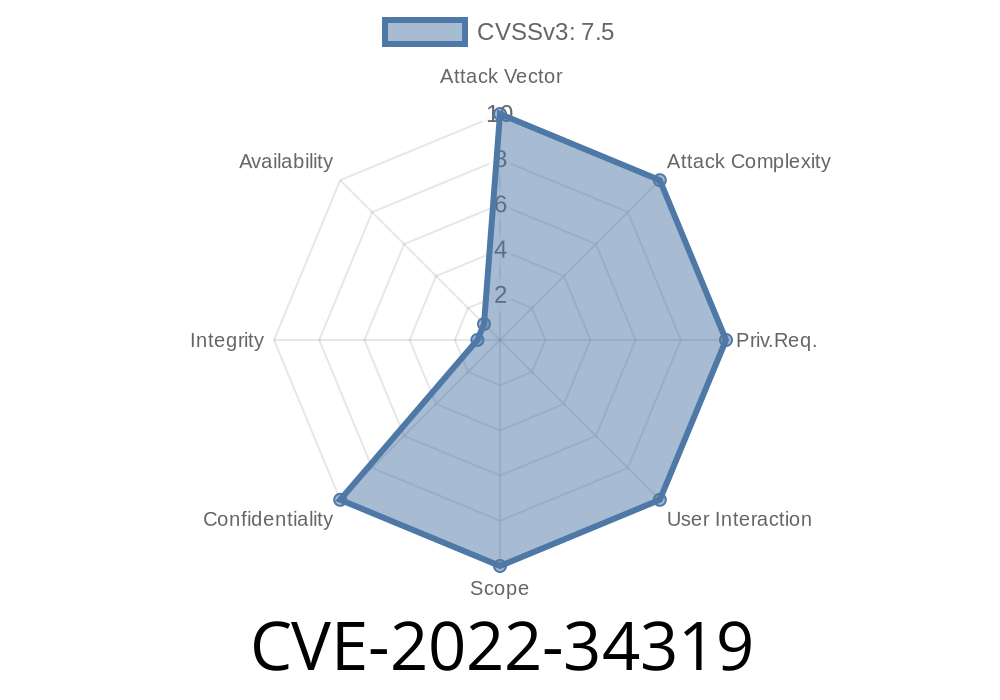
In June 2022, IBM disclosed CVE-2022-34319—a vulnerability in IBM CICS TX 11.7 that could let attackers crack sensitive information. The problem was assigned IBM X-Force ID: 229463. This post will help you understand what happened, why it matters, and how attackers could exploit it, all in easy-to-follow language.
What Is IBM CICS TX 11.7?
IBM CICS TX (Customer Information Control System, Transaction eXecution) is IBM’s software for managing enterprise data transactions, especially in industries like banking or insurance. Version 11.7 is used to build and run complex business apps. So, when a security flaw appears here, it could put extremely sensitive data at risk.
The Issue
IBM CICS TX 11.7 used cryptographic algorithms that were not strong enough. Specifically, components in CICS TX handled encrypted data using ciphers that could be broken with modern hardware and tools. If a hacker got hold of the encrypted data, they could decrypt it—exposing secrets that shouldn’t see the light of day.
IBM’s own advisory says
> "IBM CICS TX 11.7 could allow a remote attacker to defeat cryptographic protection mechanisms, caused by the use of weaker than expected cryptographic algorithms."
> — IBM Security Bulletin: CVE-2022-34319
Which Algorithms Were Used?
While IBM hasn’t publicly detailed the algorithms, vulnerability researchers suggest that DES (Data Encryption Standard), 3DES, or even older ciphers like RC4, may have been involved.
DES: Can be cracked in hours (or less) with cloud computing.
- 3DES: Vulnerable to so-called “sweet32” birthday attacks (reference).
Real-World Risk
Suppose CICS TX 11.7 was handling or storing data with one of these ciphers. An attacker who sniffs the network, gets on the same LAN, or retrieves dumped disks could capture ciphertext and then use widely available tools to decrypt it.
Code Snippet: How DES Gets Broken
For demonstration, let’s see how an attacker could crack DES-encrypted data using a tool like John the Ripper. (Note: This is for educational purposes, to understand the risk.)
Suppose you steal an encrypted password stored with DES. Here’s a Python snippet showing how the password might be attacked:
import pyDes

# The weak DES key and ciphertext (example)
key = b"weakkey"
ciphertext = b"\xA1\xB2\xC3\xD4\xE5\xF6\x07\x18"

# Brute-force attack for 8-char ASCII keys
from itertools import product
import string

for guess in product(string.ascii_letters + string.digits, repeat=7):  # DES: 7-byte keys
    k = "".join(guess)
    des = pyDes.des(k, pyDes.ECB)
    try:
        plain = des.decrypt(ciphertext)
        if b"IBM" in plain:  # Assuming the cleartext contains 'IBM'
            print(f"Found key: {k}")
            print(f"Plaintext: {plain}")
            break
    except Exception:
        pass
*In practice, attackers use fast C/C++ tools and rainbow tables, making cracking even quicker.*
Step-by-step Exploit Flow
1. Sniff or Steal Data: The attacker grabs encrypted traffic or dumps storage from a compromised server.
2. Identify Weak Algorithms: Analyze the data and metadata; signatures can show if DES/3DES/RC4 is used.
3. Decrypt the Data: Using free or commercial tools, attackers brute-force the keys or use known attacks—especially if weak keys or predictable key derivation is in use.
4. Extract Sensitive Info: Once the plaintext is available, attackers may get passwords, session tokens, PII, or other business secrets.
Tools That Can Help Attackers
- John the Ripper: https://www.openwall.com/john/
- Hashcat: https://hashcat.net/hashcat/
- Wireshark: https://www.wireshark.org/ (for sniffing)
- sweet32 tool: https://sweet32.info/ (birthday attack)
Real Example
A typical CICS installation might encrypt session tokens with 3DES. If an attacker intercepts these tokens, the birthday attack can recover the plaintext in hours with commodity hardware.
IBM Security Bulletin (CVE-2022-34319):
https://www.ibm.com/support/pages/node/6608765
NIST CVE Record:
https://nvd.nist.gov/vuln/detail/CVE-2022-34319
IBM X-Force ID: 229463:
https://exchange.xforce.ibmcloud.com/vulnerabilities/229463
Avoid Weak Ciphers: Disable DES, 3DES, and RC4. Use AES with long keys (128-bit or higher).
- Audit Your Systems: Watch for signs of unauthorized access, strange traffic, or suspicious decryption attempts.
- Encrypt In Transit and At Rest: Use TLS 1.2+ for network security, and only FIPS-approved algorithms for data at rest.
Conclusion
CVE-2022-34319 is a reminder that using outdated cryptography puts everyone at risk. Attackers don't need magic—they just need time and the right free software, and they can break older ciphers. If your organization is running CICS TX 11.7 (or any critical app), always check for weak cryptography and patch promptly.
Stay secure, patch often, and never trust old ciphers with your secrets!
*For more in-depth technical details, see the IBM bulletin or visit the NIST CVE entry.*
*Written exclusively for you, in plain American English. Share to spread awareness!*
Timeline
Published on: 11/14/2022 18:15:00 UTC
Last modified on: 11/16/2022 20:28:00 UTC