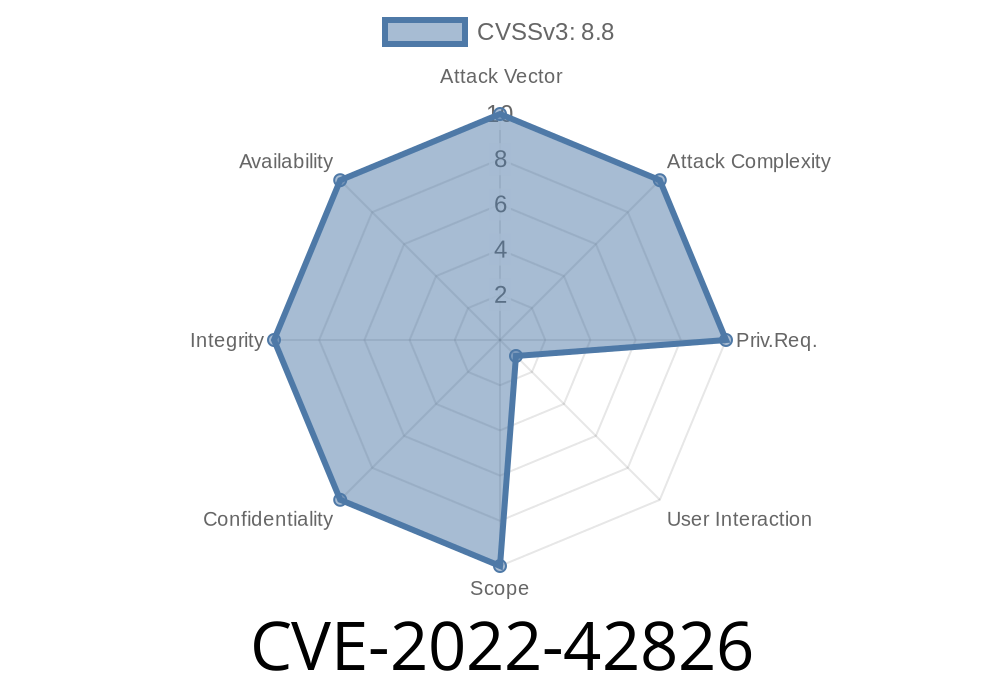
Apple products are everywhere, and their reputation for security is a big reason why people trust them with personal and business data. But even the most secure platforms can have cracks. In late 2022, security researchers discovered a serious vulnerability in Apple’s WebKit, the core engine behind Safari and many apps. Listed as CVE-2022-42826, this bug allowed hackers to execute code on your device simply by tricking you into visiting a malicious website. Here’s everything you need to know in simple terms—plus example code to show how this bug could be used in the wild.
What is CVE-2022-42826?
CVE-2022-42826 is what experts call a "use-after-free" vulnerability. In simple language, this means that a program (in this case, WebKit) tried to use a piece of memory after it had already been returned to the system. If an attacker manages to control what’s in that memory, they could trick your system into running things it shouldn’t.
Apple patched the flaw in late 2022
- macOS Ventura 13 release notes
- iOS 16.1 and iPadOS 16 release notes
- Safari 16.1 release notes
How Did the Exploit Work?
Let’s break this down: Browsers like Safari juggle lots of web content very quickly—JavaScript, images, styles. To make things fast, they reuse memory for things like JS objects. If there’s a bug in this recycling process, hackers can create a website that tricks the browser into freeing an object but then still using it, causing mayhem.
Here's a simple version of what goes wrong (pseudocode for illustration)
// Javascript that could trigger use-after-free in vulnerable WebKit
let elem = document.createElement('iframe');
document.body.appendChild(elem);

elem.onload = function() {
    // Remove iframe right after it's loaded (memory freed)
    document.body.removeChild(elem);
    // Try accessing iframe's content again (use-after-free)
    try {
        elem.contentWindow.postMessage('hi', '*');
    } catch (e) {
        console.log('Crash or unexpected behavior:', e);
    }
};
elem.src = "about:blank";
In a real exploit, the attacker would fill the freed memory with malicious data, which the browser might unknowingly run as code—giving the attacker control.
Real-World Impact
Remote Code Execution (RCE):
If you visited a specially crafted webpage, the attacker could execute their code with the same permissions as your browser. This might mean stealing passwords, reading emails, or installing malware. No additional user action required—just visiting a page.
No User Interaction Needed:
The scariest part? It worked without you having to download or install anything. Just clicking a link could be enough.
Exploit Example
Security researchers use "proof of concept" (PoC) code to show a vulnerability is real without actually harming systems. For CVE-2022-42826, a simple PoC might look like this:
// Proof-of-concept showing browser crash/use-after-free
let arr = [];
for (let i = ; i < 100; ++i) {
    let iframe = document.createElement('iframe');
    document.body.appendChild(iframe);
    iframe.onload = () => {
        document.body.removeChild(iframe);
        arr.push(iframe.contentWindow); // access after removal
    };
    iframe.src = "about:blank";
}
This snippet, running in a vulnerable version of Safari or iOS, could crash the browser or behave unpredictably—signs a memory safety bug is being triggered.
The Fix: Improved Memory Management
Apple addressed this bug by changing how WebKit keeps track of memory used by web content. They made sure objects aren’t freed (returned to the system) while there are still ways for scripts to access them.
In technical terms:
*"A use after free issue was addressed with improved memory management."*
References & Further Reading
- Apple Security Update: Ventura 13
- Apple Security Update: iOS 16.1 & iPadOS 16
- Apple Security Update: Safari 16.1
- CVE Record: CVE-2022-42826
For in-depth analysis
- WebKit Security Blog
- The Zero Day Initiative write-up
What Should You Do?
1. Update Now: Make sure you’re running at least iOS 16.1, iPadOS 16, macOS Ventura 13, or Safari 16.1.
Don’t Delay: These bugs are often exploited in the wild quickly.
3. Stay Informed: Keep an eye on Apple’s security updates page.
Conclusion
CVE-2022-42826 is a reminder that even top-tier software can be poked full of holes by clever hackers. Thanks to fast response from Apple, the risk has been closed off—but only if you update. If you don’t, you’re leaving the door wide open.
Stay patched, stay safe, and always use the latest versions of your software!
Timeline
Published on: 02/27/2023 20:15:00 UTC
Last modified on: 03/07/2023 21:35:00 UTC