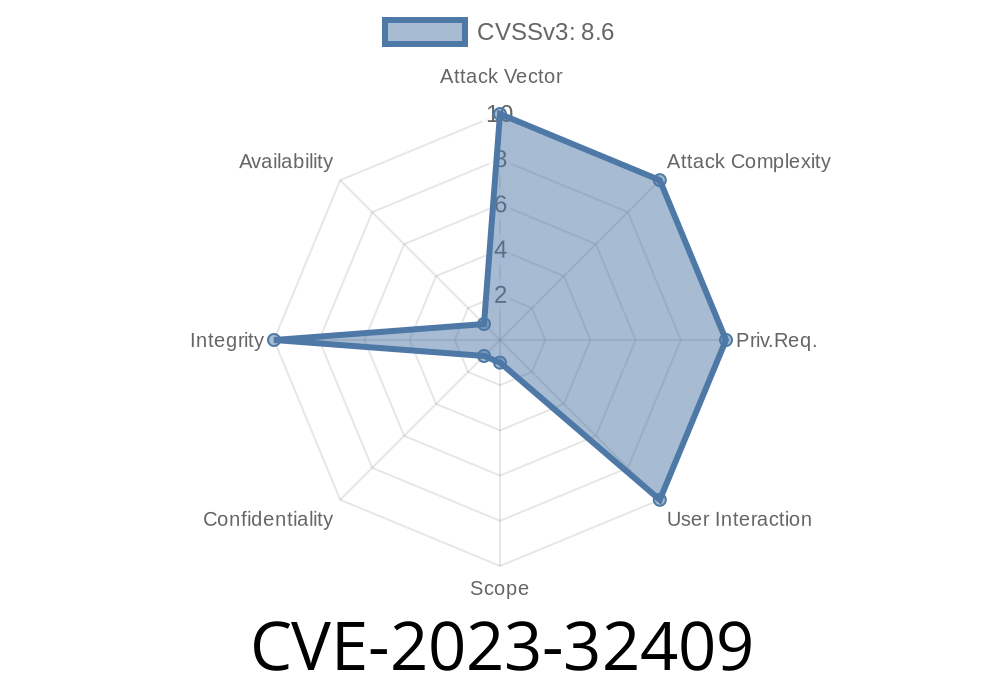
Cybersecurity vulnerabilities are discovered every day, but some shake up the tech world more than others. CVE-2023-32409 is one of those. This flaw, found in WebKit (the engine behind Safari and other Apple browsers), allowed remote attackers to escape the web content sandbox—a fundamental security barrier.
In this deep dive, we’ll break down what CVE-2023-32409 is, how an attacker could exploit it, what Apple has done to fix it, and why it matters for every Apple user. No complicated tech jargon—just a clear story, code samples, and all necessary links.
What Is CVE-2023-32409?
In simple terms, CVE-2023-32409 is a software bug in Apple’s WebKit browser engine, used in Safari and across macOS, iOS, watchOS, and tvOS. This bug meant that, if you visited a malicious website, an attacker could break out of the browser’s “sandbox” and potentially access information or parts of your device they shouldn’t.
The real danger: Apple confirmed they’re aware this vulnerability has already been exploited in the wild—meaning it’s not just theoretical.
Here’s the official Apple advisory
- Apple Security Updates Page
- CVE-2023-32409 at NIST
- WebKit Bug Entry (260673)
The flaw was in WebKit’s handling of web content.
- There were “insufficient bounds checks” (the code didn’t make sure data stayed within safe memory boundaries).
Hackers could lure users to a malicious web page and trigger the bug.
When a browser fails to check boundaries, it can accidentally overwrite critical parts of memory. Attackers craft input (like JavaScript on a webpage) to cause this kind of memory abuse, leading to sandbox escape.
Here's a made-up but similar scenario in JavaScript that could exploit an out-of-bounds write
// Hypothetical malicious JS exploiting bad bounds checks
let arr = [1, 2, 3];
arr.length = 100000; // Increase the array size

for (let i = ; i < arr.length; i++) {
    arr[i] = 7; // If there's a bug, this might overwrite memory!
}

// With certain browser bugs, code like this can corrupt memory outside the array
In real-life, exploit code would be much more sophisticated, using well-crafted JavaScript and possibly chaining together several bugs to gain code execution outside the web sandbox.
Exploit Details (What Attackers Did)
Security researchers believe attackers created *malicious webpages* designed to send crafted data to Safari browsers. When a user visited the page, the site’s JavaScript would:
Potentially gain access to other data or even run malicious code
A working attack would require skill and knowledge of WebKit’s internals, but since Apple says they saw real-world exploitation, someone made it happen.
What this means
- Apple’s developers changed the code so that any memory access in WebKit checks that it’s within legitimate limits.
- Now, malicious JavaScript can’t write outside the intended boundaries, closing off the escape route.
Sample Patch (Simplified - Not Real Code)
// Vulnerable code (before)
memcpy(buffer, data, length); // length not properly checked

// Fixed code (after)
if (length <= MAX_BUFFER_SIZE) {
    memcpy(buffer, data, length);
} else {
    // Handle error
}
Update Now: If you use any Apple device, make sure you’re running the versions listed above.
2. Stay Informed: Check Apple’s security updates page regularly.
More Technical Reading
- Apple CVE-2023-32409 Official Page
- NIST NVD Entry
- WebKit Commit Fix (example commit, not directly the CVE fix)
Final Thoughts
CVE-2023-32409 is a great example of why even “safe” apps and devices need updates. Attackers are clever, and security researchers (and companies like Apple) work daily to catch up. With this flaw, the window between discovery and real-world attacks was short—so staying updated is crucial.
Questions or want to see how exploits like this are found? Let me know in the comments!
Timeline
Published on: 06/23/2023 18:15:00 UTC
Last modified on: 07/27/2023 04:15:00 UTC